How Much Does Custom Website Design Cost in South Florida? (2026 Complete Pricing Guide)
Share this article

If you're researching the cost of custom website design in South Florida, you've probably noticed that prices can vary significantly. Some companies advertise websites for just a few hundred dollars, while others quote several thousand for what appears to be the same service. The reality is that no two websites are built the same. The level of strategy, customization, search engine optimization (SEO), performance, and functionality all play a major role in determining the overall investment. If you're considering investing in custom website design for your business, understanding what influences pricing is the first step toward making an informed decision.
In this guide, we'll explain what affects the cost of a professionally built informational website, what businesses can realistically expect to pay, and how to evaluate the value behind a proposal rather than focusing solely on price. Whether you're launching a new business, redesigning an outdated website, or comparing website design companies in South Florida, this guide will help you understand what goes into building a website that supports your long-term business goals.
Why Does Custom Website Design Cost So Much?
One of the biggest misconceptions about website design is that you're simply paying someone to create a visually appealing website. While design certainly plays an important role, it's only one piece of a much larger process. A professionally built website combines strategy, user experience (UX), search engine optimization (SEO), responsive development, content organization, and technical performance into a single digital asset designed to help your business grow.
Think of your website as an investment rather than an expense. For many businesses, it's the first interaction a potential customer has with your company. Before someone calls your office, submits a contact form, or requests a quote, they've likely already formed an opinion based on your website. A well-designed website builds credibility, answers important questions, establishes trust, and guides visitors toward taking action. A poorly designed website, on the other hand, can create confusion, frustration, and missed business opportunities.
This is why website pricing can vary so dramatically. One company may offer a basic website built from a pre-existing layout with minimal customization, while another develops a fully custom website designed around your brand, your services, and the specific goals of your business. Although both may technically be "websites," they provide very different levels of value, flexibility, and long-term performance.
When comparing website design proposals, it's important to look beyond the price and understand exactly what you're receiving. A lower upfront cost may seem attractive, but if the website isn't built to attract visitors, perform well in search engines, or convert traffic into leads, it may end up costing far more over time through lost opportunities and future redesigns.
The true cost of a website isn't determined by how many pages it has or how modern it looks. It's determined by how effectively it supports your business, represents your brand, and helps turn visitors into customers.
What You're Actually Paying For
When you invest in a professionally built custom website, you're paying for much more than design alone. A quality website requires planning, technical expertise, and careful attention to the details that impact both user experience and search engine visibility.
A custom website typically includes:
- Strategic planning based on your business goals
- Custom page layouts designed specifically for your brand
- Responsive design that works seamlessly across desktops, tablets, and mobile devices
- Search engine optimization (SEO) best practices built into every page
- Optimized page speed and performance
- User experience (UX) focused navigation and page structure
- Lead generation elements, such as contact forms and calls-to-action
- Proper heading hierarchy and content organization
- Image optimization for faster loading times
- Technical enhancements, including schema markup and metadata
- Quality assurance testing before launch
Each of these components contributes to the overall success of your website. While visitors may never notice them individually, together they create a website that is easier to use, easier to find in search engines, and more effective at generating new business.
What Factors Affect the Cost of a Custom Website?
No two businesses are exactly alike, which is why no two custom websites should be either. A local accounting firm has different goals than a law office, a pest control company, or a medical practice. Each business serves a unique audience, offers different services, and requires a website designed to support its specific objectives. Because of this, the cost of a custom website is determined by far more than its appearance.
When a website design company prepares a proposal, they're evaluating the scope of the project—not simply assigning a price based on aesthetics. Factors such as the number of pages, the amount of content, required functionality, search engine optimization (SEO), user experience, and overall project complexity all contribute to the final investment. Understanding these factors will help you compare proposals more accurately and determine whether you're receiving long-term value.
Number of Pages
One of the most significant factors affecting website pricing is the number of pages your website requires. While it may seem like each additional page simply adds more content, every page also requires planning, design, development, optimization, testing, and quality assurance.
For example, a homepage, service page, about page, and contact page each serve different purposes. Every page should have its own layout, messaging, calls-to-action, internal links, page title, meta description, heading structure, and SEO strategy. As the number of pages increases, so does the time required to ensure every page contributes to a cohesive user experience.
Rather than asking, "How many pages can I get for my budget?" a better question is, "What pages will best support my customers and business goals?"
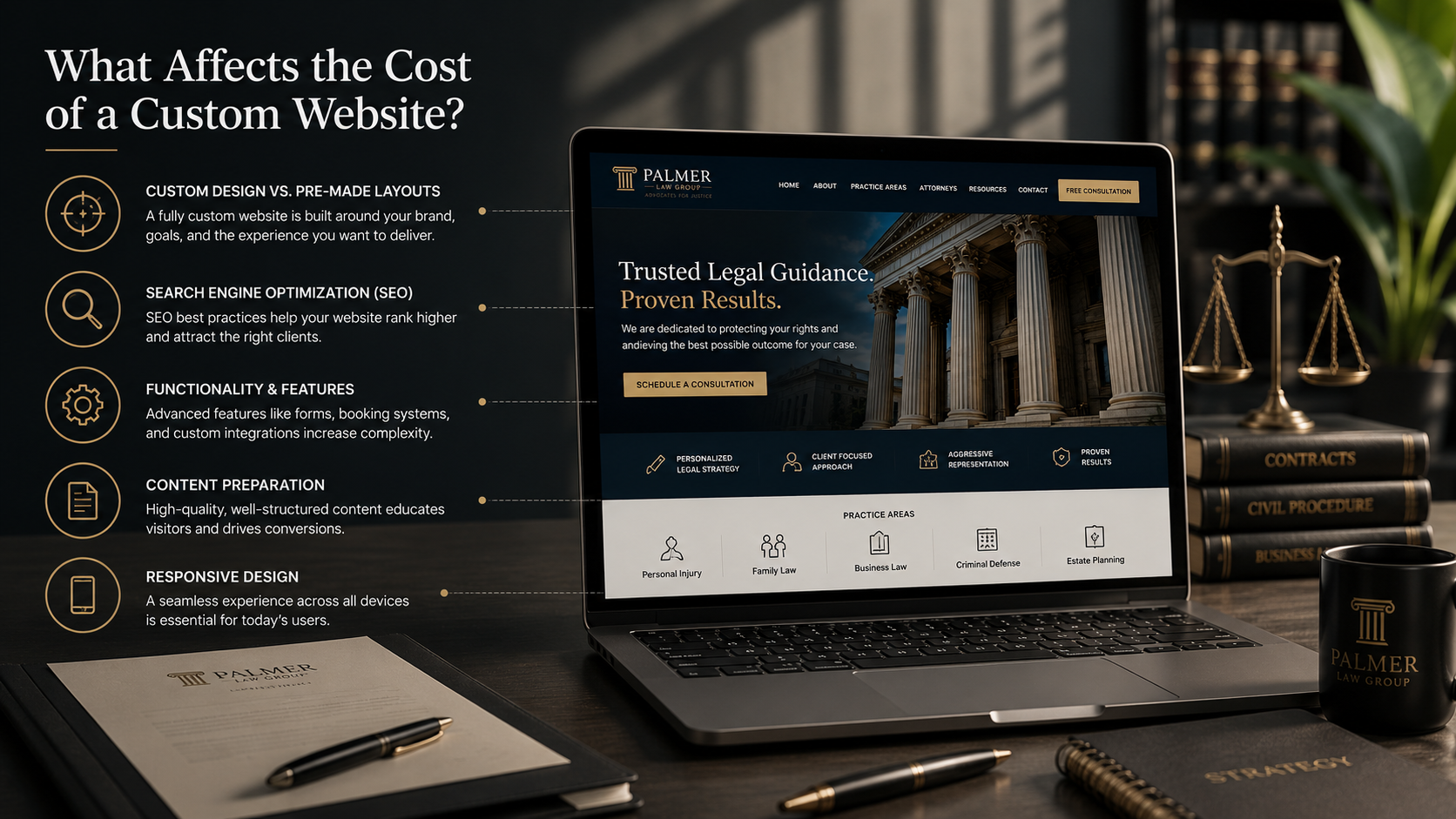
Custom Design vs. Pre-Made Layouts
Not every website is built from scratch. Some agencies use pre-designed templates that are modified with your logo, colors, and content, while others create a completely custom website tailored to your business.
A custom website is built around your brand, your services, and the experience you want visitors to have. Instead of forcing your content into an existing layout, every section is intentionally designed to communicate your value, answer customer questions, and encourage visitors to take the next step.
Custom design also provides greater flexibility as your business grows. New services, additional pages, and future updates can be integrated more naturally because the website wasn't constrained by the limitations of a pre-built template.
A website that looks beautiful but can't be found in search results won't generate the same long-term value as one built with SEO in mind.
Professional website design should include foundational SEO best practices from the beginning. This includes properly structured headings, optimized title tags and meta descriptions, image optimization, internal linking, clean URLs, mobile responsiveness, schema markup, and logical site architecture. These elements help search engines better understand your website while improving the experience for your visitors.
Although SEO is an ongoing process, building a website on a strong technical foundation makes future optimization significantly more effective.
Functionality and Features
Every business has different operational needs, and those needs often influence the complexity of a website.
Some informational websites only require a contact form and a handful of service pages. Others may include photo galleries, FAQs, testimonials, interactive maps, downloadable resources, appointment request forms, or advanced lead generation features.
Each additional feature requires planning, development, testing, and optimization to ensure it functions properly across all devices and browsers.
Content Preparation
One of the most overlooked aspects of any website project is content.
High-quality website content doesn't simply fill space—it educates visitors, builds trust, answers questions, and helps search engines understand what each page is about. Organizing services, writing persuasive copy, selecting imagery, and structuring information in a way that's easy to navigate often requires as much planning as the design itself.
The more complete and organized your content is before development begins, the more efficiently a website can be built.
How Much Does Custom Website Design Cost in South Florida?
One of the most common questions business owners ask is, "How much should I expect to pay for a custom website?" While there isn't a one-size-fits-all answer, understanding the different types of website solutions available can help you determine which option best aligns with your business goals, budget, and long-term growth strategy.
It's important to remember that you're not simply purchasing a website—you're investing in a digital asset that represents your business 24 hours a day, seven days a week. A professionally designed website should strengthen your brand, build credibility, generate qualified leads, and support your marketing efforts for years to come. With that in mind, let's look at the most common pricing ranges you'll find throughout South Florida.
DIY Website Builders ($0 – $500)
DIY website builders are often the lowest-cost option and are designed for individuals who prefer to build their own website using drag-and-drop tools. While these platforms can be useful for hobby websites or very small startups, they often require a significant time investment and may lack the flexibility, scalability, and search engine optimization features that growing businesses need.
Business owners should also consider the hidden costs of building a website themselves. Learning the platform, writing content, sourcing images, organizing pages, and maintaining the website all require time—time that could otherwise be spent running the business.
Best suited for:
- Personal projects
- Hobby websites
- Businesses with extremely limited budgets
Freelance Website Designers ($800 – $3,000)
Hiring a freelance website designer can be a good option for businesses looking for a more personalized experience than a DIY platform. Freelancers often provide custom design work and may offer competitive pricing due to lower operating costs.
However, every freelancer has different strengths and specialties. Some focus primarily on design, while others may have experience with development or SEO. Before hiring a freelancer, it's important to understand exactly what's included in the proposal, including revisions, ongoing support, website ownership, and post-launch assistance.
Best suited for:
- Small businesses
- Startups
- Businesses with straightforward website requirements
Custom Website Design Agencies ($2,500 – $10,000+)
For businesses looking to establish a strong online presence, generate leads, and support long-term growth, a custom website design agency often provides the most comprehensive solution.
Rather than focusing solely on the appearance of a website, agencies typically consider the entire customer journey—from how visitors find your website through search engines to how they navigate your pages and ultimately contact your business. A professionally developed website often includes strategic planning, responsive design, technical SEO, user experience (UX), performance optimization, and ongoing support.
While the initial investment may be higher than other options, businesses often benefit from a website that's easier to maintain, performs better in search results, and provides a stronger foundation for future marketing efforts.
Best suited for:
- Service-based businesses
- Established companies
- Businesses focused on long-term growth
- Companies investing in SEO and digital marketing
Enterprise Website Projects ($10,000+)
Large organizations, franchises, healthcare providers, universities, and businesses with complex requirements often require enterprise-level website solutions. These projects typically involve extensive planning, advanced functionality, custom integrations, accessibility compliance, multilingual support, and collaboration between multiple specialists.
While enterprise websites require a larger investment, they're designed to support organizations with more complex operational needs and higher traffic volumes.
| Website Solution | Typical Cost | Best For | Limitations |
|---|---|---|---|
| DIY Website Builder | $0–$500 | Hobby sites & startups | Limited customization, time-intensive |
| Freelance Website Designer | $800–$3,000 | Small businesses | Varies by experience and support |
| Custom Website Design Agency | $2,500–$10,000+ | Growing service businesses | Higher upfront investment |
| Enterprise Website Project | $10,000+ | Large organizations | Longer timelines and greater complexity |
Website Design Is an Investment—Not Just an Expense
When comparing website proposals, it's easy to focus on the bottom-line price. However, a website should be evaluated based on the value it provides over its lifespan rather than its upfront cost alone.
For example, if a professionally designed website helps generate just a few additional customers each month, the return on investment can quickly exceed the initial cost of development. On the other hand, a lower-cost website that fails to attract visitors or convert leads may ultimately require a complete redesign—resulting in additional expenses that could have been avoided.
Rather than asking, "What's the cheapest website I can buy?", consider asking:
"Which website will create the greatest value for my business over the next five to ten years?"
That shift in perspective often leads to a much more informed decision.
How Many Pages Does a Small Business Website Need?
One of the most common questions business owners ask when planning a new website is, "How many pages do I actually need?" The answer depends on your business, your services, and the type of information your customers need before they're ready to contact you. Contrary to popular belief, a larger website isn't always a better website. The goal isn't to have the most pages—it's to have the right pages that answer questions, build trust, and guide visitors toward taking action.
A well-planned website should provide visitors with the information they're actively searching for while making it easy to understand who you are, what you do, and why they should choose your business. Every page should serve a purpose. Whether that purpose is educating potential customers, highlighting a service, answering common questions, or encouraging someone to request a quote, each page should contribute to the overall experience rather than simply increasing the page count.
Essential Pages for Most Service-Based Businesses
While every business has unique needs, most informational websites should include a strong foundation of core pages. These pages help establish credibility, improve navigation, and give both visitors and search engines a clear understanding of your business.
Most service-based websites benefit from including:
- Home
- About
- Services Overview
- Individual Service Pages
- Portfolio or Project Gallery (if applicable)
- Testimonials or Reviews
- Frequently Asked Questions
- Contact
Depending on your industry, you may also benefit from pages for financing options, careers, service areas, blog articles, resources, or case studies. The right combination of pages depends on your business goals and the information your customers need throughout their decision-making process.
More Pages Can Improve SEO—When They Provide Value
Many business owners assume that adding more pages automatically improves their website's search engine rankings. In reality, search engines don't reward websites simply because they're larger—they reward websites that provide helpful, relevant, and original content.
For example, creating dedicated service pages allows you to explain each service in greater detail while targeting specific search terms that potential customers are actively searching for. Likewise, educational blog articles can answer common questions, establish your expertise, and create opportunities to rank for informational keywords that support your primary service pages.
However, adding pages with thin, repetitive, or low-quality content can have the opposite effect. Every page should exist for a reason and provide meaningful value to your visitors.
Quality Is More Important Than Quantity
Instead of focusing on how many pages your website should have, focus on whether your website fully answers your customers' questions.
Ask yourself:
- Does my website clearly explain every service I offer?
- Can visitors quickly understand why they should choose my business?
- Have I answered the most common questions customers ask before contacting me?
- Is it easy for someone to find the information they're looking for?
- Does every page encourage visitors to take the next step?
A thoughtfully planned website with ten high-quality pages will almost always outperform a larger website filled with repetitive or unnecessary content. When every page is created with a clear purpose, your website becomes easier to navigate, more valuable to your visitors, and better positioned to support your long-term SEO strategy.
What Should Be Included in a Professional Business Website?
A professionally designed website should do much more than look attractive. It should support your business goals, provide a positive user experience, and establish a strong technical foundation that helps your website perform well for years to come. While every project is unique, there are several core elements that every high-quality custom website should include.
Whether you're comparing website design companies or planning your first business website, understanding these fundamentals can help you make a more informed investment.
- Custom Design Built Around Your Business
Every business has unique goals, branding, and customers. A custom website is designed specifically around your company rather than forcing your content into a generic layout. This creates a more professional online presence while allowing every page to support your business objectives and provide a better experience for your visitors. - Responsive Design Across Every Device
A modern website should function seamlessly on desktops, laptops, tablets, and smartphones. Responsive design ensures visitors can easily browse your website regardless of the device they're using, improving both usability and customer satisfaction. - Search Engine Optimization (SEO) From Day One
SEO shouldn't begin after your website launches. A professionally developed website should include a strong SEO foundation with proper heading structures, optimized metadata, clean URLs, internal linking, image optimization, schema markup, and logical site architecture that helps search engines understand your content. - Fast Loading Speeds
Website performance plays an important role in both user experience and search engine rankings. Optimized images, clean code, and efficient development practices help pages load quickly, reducing bounce rates and encouraging visitors to stay on your website longer. - Clear Navigation and User Experience
Visitors should never struggle to find information. A well-organized navigation structure makes it easy for users to browse your services, learn about your business, and quickly locate the information they're looking for without unnecessary frustration. - Conversion-Focused Layouts
Every page should guide visitors toward a specific goal, whether that's requesting a quote, scheduling a consultation, completing a contact form, or calling your business. Strategic layouts and clearly placed calls-to-action help turn website visitors into qualified leads. - Built for Future Growth
Your website should grow alongside your business. Whether you expand your services, publish educational content, or target new service areas, a well-built website provides the flexibility to evolve without requiring a complete redesign every few years.
A high-quality website isn't defined by how many animations it has or how modern it looks. It's defined by how effectively it supports your business, communicates your value, and helps potential customers take the next step. Investing in a website built on these principles creates a stronger foundation for your marketing efforts and positions your business for long-term success.
Our Custom Website Design Process
Building a successful website involves much more than designing attractive pages. A well-planned website follows a structured process that ensures every page serves a purpose, every design decision supports your brand, and every element works together to create a positive experience for your visitors.
At The Business Theory, we follow a proven website design process that allows us to create custom informational websites tailored to each client's business, industry, and long-term goals. While every project is unique, our process follows the same strategic foundation from discovery through launch.
Discovery & Business Consultation
Every project begins with understanding your business. Before we design a single page, we take the time to learn about your company, the services you offer, your target audience, and what you want your website to accomplish. This discovery phase helps us create a website that's aligned with your business objectives rather than simply focusing on aesthetics.
Website Planning & Site Structure
A great website starts with thoughtful planning. During this stage, we determine which pages your website needs, organize your navigation, and develop a logical site structure that makes it easy for visitors to find information. Proper planning also creates a stronger foundation for search engine optimization (SEO) and improves the overall user experience.
Custom Website Design
Once the strategy is established, we begin designing your website from the ground up. Every layout is customized to reflect your brand, highlight your services, and create a professional online presence that builds credibility with potential customers. We exclusively build custom informational websites for service-based businesses. Every website is designed from the ground up to reflect your brand, communicate your services, and support your long-term business goals. Because we don't build e-commerce websites or rely on pre-designed templates, we're able to focus entirely on creating websites that educate visitors, build trust, and generate qualified leads.
Website Development
After the design is approved, we bring your website to life using the Duda platform. During development, we focus on responsive design, clean page structure, fast loading speeds, and a consistent experience across desktops, tablets, and mobile devices. Every page is carefully built to ensure your website performs as well as it looks.
SEO Foundation & Optimization
Before launch, we implement foundational on-page SEO best practices to help search engines better understand your website. This includes optimizing page titles, meta descriptions, heading structures, image alt attributes, internal linking, clean URLs, and other technical elements that support future search engine visibility.
Review, Testing & Launch
Before your website goes live, we thoroughly review every page to ensure everything functions as expected. We test forms, links, mobile responsiveness, page layouts, and overall performance to provide a smooth user experience across all devices. Once final approval is received, your website is launched and ready to represent your business online.
Every Website We Build Is Designed With Long-Term Growth in Mind
A website shouldn't become outdated the moment it's launched. It should provide a strong foundation that allows your business to grow over time. Whether you're adding new services, publishing educational content, expanding into new markets, or investing in ongoing SEO, your website should be built to support those future goals without requiring a complete redesign.
By following a structured process and focusing on strategy from the very beginning, we create custom informational websites that not only look professional but are designed to support your business for years to come.
Frequently Asked Questions About Custom Website Design
Choosing the right website design company is an important decision, and it's natural to have questions before making an investment. Below are answers to some of the most common questions business owners ask about custom website design, pricing, timelines, and what to expect throughout the process.
Build a Website That Supports Your Business for Years to Come
Choosing a website design company is about more than comparing prices—it's about finding a partner who understands your business and can create a website that supports your long-term goals. As you've learned throughout this guide, the cost of a custom website depends on many factors, including the number of pages, the level of customization, technical requirements, and the strategy behind the project. The right website isn't simply the least expensive option—it's the one that delivers lasting value for your business.
At The Business Theory, we specialize in building custom informational websites for service-based businesses that are designed to educate visitors, build trust, and generate qualified leads. Every website is custom designed, mobile responsive, built with foundational SEO best practices, and tailored to reflect your unique brand and business goals. We don't rely on generic templates or one-size-fits-all solutions because we believe every business deserves a website that's built specifically for them.
If you're ready to invest in a professional website that supports your business today and grows with you tomorrow, we'd love to learn more about your goals. Whether you're launching a new business, redesigning an existing website, or simply exploring your options, we're here to answer your questions and provide honest guidance every step of the way.
Ready to get started? Contact The Business Theory today to schedule your free website design consultation and discover how a custom website can help your business stand out online.