Custom Website vs Template Website: Which Is Right for Your Business?
Share this article
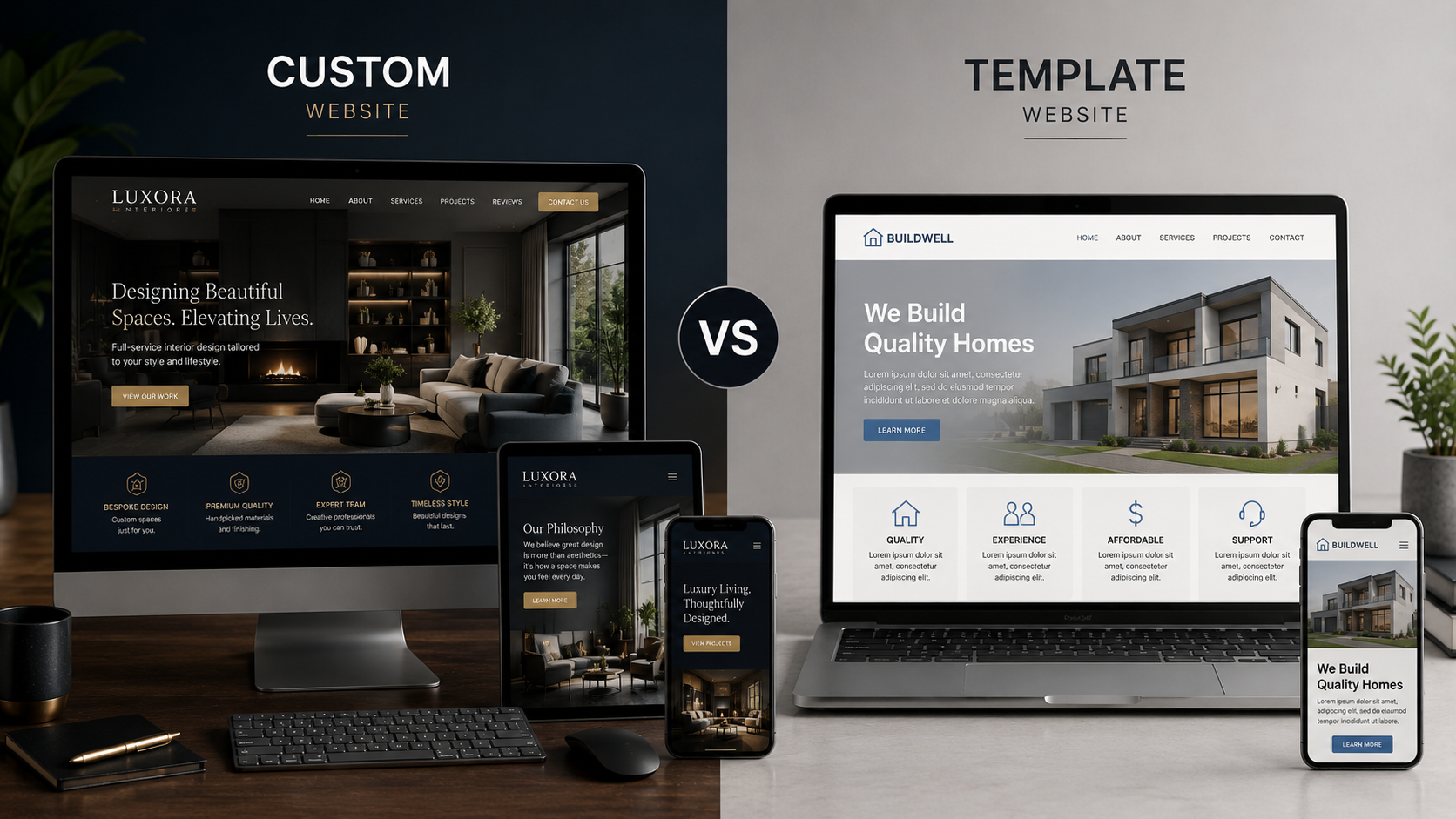
If you're planning a new website for your business, you've probably come across two common options: a custom website or a template website. At first glance, template websites often seem like the more affordable and convenient choice. They promise quick setup, attractive designs, and lower upfront costs. But once your business begins to grow, those initial savings can quickly disappear as you encounter limitations in functionality, performance, branding, and search engine optimization.
A custom website, on the other hand, is designed specifically around your business, your customers, and your long-term goals. Instead of forcing your company into a pre-built layout, every page, feature, and design decision is intentionally created to support your marketing strategy and help generate more leads.
In this guide, we'll compare custom websites and template websites side by side, explain the advantages and disadvantages of each, and help you determine which solution makes the most sense for your business. Whether you're launching a brand-new company or considering a website redesign, understanding the differences can help you make a smarter investment for the future.
What Is the Difference Between a Custom Website and a Template Website?
Many business owners assume that all websites are built the same way. In reality, there are significant differences between a custom website and a template website, and those differences can directly impact your branding, search engine visibility, customer experience, and long-term growth.
A template website is built using a pre-designed layout that has already been created for thousands of other businesses. While colors, images, and text can usually be customized, the underlying structure, page layouts, and available functionality are often limited by the template itself. Template websites are typically designed to help businesses get online quickly with a lower upfront investment.
A custom website, on the other hand, is designed specifically for your business from the ground up. Every page, navigation menu, call-to-action, layout, and user experience is intentionally created around your goals, your target audience, and the way your customers interact with your business online.
Rather than fitting your business into an existing design, a custom website is built to support your unique brand identity while providing the flexibility to grow as your business evolves.
Although both options can create an online presence, they are designed for very different purposes. Template websites prioritize speed and convenience, while custom websites focus on long-term performance, scalability, and creating a stronger competitive advantage.
Custom Website vs Template Website: Side-by-Side Comparison
While both custom and template websites can help establish an online presence, the experience of owning and growing each type of website is very different. As your business evolves, those differences become more noticeable in everything from branding and search engine visibility to performance and scalability.
Let's compare the areas that matter most when choosing the right website for your business.
| Feature | Custom Website | Template Website |
|---|---|---|
| Design & Branding | Designed specifically for your business, branding, and goals. Creates a unique experience that helps your business stand out. | Uses pre-designed layouts that may be shared by thousands of other businesses. Limited uniqueness. |
| Search Engine Optimization (SEO) | Built with SEO best practices from the ground up, allowing greater flexibility for technical optimization and future growth. | Usually includes basic SEO settings but may have limitations depending on the platform and template. |
| Performance & Speed | Optimized with clean code and only the features your business needs, often resulting in better performance. | Can include unnecessary code, plugins, or features that may affect loading speed. |
| Customization | Every page, feature, and function is built around your business requirements. | Limited to what the template or platform allows. Advanced customization may not be possible. |
| Scalability | Easily adapts as your business grows with new pages, services, and functionality. | Can become restrictive as your business expands, sometimes requiring a complete redesign. |
| Integrations | Easily connects with CRMs, booking systems, payment platforms, APIs, and custom software. | Integrations depend on platform compatibility and available plugins. |
| Security | Security can be customized based on your website's needs and best practices. | Security depends largely on the platform and any third-party plugins being used. |
| Ownership & Control | Greater control over your website's design, functionality, and future updates. | Subject to the limitations, updates, and policies of the platform you're using. |
| Long-Term Value | Built as a long-term business asset that supports marketing, lead generation, and future growth. | Lower upfront investment but may require rebuilding as business needs change. |
| Best For | Established businesses, growing companies, and organizations that rely on their website to generate leads. | Startups, hobby websites, temporary projects, or businesses with very simple website needs. |
| Future Changes | Adding new pages, services, and features is typically straightforward because the website is built specifically for your business. | Major changes may require workarounds, premium plugins, or switching to an entirely new website. |
Both custom and template websites have their place. The right choice depends on your business goals, budget, and long-term plans. While template websites can provide an affordable starting point, businesses that rely on their website to generate leads, improve search visibility, and support long-term growth often benefit from the flexibility and scalability of a custom website.
When Does a Template Website Stop Being Enough?
For many startups and small businesses, a template website can be a practical way to establish an online presence. If your goal is simply to launch a basic website with a few pages and limited functionality, a template may provide everything you need in the beginning.
However, as your business grows, your website often needs to grow with it.
Many business owners eventually discover that what worked during their first year in business no longer supports their marketing goals. They may want to improve their search rankings, create custom landing pages, add advanced functionality, integrate third-party software, or better showcase their services. Unfortunately, these are often the areas where template websites begin to feel restrictive.
As your business evolves, your website should become more than an online brochure. It should actively generate leads, build trust with potential customers, and support your long-term growth. That's where a custom website often becomes the better investment.
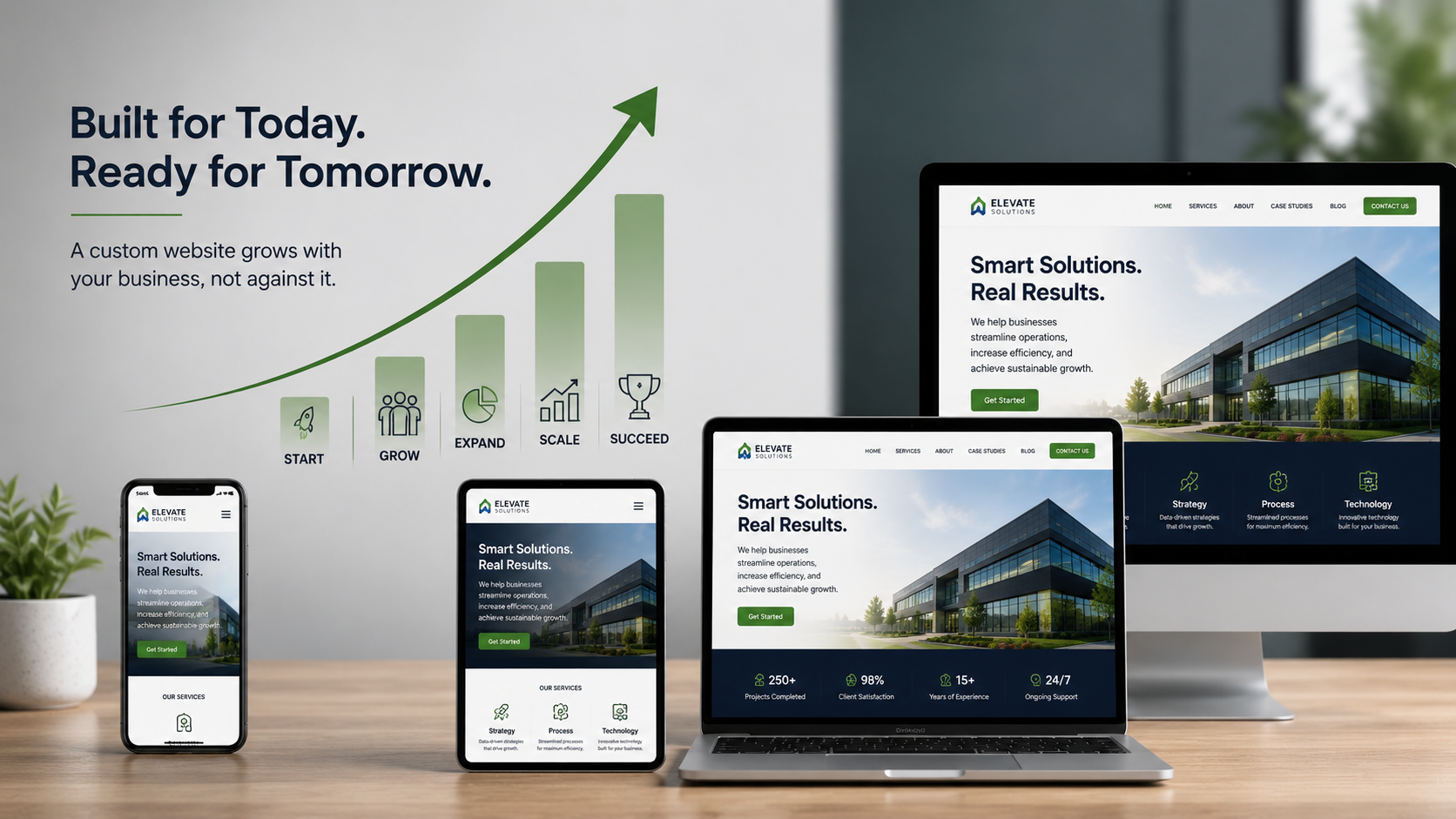
If you're already investing in Search Engine Optimization (SEO), paid advertising, or other digital marketing strategies, your website should be built to maximize those efforts rather than limit them.
Likewise, if your company is growing, adding new services, expanding into additional markets, or refreshing its brand, a custom website provides the flexibility to make those changes without rebuilding your entire online presence.
Many businesses don't start with a custom website because they need one immediately. They upgrade because they've reached the point where their template website can no longer keep up with their business.
Should You Choose a Custom Website or a Template Website?
There isn't a one-size-fits-all answer. The right choice depends on your business goals, budget, and where you see your company in the next few years. While template websites can work well for certain situations, businesses focused on long-term growth often find that investing in a custom website provides greater flexibility, stronger branding, and a better return over time.
The key is choosing a solution that supports where your business is headed—not just where it is today.
A Template Website May Be Right for You If...
A template website can be a practical solution if your website has relatively simple requirements and you're looking to get online quickly.
- You're launching a brand-new business with a limited budget.
- You only need a basic informational website with a few pages.
- You don't require custom functionality or advanced features.
- You aren't planning to invest heavily in Search Engine Optimization (SEO) right away.
- You expect your website needs to remain relatively simple over the next few years.
- You understand that you may eventually outgrow the platform as your business expands.
A Custom Website Is Often the Better Investment If...
If your website is an important part of your marketing strategy, investing in a custom website can provide significantly more value over the long term.
- You want a website that's built specifically around your brand and business goals.
- You rely on your website to generate leads, phone calls, or online inquiries.
- You plan to invest in Search Engine Optimization (SEO), Google Ads Management, or other digital marketing strategies.
- You want complete flexibility to add new pages, features, or integrations as your business grows.
- You want your website to stand out instead of looking similar to other businesses using the same template.
- You view your website as a long-term business asset rather than a short-term expense.
- You want a website that's designed to support future growth without requiring a complete rebuild.
Is a Custom Website Worth the Investment?
When comparing prices, it's easy to focus on the upfront cost of building a website. However, the true value of a website isn't determined by what it costs today—it's determined by how well it helps your business attract customers, generate leads, and support long-term growth.
A template website may cost less initially, but if it limits your ability to rank in search engines, convert visitors into customers, or expand your online presence, those limitations can become far more expensive over time.
A custom website is designed with your business objectives in mind. Rather than simply creating an attractive online presence, it becomes a marketing tool that works alongside your Search Engine Optimization (SEO), advertising campaigns, and overall digital marketing strategy to help your business grow.
For businesses that depend on their website to generate inquiries, appointments, or sales, investing in a custom website often provides greater long-term value than choosing the lowest-cost option.
If you're still comparing pricing, our guide on Custom Website Design Cost in South Florida explains what influences website pricing and what businesses should consider before making an investment.
A Custom Website Can Deliver Long-Term Value By...
A professionally designed custom website is built to continue serving your business for years as your needs evolve.
- Supporting long-term Search Engine Optimization (SEO) efforts.
- Creating a stronger and more recognizable brand identity.
- Improving user experience and helping visitors find information more easily.
- Providing the flexibility to add new pages, services, and functionality over time.
- Helping convert more website visitors into qualified leads.
- Reducing the likelihood of needing a complete website rebuild as your business grows.
Think Beyond Today's Budget
Choosing a website shouldn't be based solely on the lowest price. Instead, consider how your website will support your business over the next five to ten years.
Ask yourself:
- Will this website still meet my business needs as I grow?
- Can it support future Website Design improvements and new functionality?
- Will it work well with my Search Engine Optimization (SEO) strategy?
- Can I easily expand into new services or locations?
- Does it represent my brand professionally and build trust with potential customers?
Frequently Asked Questions About Custom and Template Websites
Choosing the right type of website is an important business decision, and it's normal to have questions before making an investment. Below are answers to some of the most common questions business owners ask when comparing custom websites and template websites.
Choosing the Right Website for Your Business
Whether you choose a custom website or a template website ultimately depends on your business goals, budget, and long-term vision. For some businesses, a template website can provide a fast and affordable way to establish an online presence. For others, investing in a custom website creates the flexibility, branding, and scalability needed to support continued growth.
The most important thing to remember is that your website should be more than just an online brochure. It should represent your brand professionally, provide an excellent user experience, and help turn visitors into customers. As your business grows, your website should grow with it—not hold you back.
If you're planning a new website, considering a redesign, or comparing your options, taking the time to understand the differences between custom and template websites can help you make a more informed investment.
At The Business Theory, we specialize in Custom Website Design that's built around your business—not forced into a pre-made template. Every website we create is strategically designed to support your brand, improve user experience, and provide a strong foundation for long-term growth. If you're ready to build a website that's tailored to your business goals, we'd love to help.