Beginner's Guide to SEO for Small Businesses (Everything You Need to Know)
Share this article
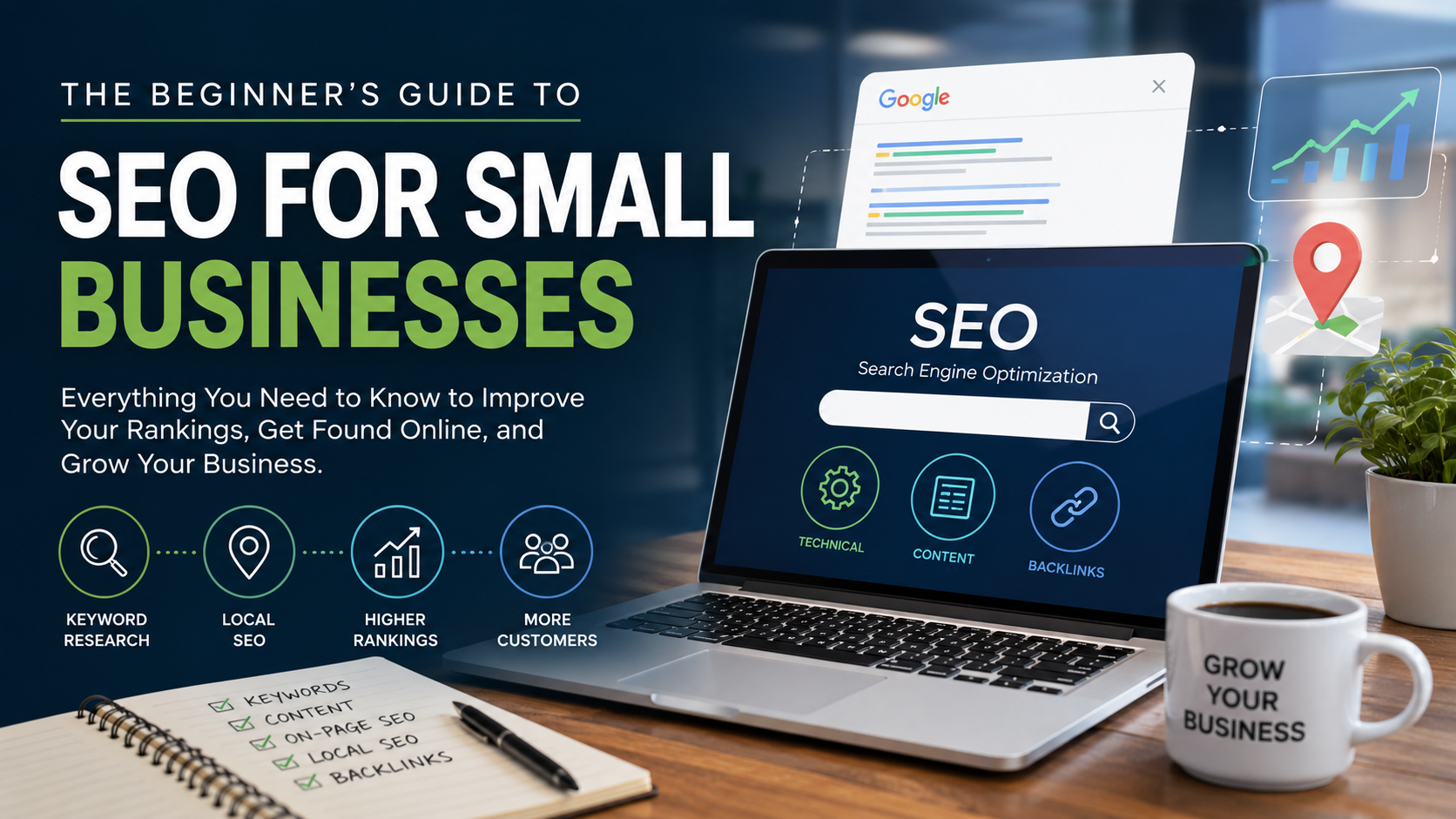
If you've ever wondered why some businesses consistently appear at the top of Google while others seem impossible to find, you're not alone. Search Engine Optimization, commonly known as SEO, is one of the most effective ways to increase your website's visibility and attract potential customers without relying solely on paid advertising.
For many small business owners, SEO can seem overwhelming. Terms like keywords, backlinks, technical SEO, and search rankings often sound complicated, causing many businesses to ignore SEO altogether. The good news is that understanding the fundamentals doesn't have to be difficult. Once you understand how search engines work and what they look for, you'll have a much clearer picture of how SEO helps businesses grow online.
In this beginner's guide, we'll explain what SEO is, why it matters for small businesses, and the key strategies that can help improve your website's visibility in search results. Whether you're launching a new website or looking to generate more organic traffic, this guide will give you a solid foundation for understanding how SEO works.
What Is Search Engine Optimization (SEO)?
Search Engine Optimization (SEO) is the process of improving your website so it has a better opportunity to appear in search engine results when people are looking for the products or services you offer.
For example, if someone searches for "website designer in South Florida" or "SEO company near me," search engines like Google evaluate thousands of websites to determine which ones are the most relevant, trustworthy, and helpful for that search.
The goal of SEO isn't simply to increase website traffic—it's to attract the right visitors. Effective SEO helps connect your business with people who are already searching for the services you provide, making it one of the most valuable long-term digital marketing strategies available to small businesses.
Unlike paid advertising, where visibility ends when your budget runs out, SEO focuses on building long-term organic visibility. While it takes time and consistent effort, a well-executed SEO strategy can continue generating traffic and leads for months or even years.
| SEO | Paid Advertising |
|---|---|
| Builds long-term organic visibility | Provides immediate visibility while campaigns are running |
| Traffic isn't charged per click | You pay each time someone clicks your ad |
| Takes time to produce results | Results can begin immediately |
| Builds long-term website authority | Traffic stops when the advertising budget ends |
| Often provides long-term return on investment | Best suited for immediate lead generation and promotions |
Many successful businesses use both SEO and paid advertising together. Paid advertising can help generate immediate traffic, while Search Engine Optimization (SEO) focuses on building sustainable, long-term visibility that continues supporting your business over time.
How Does Google Decide Which Websites to Rank?
Every time someone searches on Google, the search engine scans billions of web pages to find the ones that best answer the user's question. Google's goal is simple: provide the most helpful, relevant, and trustworthy results for every search.
To determine which websites deserve to appear at the top of the search results, Google evaluates hundreds of ranking factors. While the exact algorithm isn't public and changes frequently, the overall goal remains the same—reward websites that provide a great experience and valuable information for users.
Rather than asking, "How do I trick Google into ranking my website?" the better question is, "How can I create the best possible experience for my customers?" Businesses that consistently answer customer questions, maintain high-quality websites, and provide helpful content are much more likely to earn visibility over time.
| What Google Looks For | Why It Matters |
|---|---|
| Helpful, high-quality content | Answers the questions people are searching for. |
| Relevant keywords | Helps Google understand what each page is about. |
| Mobile-friendly design | Creates a better experience for visitors on all devices. |
| Fast website performance | Improves user experience and keeps visitors engaged. |
| Secure website (HTTPS) | Helps protect visitors and builds trust. |
| Easy navigation | Makes it simple for users and search engines to find information. |
| High-quality backlinks | Signals that other websites trust your content. |
| Positive user experience | Encourages visitors to stay longer and interact with your website. |
No single factor guarantees a top ranking. Instead, Google looks at the overall quality of your website and how well it serves the people searching for your products or services. That's why successful Search Engine Optimization (SEO) focuses on improving every aspect of your website rather than trying to optimize just one element.
Why SEO Matters for Small Businesses
For many small businesses, every new customer matters. Unlike large companies with massive advertising budgets, small businesses often need marketing strategies that continue generating results over time. That's one of the biggest reasons SEO has become such a valuable investment.
When someone searches for a product or service on Google, they're often actively looking for a solution. Appearing in those search results gives your business the opportunity to connect with potential customers at the exact moment they're ready to learn more, request a quote, or make a purchase.
Rather than interrupting people with advertisements, SEO helps your business become visible when customers are already searching for what you offer. This makes it one of the most effective long-term strategies for attracting qualified traffic and generating consistent leads.
While SEO requires time and ongoing effort, the long-term benefits often continue long after the work has been completed, making it a valuable investment for businesses focused on sustainable growth.
| Benefit of SEO | How It Helps Your Business |
|---|---|
| Increased Online Visibility | Helps more potential customers discover your business through search engines. |
| Qualified Website Traffic | Attracts people actively searching for your products or services. |
| Greater Brand Credibility | Businesses appearing higher in search results are often viewed as more trustworthy. |
| Long-Term Marketing Value | SEO can continue generating traffic long after content is published. |
| Better Return on Investment | Organic traffic doesn't require paying for every click like paid advertising. |
| Supports Business Growth | Creates more opportunities to generate leads and attract new customers. |
SEO isn't about trying to "beat" Google's algorithm. It's about creating a website that answers your customers' questions, provides valuable information, and delivers a positive user experience. Businesses that consistently focus on helping their customers are often the ones that see the greatest long-term success with Search Engine Optimization (SEO).
The Three Main Types of SEO
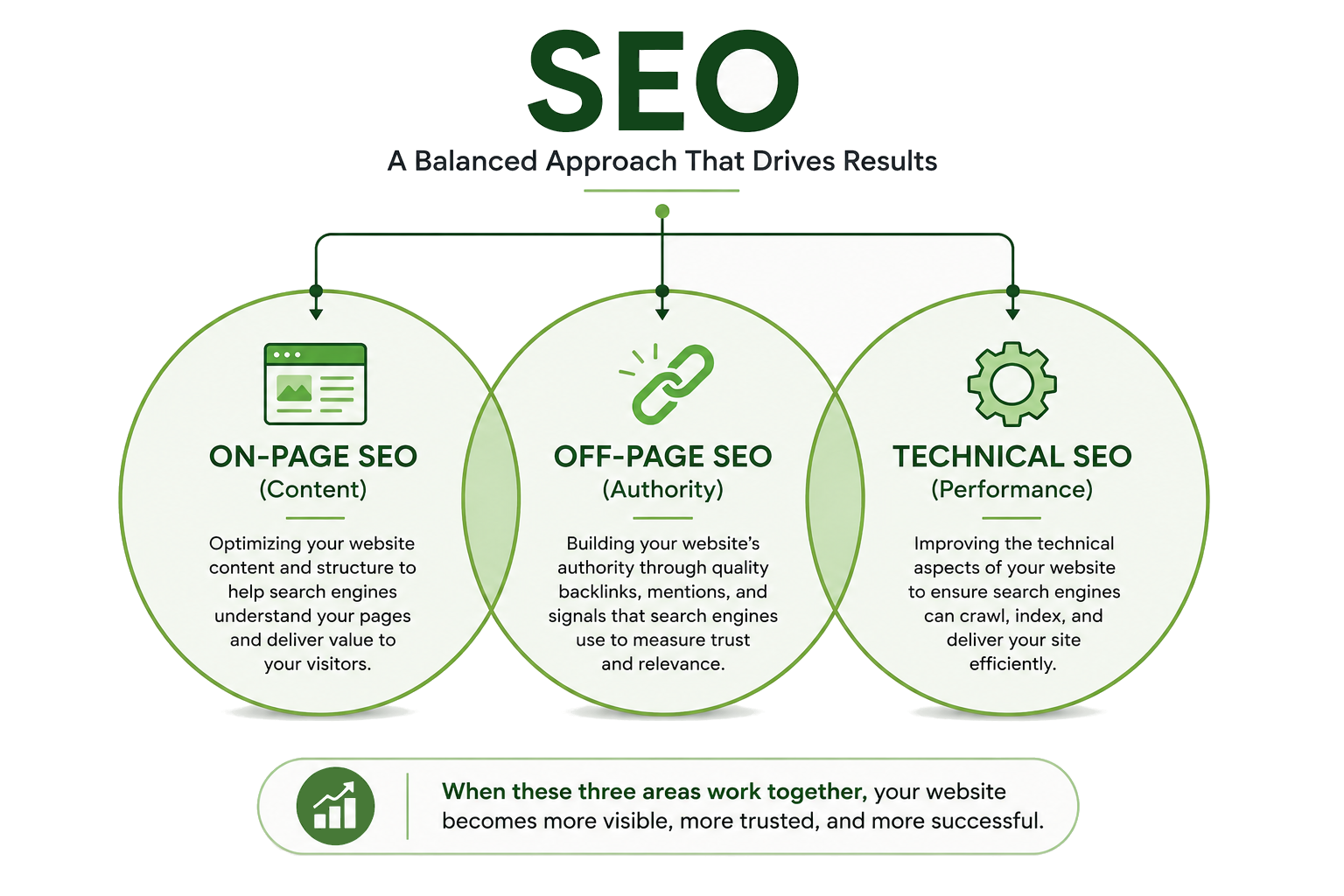
Search Engine Optimization isn't a single task—it's a combination of strategies that work together to improve your website's visibility in search results. While SEO can seem complex at first, most activities fall into three main categories: On-Page SEO, Off-Page SEO, and Technical SEO.
Each plays a different role in helping search engines understand, trust, and rank your website. The strongest SEO strategies focus on improving all three areas rather than relying on just one.
| Type of SEO | Focus | Examples |
|---|---|---|
| On-Page SEO | Optimizing the content on your website. | Keywords, page titles, headings, content, internal links, image alt text. |
| Off-Page SEO | Building your website's authority and reputation online. | Backlinks, directory listings, citations, online reviews. |
| Technical SEO | Improving your website's technical performance. | Website speed, mobile responsiveness, XML sitemaps, indexing, SSL certificates. |
On-Page SEO
On-page SEO focuses on everything that appears directly on your website. This includes the words you write, the way your pages are organized, your headings, images, internal links, and the information search engines use to understand each page.
The goal of on-page SEO is to make it easy for both visitors and search engines to understand what each page is about. Well-written content, descriptive page titles, optimized images, and clear page structures all contribute to a better user experience while helping search engines properly index your website.
Because every page should focus on a specific topic, organizing your website with dedicated service pages and a logical structure can significantly improve your SEO strategy. If you're unsure how many pages your website should include, our guide on How Many Pages Should Your Business Website Have? explains how proper website structure can support both user experience and search engine visibility.
Off-Page SEO
Off-page SEO refers to activities that happen outside of your website but still influence your search visibility.
One of the most important off-page ranking factors is backlinks—links from other reputable websites pointing to your own. Search engines often view these links as signals that your website provides valuable information and is trusted by others.
Other off-page SEO activities include directory listings, local citations, online reviews, and building your business's reputation across the web. Together, these efforts help strengthen your website's authority while increasing your visibility beyond your own website.
Although you don't have direct control over every backlink your website earns, consistently publishing helpful content and maintaining a professional online presence can encourage other websites to reference and recommend your business over time.
Technical SEO
Technical SEO focuses on how well your website functions behind the scenes.
Even the best content may struggle to perform if your website loads slowly, isn't mobile-friendly, or makes it difficult for search engines to access and understand your pages.
Technical SEO includes elements such as website speed, secure connections (HTTPS), XML sitemaps, mobile responsiveness, structured heading hierarchy, and proper indexing. These improvements help create a better experience for visitors while making it easier for search engines to crawl and evaluate your website.
If your website is outdated, difficult to navigate, or doesn't perform well on mobile devices, it may be time to make improvements before investing heavily in SEO. Our guide on 10 Signs It's Time to Redesign Your Business Website explains how an outdated website can impact both user experience and search visibility.
The most successful SEO strategies combine all three types of SEO. Creating valuable content, building your website's authority, and maintaining a technically sound website all work together to improve your visibility over time.
A strong SEO strategy also begins with a solid website foundation. If you're planning a new website or considering a redesign, our Custom Website Design services are built with both user experience and long-term SEO success in mind.
Keyword Research: Understanding What Your Customers Are Searching For
Every successful SEO strategy begins with understanding what your potential customers are actually searching for online. This process is known as keyword research, and it helps businesses create content that answers the questions people are already asking.
A keyword can be a single word, but more often it's a phrase someone types into a search engine. For example, instead of searching for simply "website," a business owner might search for "website designer in South Florida" or "SEO services for small businesses."
The goal isn't to guess what people might search for. It's to understand how your customers describe their problems, the services they need, and the questions they want answered. By creating pages that align with those searches, your website becomes more relevant to both visitors and search engines.
Good keyword research also helps determine what pages your website should include. Rather than trying to rank one page for dozens of different topics, it's often more effective to create dedicated pages that focus on individual services, locations, or frequently asked questions.
| Broad Keyword | More Specific Keyword |
|---|---|
| Website Design | Custom Website Design South Florida |
| SEO | SEO Services for Small Businesses |
| Pest Control | Rodent Control Weston |
| Dentist | Cosmetic Dentist Fort Lauderdale |
| Electrician | Emergency Electrician Pembroke Pines |
| Roofing | Roof Repair Miami |
Notice how the more specific keywords describe exactly what the customer is looking for. These are often called long-tail keywords, and while they may receive fewer searches than broad terms, they frequently attract visitors who are closer to making a purchasing decision.
Rather than trying to rank for every possible keyword, successful SEO focuses on identifying the searches that are most relevant to your business and creating high-quality content that answers those specific needs.
If you're planning your website, choosing the right keywords also influences how your pages are organized. Our guide on How Many Pages Should Your Business Website Have? explains why creating dedicated pages around specific services and topics can strengthen both your website structure and your SEO strategy.
Local SEO: Helping Nearby Customers Find Your Business
For most small businesses, your customers aren't searching from across the country—they're searching in your local community. Whether someone types "website designer near me," "pest control in Weston," or "accountant in Fort Lauderdale," Google works to display businesses that are both relevant and located near the person searching.
This is where Local SEO becomes incredibly important.
Local SEO focuses on improving your business's visibility in location-based searches. Rather than trying to compete with every business nationwide, Local SEO helps connect your business with potential customers in the cities and communities you actually serve.
A successful Local SEO strategy combines several important factors, including your website, your Google Business Profile, customer reviews, business citations, and location-specific content.
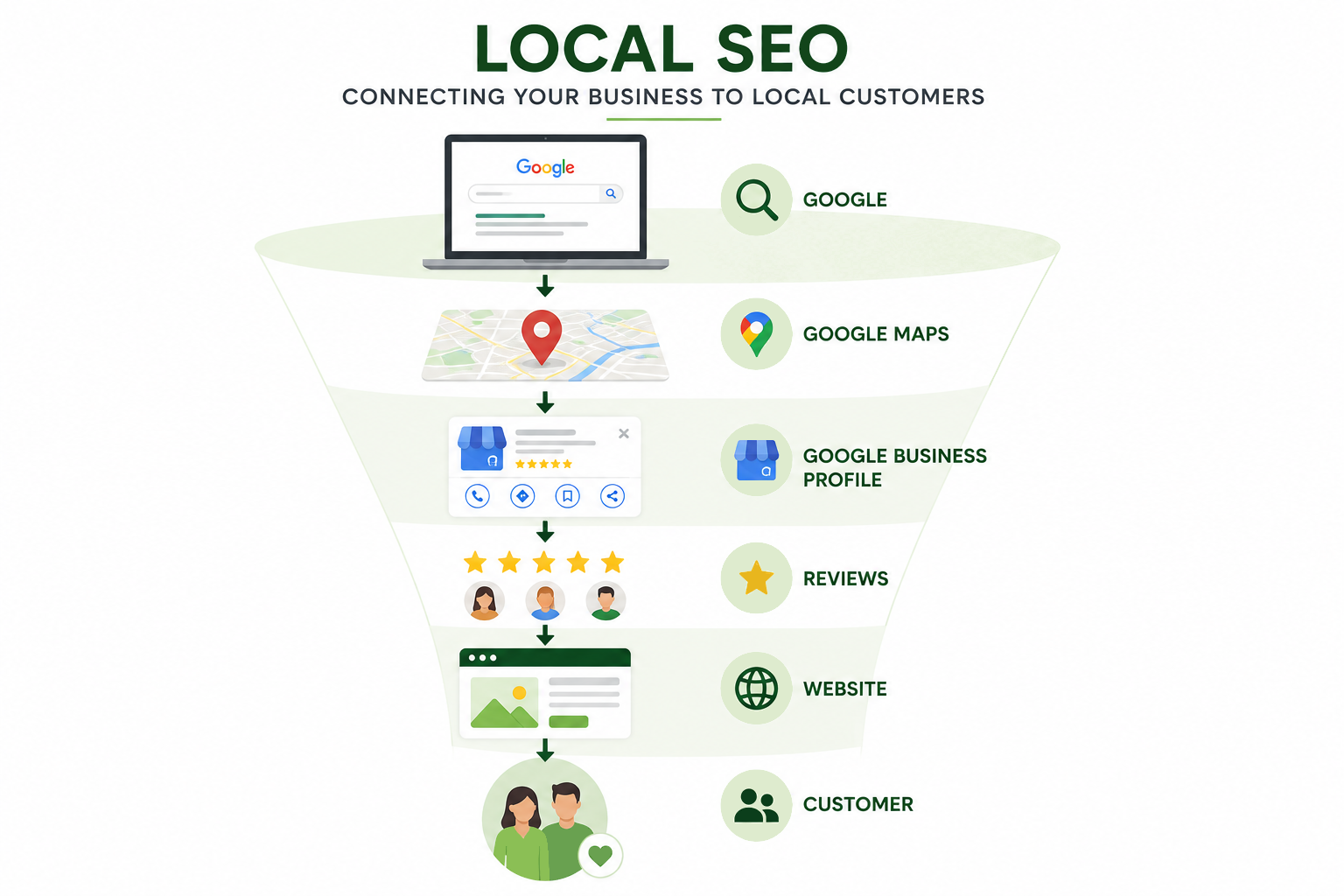
| Local SEO Factor | Why It Matters |
|---|---|
| Google Business Profile | Helps your business appear in Google Maps and local search results. |
| Location Pages | Targets the cities and communities your business serves. |
| Customer Reviews | Builds trust and strengthens your local online reputation. |
| Consistent Business Information | Ensures your name, address, and phone number are consistent across the web. |
| Local Keywords | Helps search engines understand where your services are offered. |
| Quality Website Content | Answers local customer questions and supports search visibility. |
One of the biggest mistakes small businesses make is relying solely on their Google Business Profile to attract customers. While your profile plays an important role in Local SEO, it works best when it's supported by a professional website that provides detailed information about your services, answers customer questions, and demonstrates your expertise.
Think of your Google Business Profile as the tool that helps customers discover your business, while your website helps convince them to choose you. Together, they create a stronger online presence by making it easy for potential customers to learn about your business, build trust in your brand, and take the next step.
Businesses that serve multiple cities or offer a variety of services can further strengthen their Local SEO strategy by creating dedicated pages for each service and service area. This not only provides a better experience for visitors but also gives search engines a clearer understanding of the markets and services your business is targeting.
How Long Does SEO Take to Work?
One of the most common questions business owners ask is, "How long does SEO take?" While every website is different, SEO should be viewed as a long-term investment rather than a quick fix.
Unlike paid advertising, where your business can begin receiving traffic as soon as a campaign launches, SEO takes time to build momentum. Search engines need time to discover new content, evaluate changes to your website, and determine how your pages compare to competitors.
For most small businesses, it's common to begin seeing movement within three to six months, although this timeline varies depending on several factors, including your industry, competition, website history, and the amount of ongoing SEO work being performed.
Businesses operating in highly competitive industries may take longer to achieve significant improvements, while businesses targeting less competitive markets may begin seeing results sooner.
| Time Frame | What You Can Typically Expect |
|---|---|
| Month 1 | Website audit, keyword research, technical improvements, and on-page optimization begin. |
| Months 2–3 | Search engines begin indexing updates, and early ranking improvements may start appearing. |
| Months 3–6 | Many businesses begin seeing noticeable improvements in rankings, organic traffic, and lead generation. |
| 6+ Months | Ongoing optimization continues building authority, increasing visibility, and supporting long-term business growth. |
SEO is an ongoing process, not a one-time project. Search engines continuously update their algorithms, competitors continue improving their websites, and customer search behavior changes over time. Businesses that consistently invest in SEO are often the ones that continue growing their online visibility year after year.
If you're looking for immediate traffic while your SEO campaign builds momentum, many businesses choose to combine Google Ads Management with SEO. Paid advertising can help generate leads right away, while SEO focuses on building sustainable, long-term organic visibility.
Common SEO Mistakes Small Businesses Make
Many small businesses invest time and money into their websites but unknowingly make SEO mistakes that limit their online visibility. The good news is that most of these issues can be identified and corrected with the right strategy.
SEO isn't about finding shortcuts or trying to outsmart search engines. Instead, it's about consistently creating a better experience for your customers while making it easier for search engines to understand your website.
Below are some of the most common SEO mistakes we see small businesses make.
| Common Mistake | Why It's a Problem | Better Approach |
|---|---|---|
| Targeting too many keywords on one page | Makes it difficult for search engines to understand the page's main topic. | Focus each page on one primary topic or service. |
| Publishing thin or low-quality content | Provides little value to visitors and search engines. | Create helpful, detailed content that answers customer questions. |
| Ignoring mobile users | Creates a poor experience for a large percentage of visitors. | Ensure your website is fully responsive on all devices. |
| Forgetting to optimize page titles and meta descriptions | Reduces visibility and click-through rates in search results. | Write unique titles and descriptions for every important page. |
| Neglecting image optimization | Large images can slow down your website and missing alt text reduces accessibility. | Compress images and include descriptive alt text. |
| Expecting immediate results | SEO requires time and consistent effort. | Focus on long-term improvements instead of quick wins. |
| Treating SEO as a one-time project | Search engines and competitors constantly evolve. | Continue optimizing your website on an ongoing basis. |
One of the biggest misconceptions about SEO is that it's something you complete once and never revisit. In reality, successful SEO requires continuous monitoring, content improvements, technical updates, and adapting to changes in search engine algorithms.
Businesses that treat SEO as an ongoing investment are often the ones that continue building visibility, attracting qualified traffic, and generating consistent leads over the long term.
Can I Do SEO Myself?
The short answer is yes.
Many business owners successfully learn the basics of SEO and make meaningful improvements to their websites. Tasks such as writing helpful content, updating page titles, optimizing images, and improving website structure can often be done without hiring an SEO agency.
However, as your business grows, SEO becomes more than simply adding keywords to a page. Successful SEO requires ongoing keyword research, technical optimization, content strategy, backlink development, performance monitoring, and adapting to changes in search engine algorithms.
For many small business owners, the biggest challenge isn't understanding SEO—it's finding the time to consistently implement it while also running a business.
| Doing SEO Yourself | Hiring an SEO Professional |
|---|---|
| Lower upfront investment | Saves time and allows you to focus on your business |
| Great for learning the basics | Access to experience and industry best practices |
| Requires ongoing research and education | Ongoing strategy, monitoring, and optimization |
| Can be time-consuming | Frees up time to serve customers and grow your business |
| Results depend on your knowledge and consistency | Benefits from a structured, long-term SEO strategy |
Whether you choose to manage SEO yourself or work with a professional, consistency is what matters most. Search engine optimization isn't something that's completed once and forgotten—it's an ongoing process of improving your website, publishing valuable content, and adapting as your business and search engines evolve.
For many business owners, partnering with an experienced SEO Company in South Florida allows them to spend less time learning SEO and more time focusing on serving their customers while knowing their website is continuously being optimized for long-term growth.
Frequently Asked Questions About SEO for Small Businesses
If you're just getting started with SEO, it's completely normal to have questions. Below are answers to some of the most common questions we receive from small business owners looking to improve their online visibility.
Build a Stronger Online Presence with SEO
Search Engine Optimization isn't about finding shortcuts or trying to outsmart Google's algorithm. It's about creating a website that's helpful, trustworthy, and easy for both your customers and search engines to understand.
Whether you're just getting started with SEO or looking to improve an existing strategy, the most important thing to remember is that SEO is a long-term investment. Every improvement you make—from publishing helpful content and optimizing your website to improving the user experience and earning quality backlinks—helps strengthen your online presence over time.
The businesses that achieve the greatest success with SEO aren't necessarily the ones with the largest budgets. They're the ones that consistently invest in creating valuable content, maintaining a healthy website, and providing an excellent experience for their customers.
At The Business Theory, we help service-based businesses build SEO strategies that are designed for long-term growth. From technical optimization and keyword research to content development and Local SEO, our local SEO services in South Florida are focused on helping your business attract more qualified traffic, generate more leads, and build a stronger online presence.
If you're ready to start growing your business through SEO, Contact The Business Theory to schedule a consultation. We'd be happy to discuss your goals and create a strategy that's tailored to your business.
About The Business Theory
The Business Theory is an award-winning website design and digital marketing agency helping service-based businesses build stronger online presences and attract more qualified customers. We specialize in custom website design, Search Engine Optimization (SEO), directory listings, Google Ads, Meta Ads, social media posting, content marketing, and link building, with strategies tailored to each business rather than a one-size-fits-all approach. Whether you need a new website, stronger search visibility, or a more coordinated digital marketing strategy, explore our services or schedule a free consultation to learn how The Business Theory can support your business goals.