How Many Pages Should Your Business Website Have? (And Why It Matters for SEO)
Share this article
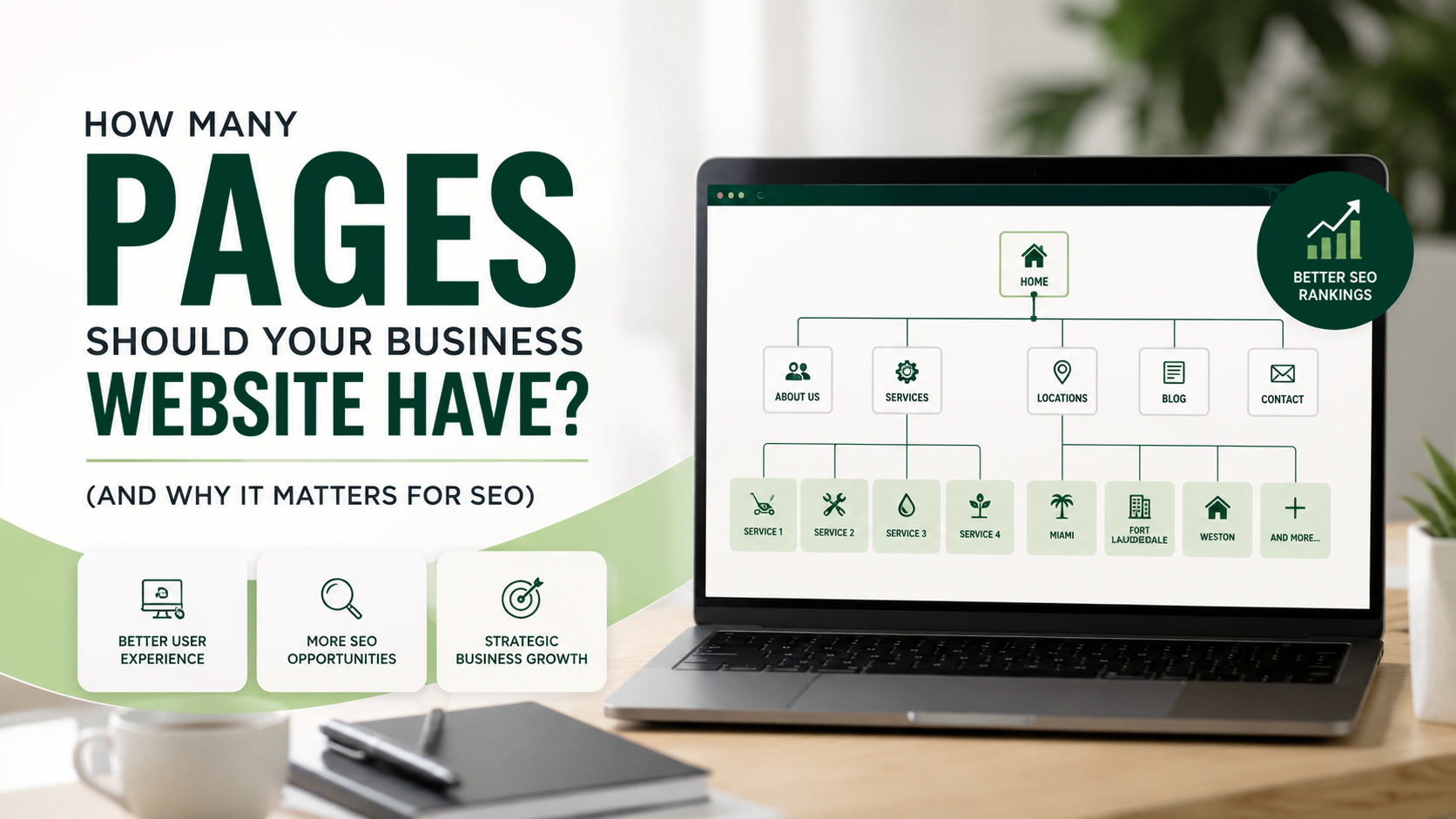
One of the most common questions business owners ask when planning a new website is, "How many pages do I actually need?" While it might seem like a simple question, the answer depends on your business, your services, and your long-term marketing goals.
Some businesses only need a handful of pages to establish a professional online presence, while others benefit from creating dedicated pages for each service, location, or specialty they offer. The right website structure not only helps visitors find the information they're looking for—it also plays an important role in how search engines understand and rank your website.
Rather than asking how many pages your website should have, a better question is: How many pages does your business need to effectively serve your customers and support your SEO strategy?
In this guide, we'll explain how to determine the right number of pages for your business website, which pages every business should consider, and how a well-planned website structure can improve both user experience and search engine visibility.
There Isn't a One-Size-Fits-All Answer
One of the biggest misconceptions about website design is that every business needs the same number of pages. In reality, the ideal website structure depends on your business, the services you offer, your target audience, and your long-term marketing goals.
For example, a local consultant who offers one primary service may only need a handful of well-organized pages. On the other hand, a contractor, medical practice, law firm, or home service business that offers multiple services may benefit from creating dedicated pages for each service they provide.
The goal isn't simply to have more pages—it's to have the right pages. Every page should serve a purpose by helping visitors find information quickly, answering their questions, or supporting your visibility in search engines.
As your business grows, your website should grow with it. Adding new services, expanding into additional cities, or creating educational resources can all increase the number of pages your website needs over time.
A well-planned Website Design isn't measured by the number of pages it contains. It's measured by how effectively those pages support your customers and your business goals.
The Essential Pages Every Business Website Should Have
While every business is unique, there are several pages that almost every professional website should include. These pages help visitors understand who you are, what you offer, and how to contact you, while also providing search engines with a clear understanding of your business.
The table below outlines the core pages that form the foundation of most business websites.
| Page | Purpose | Why It Matters |
|---|---|---|
| Home | Introduces your business and directs visitors to important sections of your website. | Creates a strong first impression and helps visitors quickly understand what you do. |
| About Us | Shares your company's story, experience, and values. | Builds credibility and helps customers connect with your business. |
| Services | Provides an overview of the services you offer. | Helps visitors understand your solutions while supporting SEO. |
| Individual Service Pages | Explains each service in greater detail. | Gives every service an opportunity to rank independently in Google search results. |
| Contact | Makes it easy for customers to reach you. | Encourages inquiries and supports lead generation. |
| Frequently Asked Questions | Answers common customer questions before they contact you. | Builds trust while reducing barriers to conversion. |
| Testimonials / Reviews | Highlights customer feedback and success stories. | Increases credibility and social proof. |
| Privacy Policy | Explains how visitor information is handled. | Supports compliance and builds trust with visitors. |
Most businesses can launch with these core pages and expand over time as their services and marketing efforts grow. However, businesses that want to improve their online visibility often benefit from adding dedicated pages for individual services, industries, or service areas rather than combining everything onto a single page.
A well-structured website makes it easier for visitors to find the information they're looking for while also helping search engines better understand the topics your website covers.
Why Dedicated Service Pages Matter for SEO
One of the biggest mistakes businesses make is trying to describe every service they offer on a single page. While this may seem simpler, it often makes it more difficult for both visitors and search engines to understand exactly what your business specializes in.
Creating a dedicated page for each service allows you to provide more detailed information while giving each service its own opportunity to appear in search results. Instead of competing with one generic "Services" page, each individual service page can target specific keywords that potential customers are actively searching for.
For example, imagine a landscaping company that offers:
- Landscape Design
- Lawn Maintenance
- Irrigation Installation
- Outdoor Lighting
Rather than listing all four services on a single page, each service should have its own dedicated page with unique content, images, and calls-to-action. This creates a better experience for visitors while helping search engines better understand each service your business provides.
| One Services Page | Dedicated Service Pages |
|---|---|
| All services listed on a single page | Each service has its own page |
| Limited information about each service | Detailed information for every service |
| Targets only broad keywords | Targets specific service-related keywords |
| Fewer opportunities to rank in search results | More opportunities to rank for multiple searches |
| Harder for customers to find detailed information | Easier for visitors to learn about each service |
A well-organized website doesn't just improve the customer experience—it also creates more opportunities for your business to appear in search results. By giving each service its own page, you're helping search engines better understand your website while making it easier for potential customers to find exactly what they're looking for.
If you're planning a Website Design project, organizing your website around dedicated service pages is one of the most effective ways to build a stronger foundation for future Search Engine Optimization (SEO) efforts.
Should Every Location Have Its Own Page?
If your business serves multiple cities or geographic areas, creating dedicated location pages can be an effective way to improve your local online visibility. Instead of relying on a single page to target every city you serve, individual location pages allow you to provide more relevant information for customers searching in specific areas.
For example, imagine a roofing company that serves several cities throughout South Florida. Rather than listing every city on one page, the company could create individual pages for each service area, allowing visitors to quickly find information that's relevant to their location.
These pages can also help search engines better understand where your business operates, making it easier for potential customers to discover your services when searching in their local area.
| One Location Page | Dedicated Location Pages |
|---|---|
| Lists every city on one page | Each city has its own dedicated page |
| Broad location targeting | Targets individual cities and communities |
| Limited local information | Allows city-specific content and messaging |
| Fewer opportunities to appear in local searches | More opportunities to rank for location-based searches |
| Less relevant to local visitors | Creates a more personalized experience for customers in each area |
Creating location pages doesn't mean simply copying the same content for every city. Each page should provide unique, valuable information that demonstrates your experience serving customers in that area. When planned correctly, location pages can improve both the customer experience and your long-term Search Engine Optimization (SEO) strategy.
It's important to remember that not every business needs dozens of location pages. The right approach depends on your service area, your business goals, and the markets you want to reach. A well-planned Website Design strategy focuses on creating meaningful pages that serve both your customers and your long-term growth objectives.
Quality Matters More Than the Number of Pages
While adding dedicated service and location pages can strengthen your website, simply increasing the number of pages isn't enough. Every page should provide valuable, relevant, and unique information that helps both your visitors and search engines better understand your business.
Creating dozens of thin or repetitive pages just to increase your page count rarely produces good results. Instead, each page should have a clear purpose, answer specific customer questions, and provide information that's genuinely useful to your audience.
A well-structured website focuses on quality over quantity. Whether your website has 10 pages or 100 pages, every page should contribute to your overall marketing strategy and help visitors move closer to becoming a customer.
Search engines reward websites that consistently publish helpful, well-organized content. A smaller website with high-quality pages will almost always outperform a larger website filled with duplicate or low-value content.
| Quality Website Structure | Poor Website Structure |
|---|---|
| Every page serves a clear purpose | Pages exist only to increase page count |
| Unique, helpful content | Thin or repetitive content |
| Organized around customer needs | Difficult for visitors to navigate |
| Supports long-term SEO growth | Offers little value to search enginess |
| Focuses on user experience | Focuses only on keywords |
Instead of asking, "How many pages should my website have?" ask, "What information do my customers need to make a confident decision?" When every page is created with that mindset, your website becomes more valuable to visitors while creating a stronger foundation for Search Engine Optimization (SEO) and long-term business growth.
How We Determine the Right Number of Pages for Your Business
Every business is different, which means there's no universal formula for determining the ideal number of website pages. At The Business Theory, we don't recommend a specific page count until we've taken the time to understand your business, your services, and your long-term goals.
Rather than focusing on creating the smallest website possible, we focus on building a website that's strategically organized to support your customers, your marketing efforts, and your future growth.
Several factors influence the number of pages we recommend, including the services you offer, the geographic areas you serve, your content strategy, and whether you're planning to invest in Search Engine Optimization (SEO).
| We Consider... | Why It Matters |
|---|---|
| Number of services | Each service may benefit from its own dedicated page. |
| Service areas | Businesses serving multiple cities may benefit from dedicated location pages. |
| Business goals | A lead generation website may require a different structure than an informational website. |
| Future growth | Your website should have room to expand as your business grows. |
| SEO strategy | A well-organized website creates more opportunities to target relevant keywords. |
| Customer experience | Visitors should be able to find information quickly and easily. |
| Industry | Different industries require different website structures based on customer expectations. |
By taking these factors into account, we create website structures that are designed around your business instead of forcing your business into a one-size-fits-all solution. The result is a website that's easier for visitors to navigate, easier for search engines to understand, and better positioned to support your business over the long term.
Whether your website ultimately includes 10 pages or 50 pages isn't the most important consideration. What matters is that every page serves a purpose and contributes to your overall business objectives.
If you're planning a Custom Website Design, taking the time to build the right website structure from the beginning can save time, improve the user experience, and provide a stronger foundation for future growth.
Frequently Asked Questions About Business Website Pages
Determining the right number of pages for your business website can feel overwhelming, especially if you're building a new website or planning a redesign. Below are answers to some of the most common questions business owners ask.
Build a Website That Supports Your Business Growth
The number of pages your website should have isn't determined by an industry standard or a one-size-fits-all formula. It's determined by your business, your customers, and the goals you want your website to achieve.
For some businesses, a simple website with a handful of pages may be enough to establish an online presence. For others, creating dedicated pages for individual services, service areas, and frequently asked questions can provide a better user experience while creating more opportunities to support Search Engine Optimization (SEO) and long-term business growth.
The most successful business websites aren't measured by how many pages they have—they're measured by how effectively those pages educate visitors, build trust, and encourage potential customers to take the next step.
At The Business Theory, we don't believe in recommending a specific page count without first understanding your business. Every Custom Website Design project begins by identifying your goals, evaluating your services, and creating a website structure that's designed to support your business today while leaving room for future growth.
If you're planning a new website or considering a redesign, we'd be happy to help you determine the right website structure for your business. Contact The Business Theory to schedule a consultation and let's create a website that's built to grow alongside your business.
About The Business Theory
The Business Theory is an award-winning website design and digital marketing agency helping service-based businesses build stronger online presences and attract more qualified customers. We specialize in custom website design, Search Engine Optimization (SEO), directory listings, Google Ads, Meta Ads, social media posting, content marketing, and link building, with strategies tailored to each business rather than a one-size-fits-all approach. Whether you need a new website, stronger search visibility, or a more coordinated digital marketing strategy, explore our services or schedule a free consultation to learn how The Business Theory can support your business goals.