Why Isn't My Website Ranking on Google? 12 Common Reasons
Share this article
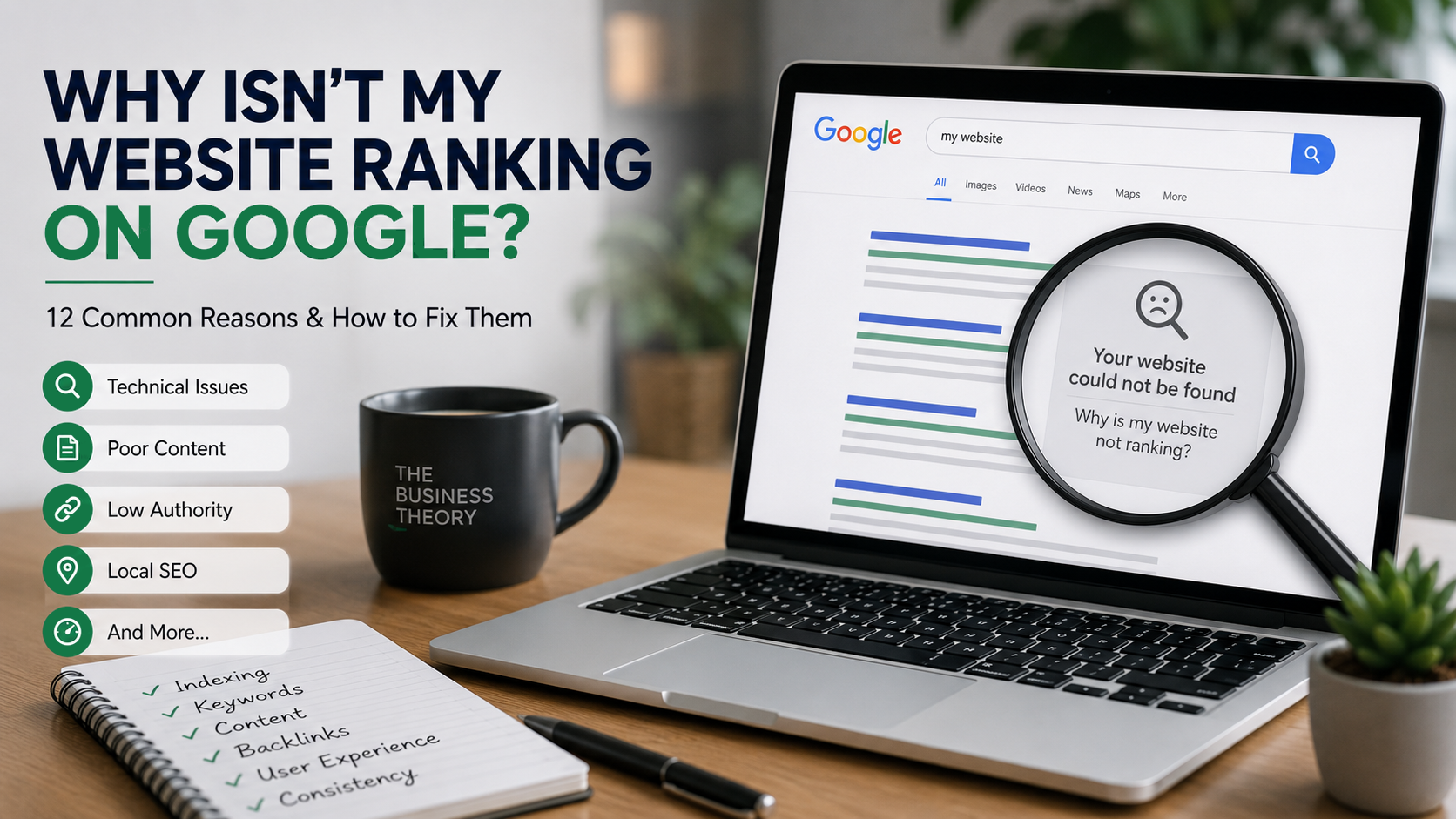
Launching a website is an exciting milestone, but many business owners are surprised when their new website doesn't immediately appear in Google search results. Others have had a website online for years yet still struggle to attract organic traffic or rank for the services they offer.
The truth is that simply having a website doesn't guarantee visibility in search engines. Google evaluates hundreds of factors when deciding which websites to display, including content quality, website structure, technical performance, authority, and user experience. If your website isn't ranking, there's usually a reason—and in many cases, multiple factors may be working against you.
The good news is that most ranking issues can be identified and improved with the right strategy. In this guide, we'll explore some of the most common reasons websites fail to rank on Google, explain why these issues matter, and discuss what you can do to improve your website's visibility over time.
How Does Google Decide Which Websites to Rank?
Every time someone searches on Google, the search engine's goal is to provide the most helpful and relevant results possible. Whether someone searches for "SEO company near me" or "website designer in South Florida," Google evaluates billions of web pages to determine which ones are most likely to answer that person's question.
While Google's algorithm considers hundreds of ranking factors, most of them fall into a few key categories. Search engines look for websites that provide valuable content, offer a positive user experience, demonstrate credibility, and clearly match what the person is searching for.
Rather than asking, "How can I get my website to rank?" it's often more helpful to ask, "How can I create the best possible resource for my potential customers?" Businesses that consistently answer customer questions, publish helpful content, and maintain a technically sound website are far more likely to improve their visibility over time.
| What Google Looks For | Why It Matters |
|---|---|
| Helpful, original content | Answers the user's search intent and provides value. |
| Relevant keywords | Helps Google understand what each page is about. |
| Fast website performance | Creates a better experience for visitors. |
| Mobile-friendly design | Ensures the website works well on all devices. |
| Website authority | Demonstrates trust through backlinks, reviews, and reputation. |
| Technical health | Makes it easier for search engines to crawl and index your website. |
| Positive user experience | Encourages visitors to stay, explore, and engage with your content. |
The important thing to remember is that Google doesn't rank websites simply because they're new, attractive, or filled with keywords. It ranks websites that provide the best overall experience for the people performing the search.
Once you understand what Google is trying to accomplish, it becomes much easier to identify why your own website may not be performing as expected.
The Most Common Reasons Your Website Isn't Ranking on Google
If your website isn't appearing where you'd like in Google search results, there's rarely one single issue to blame. In most cases, several factors work together to affect your visibility. Some problems are technical, while others relate to your content, website structure, competition, or overall SEO strategy.
The good news is that many of these issues can be identified and improved over time. Understanding what's preventing your website from ranking is the first step toward creating a stronger online presence and attracting more qualified visitors.
The sections below highlight some of the most common reasons websites struggle to rank on Google and explain what you can do to improve your chances of appearing in search results.
1. Your Website Hasn't Been Indexed by Google
One of the most common reasons a website doesn't appear in Google search results is because Google hasn't indexed it yet. Indexing is the process of adding your website's pages to Google's database so they can be considered for search results.
It's important to understand that launching a website doesn't automatically mean it will appear on Google. Search engines first need to discover your website, crawl its pages, and decide whether they're ready to be included in the search index.
If your website hasn't been indexed, it won't rank—regardless of how well it's designed or how much content you've created.
How to Fix It
The first step is verifying that your website has been submitted to Google Search Console. From there, you can submit your XML sitemap, request indexing for important pages, and monitor whether Google is successfully crawling your website.
If your website has already been indexed but still isn't ranking, it's likely that other SEO factors are affecting your visibility—which we'll cover throughout the rest of this guide.
2. You're Targeting the Wrong Keywords
Even if your website has been indexed by Google, it won't rank well if it's targeting keywords that don't match what your potential customers are actually searching for.
Many business owners create pages based on how they describe their services rather than the language their customers use. While the terminology may make perfect sense internally, it may not align with the phrases people are typing into Google.
For example, a landscaping company might create a page titled "Outdoor Environmental Solutions," while potential customers are searching for "landscape design" or "lawn maintenance." If the content doesn't closely match what people are searching for, Google may struggle to determine when that page should appear in search results.
Successful SEO begins with understanding search intent. Instead of guessing what customers might search for, keyword research helps identify the exact words and phrases people are already using to find businesses like yours.
How to Fix It
Start by researching the keywords your ideal customers are actually searching for. Focus on terms that accurately describe your services, answer common customer questions, and match the intent behind each search.
Rather than trying to optimize one page for dozens of unrelated keywords, create focused pages that each target a specific topic or service. This helps both visitors and search engines better understand what each page is about.
If you're new to keyword research, our Beginner's Guide to SEO for Small Businesses explains how keyword research works and why it's one of the most important parts of any successful SEO strategy.
3. Your Website Doesn't Have Enough Helpful Content
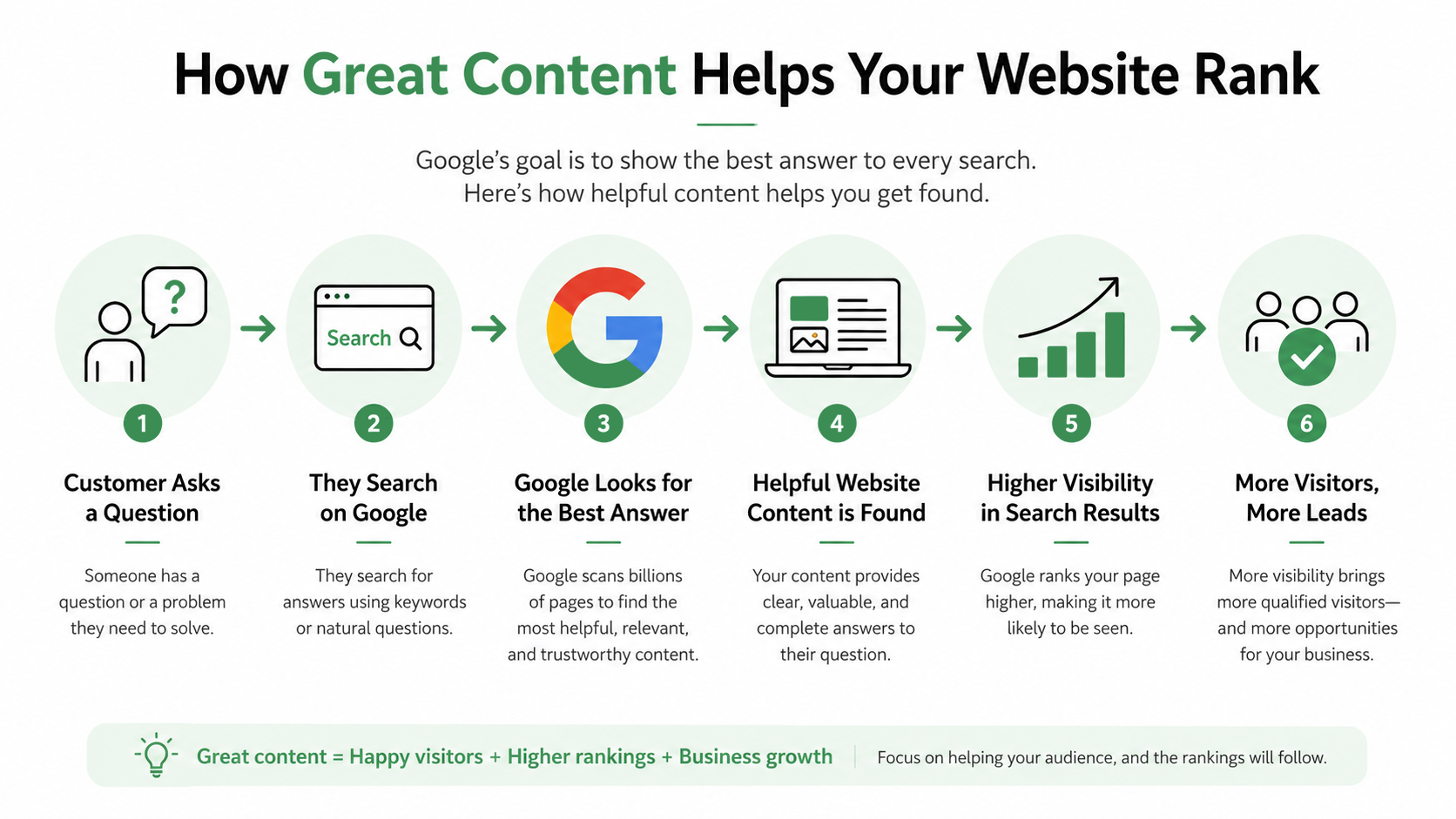
One of the biggest misconceptions about SEO is that simply adding keywords to a page will help it rank. While keywords are important, Google ultimately rewards websites that provide helpful, relevant, and valuable content for the people performing the search.
Think about it this way: if someone searches "How do I choose a website designer?" they're looking for answers—not just a page that repeats the phrase "website designer" over and over.
The more effectively your content answers a visitor's question, explains your services, and demonstrates your expertise, the more likely it is to satisfy both your audience and search engines.
This is why businesses that consistently publish educational articles, detailed service pages, and helpful resources often build stronger long-term visibility than businesses with only a few basic pages.
How to Fix It
Focus on creating content that genuinely helps your customers. Answer the questions they're asking. Explain your services clearly. Share your expertise.
The goal isn't to publish more content—it's to publish better content. Every page on your website should have a clear purpose and provide value to the people visiting it.
If you're just getting started, creating detailed service pages and educational blog articles is one of the most effective ways to strengthen your long-term Search Engine Optimization (SEO) strategy.
4. Your Website Has Technical SEO Problems
Even if your website has strong content and targets the right keywords, technical issues can still prevent it from ranking well on Google.
Technical SEO focuses on how easily search engines can access, understand, and evaluate your website. If Google encounters broken links, missing pages, crawl errors, poor heading structures, duplicate content, or other technical problems, it may struggle to properly index your pages or determine where they belong in search results.
Some technical issues are obvious, such as pages that return an error. Others work quietly behind the scenes and may go unnoticed for months. A website can look perfectly fine to visitors while still having technical problems that limit its search visibility.
Common technical SEO issues include:
- Broken internal links
- Missing or duplicate meta titles
- Duplicate H1 headings
- Pages blocked from search engines
- Missing XML sitemaps
- Incorrect redirects
- Duplicate content
- Crawl and indexing errors
- Missing image alt text
- Poor mobile usability
How to Fix It
Start with a complete technical SEO audit to identify problems that may be preventing search engines from properly crawling and indexing your website.
Google Search Console can help uncover indexing errors, broken pages, mobile usability issues, and other technical concerns. Additional SEO tools can provide deeper insight into duplicate content, missing metadata, page structure, redirects, and overall site health.
Once the issues have been identified, prioritize the problems that directly affect crawling and indexing first. After that, improve page titles, heading structures, internal links, image optimization, and other foundational elements that help search engines understand your content.
Technical improvements alone may not immediately move your website to the top of Google, but they create a healthier foundation for your broader Search Engine Optimization (SEO) strategy.
5. Your Website Doesn't Have Enough High-Quality Backlinks
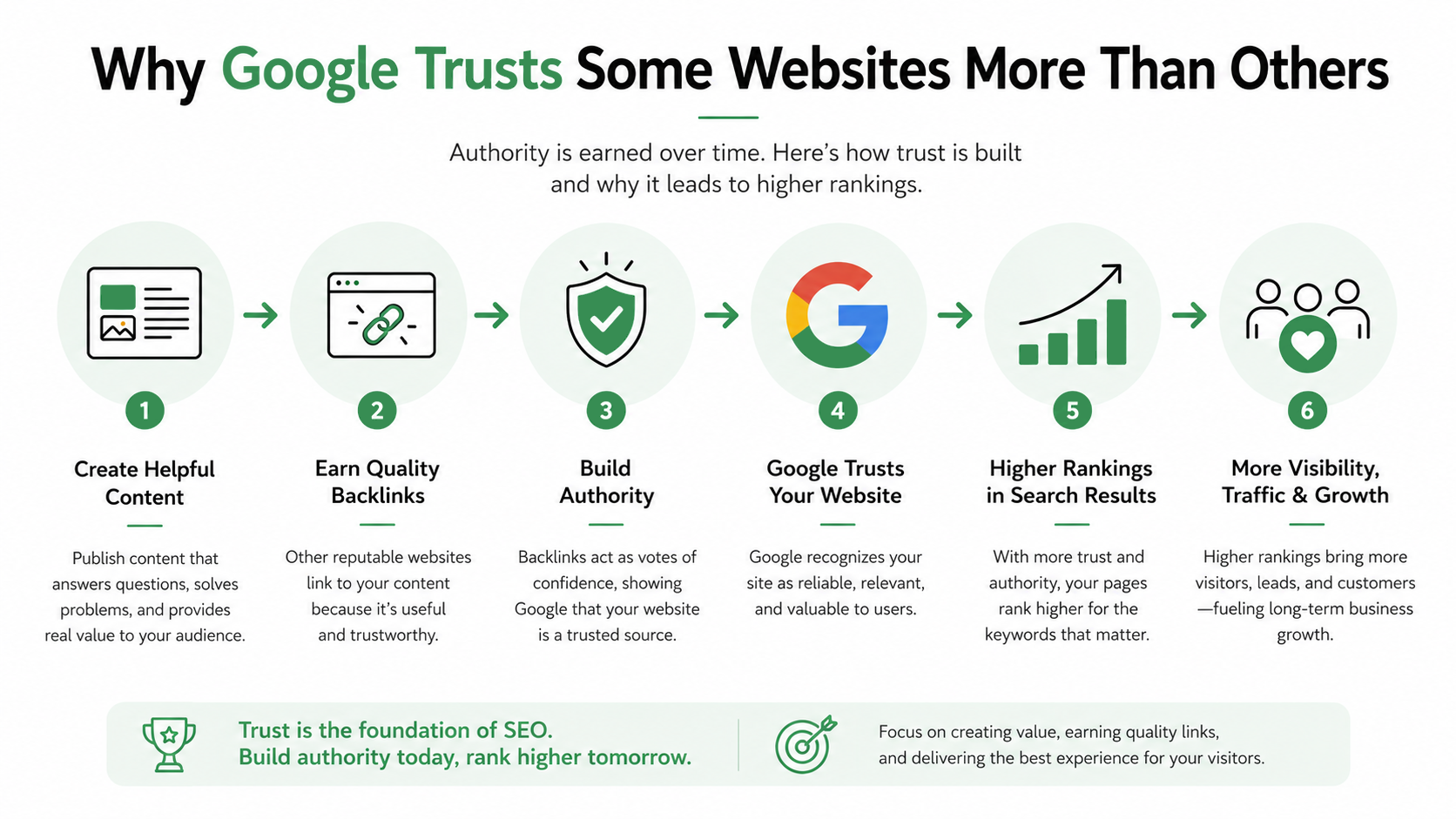
Creating a great website is only part of the equation. Search engines also look at how other websites interact with yours. One of the strongest signals of trust is something known as a backlink.
A backlink is simply a link from another website pointing to your own. You can think of it as a recommendation. When reputable websites reference your content, search engines often interpret those links as a sign that your website is trustworthy and provides valuable information.
Not all backlinks are created equal, however. A single link from a respected industry website is often far more valuable than dozens of low-quality links from unrelated or spammy websites.
For new businesses, it's completely normal to have very few backlinks. Building authority takes time, and quality is always more important than quantity.
How to Fix It
Rather than trying to collect as many backlinks as possible, focus on earning links naturally by creating helpful, informative content that other websites want to reference.
Other effective ways to build authority include:
- Publishing educational blog articles
- Maintaining accurate business directory listings
- Earning positive customer reviews
- Creating shareable resources and guides
- Building relationships with local organizations and industry partners
Over time, these efforts help strengthen your website's authority and improve its ability to compete in search results.
Successful Search Engine Optimization (SEO) isn't just about optimizing your own website—it's also about building your business's credibility across the web.
6. Your Website Is Too Slow
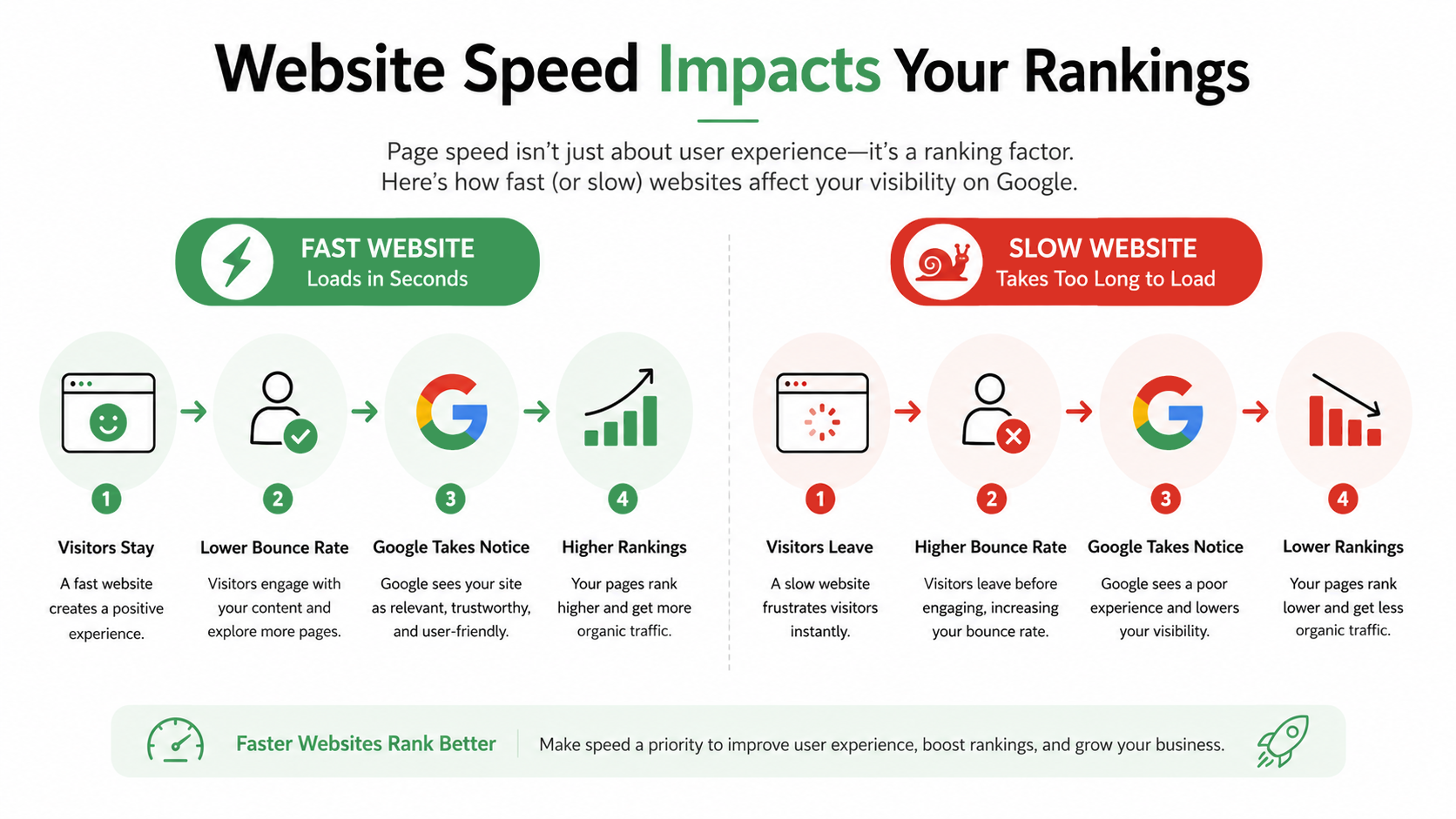
Website speed plays a much bigger role in SEO than many business owners realize. While Google doesn't expect every website to load instantly, visitors expect fast, responsive websites. If your pages take too long to load, many people will leave before they even have a chance to learn about your business.
Search engines pay attention to this behavior. A slow website can create a poor user experience, increase bounce rates, and make it more difficult for visitors to engage with your content. Over time, these signals can affect your website's ability to compete in search results.
Website speed can be influenced by many factors, including oversized images, unnecessary code, outdated software, excessive plugins, poor hosting, and unoptimized website design.
How to Fix It
Improving website speed starts with identifying what's slowing your website down.
Some of the most effective improvements include:
- Compressing and properly sizing images.
- Removing unnecessary plugins and scripts.
- Using fast, reliable website hosting.
- Optimizing website code.
- Enabling browser caching and content delivery networks (CDNs).
- Choosing a platform that's built for performance from the ground up.
Remember, website speed isn't just about SEO—it also affects how visitors perceive your business. A fast website creates a more professional first impression and encourages visitors to stay longer and explore your content.
If your website is several years old or built on outdated technology, investing in a Website Design that's optimized for performance can significantly improve both the user experience and your long-term SEO efforts.
7. Your Website Isn't Mobile-Friendly
Today, the majority of Google searches happen on mobile devices. If your website doesn't provide a positive experience on smartphones and tablets, you're not only frustrating potential customers—you may also be limiting your visibility in search results.
A mobile-friendly website automatically adjusts to different screen sizes, making it easy for visitors to read your content, navigate your pages, and contact your business without having to zoom or scroll horizontally.
Google uses mobile-first indexing, which means it primarily evaluates the mobile version of your website when determining how it should appear in search results. If your mobile experience is poor, it can negatively impact both your rankings and your ability to convert visitors into customers.
How to Fix It
Review your website on multiple devices to ensure it provides a consistent experience across desktops, tablets, and smartphones.
Pay close attention to:
- Text that's easy to read without zooming.
- Buttons that are easy to tap.
- Navigation that's simple to use.
- Fast page loading on mobile devices.
- Forms that are easy to complete.
A responsive website isn't just an SEO best practice—it's an expectation. If your website was built several years ago or isn't optimized for modern mobile devices, investing in a Custom Website Design can help improve both your search visibility and the overall experience for your visitors.
8. Your Content Doesn't Match Search Intent
One of the most overlooked aspects of SEO is something called search intent. Simply put, search intent is the reason behind someone's Google search. Understanding why a person is searching is just as important as understanding what they typed.
For example, someone searching "how to choose a website designer" is likely looking for educational information, while someone searching "website designer near me" is probably ready to contact a business. Even though both searches relate to website design, they have very different intentions.
Google's goal is to provide the page that best satisfies the user's intent. If your content doesn't answer the question or solve the problem behind the search, it's much less likely to rank well—even if you've included the right keywords.
How to Fix It
Before creating a page, ask yourself:
- What question is the visitor trying to answer?
- What problem are they trying to solve?
- Are they researching, comparing options, or ready to hire someone?
Once you understand the intent behind the search, create content that completely answers the user's question. The more helpful and relevant your page is, the more likely it is to satisfy both your visitors and Google's ranking algorithms.
Successful SEO isn't about creating content for search engines—it's about creating content for people.
If you're investing in Search Engine Optimization (SEO), understanding search intent should be one of the first steps in every content strategy.
9. Your Competitors Have Stronger SEO
Sometimes your website isn't ranking simply because your competitors have been investing in SEO for much longer.
Search engine rankings are relative. Google doesn't evaluate your website in isolation—it compares your content, authority, user experience, and overall quality against other websites competing for the same keywords.
If your competitors have been consistently publishing helpful content, earning quality backlinks, improving their websites, and optimizing their pages for years, they're likely to have built more authority in Google's eyes.
That doesn't mean you can't compete—it simply means you'll need a consistent strategy to gradually earn visibility over time.
How to Fix It
Start by studying the businesses that already rank well for the keywords you're targeting.
Ask yourself:
- What topics are they covering?
- How detailed are their service pages?
- Are they publishing educational blog articles?
- Do they have more location pages?
- What makes their website helpful?
Rather than trying to copy your competitors, look for opportunities to create content that's more informative, easier to understand, and more valuable to your potential customers.
SEO isn't about beating Google—it's about becoming the best resource available for the people searching for your services. Building a library of high-quality content is one of the most effective ways to compete over time. If you're just getting started, our Beginner's Guide to SEO for Small Businesses provides an excellent foundation for understanding the strategies that help businesses improve their search visibility.
10. You're Ignoring Local SEO
If your business serves customers in a specific city, county, or region, local SEO should be an essential part of your marketing strategy.
Many business owners focus entirely on ranking their website while overlooking the importance of optimizing for local searches. However, when someone searches for phrases like "website designer near me" or "pest control in Weston," Google considers much more than just your website content.
Your Google Business Profile, customer reviews, business information, local citations, and website all work together to help determine whether your business appears in local search results and Google Maps.
Ignoring these factors can make it much more difficult for nearby customers to discover your business, even if you have a well-designed website.
How to Fix It
Start by making sure your Google Business Profile is fully completed and regularly updated with accurate business information, photos, services, and business hours. Encourage satisfied customers to leave reviews, ensure your business information is consistent across online directories, and create website content that clearly identifies the cities and communities you serve.
Most importantly, remember that your Google Business Profile and your website should work together. Your profile helps customers discover your business, while your website helps answer their questions, build trust, and encourage them to contact you.
A strong Search Engine Optimization (SEO) strategy combines both your website and your local presence to maximize your visibility where it matters most.
11. You're Not Consistent With SEO
One of the biggest misconceptions about SEO is that it's a one-time project. Many businesses optimize their website once, publish a few pages, and expect their rankings to continue improving indefinitely.
In reality, SEO is an ongoing process.
Search engines regularly update their algorithms, competitors continue improving their websites, and customer search behavior evolves over time. A website that performed well two years ago may struggle today if it hasn't been updated or improved.
Businesses that consistently publish helpful content, refine existing pages, monitor their website's performance, and continue improving their SEO strategy are often the ones that build long-term visibility in Google.
How to Fix It
Think of SEO as part of your ongoing marketing strategy rather than a one-time task.
A consistent SEO strategy may include:
- Publishing new educational content.
- Updating existing pages with fresh information.
- Monitoring keyword rankings and website performance.
- Improving technical SEO as your website grows.
- Continuing to earn backlinks and online mentions.
- Refining your content based on changing customer needs.
Small improvements made consistently over time often produce much stronger results than making a large number of changes all at once and then doing nothing for months.
The businesses that experience the greatest long-term success with SEO aren't always the biggest—they're often the most consistent. If you're looking for a long-term partner to help manage and improve your website's visibility, our Search Engine Optimization (SEO) services are designed to help businesses build sustainable growth through consistent optimization and strategic content development.
12. SEO Simply Takes Time
One of the hardest parts about SEO is that it doesn't produce overnight results. Even if you're following best practices and making continuous improvements, search engines need time to discover, evaluate, and build confidence in your website.
Many business owners become discouraged after only a few weeks because they expect immediate results. Unlike paid advertising, where traffic can begin as soon as a campaign launches, SEO is designed to build long-term, sustainable visibility.
Google wants to be confident that a website consistently provides value before rewarding it with higher rankings. That's why websites that continue publishing helpful content, improving their user experience, and maintaining a healthy SEO strategy often see stronger results over time.
It's also important to remember that you're not just competing against Google's algorithm—you're competing against businesses that may have been investing in SEO for several years. Building that same level of authority takes patience and consistent effort.
How to Fix It
The best approach is to stay consistent. Continue improving your website, publishing valuable content, monitoring your performance, and making gradual improvements over time. Focus on creating the best possible experience for your customers rather than chasing quick ranking wins.
SEO should be viewed as a long-term investment in your business. While it requires patience, the businesses that remain committed to their strategy often benefit from increased visibility, more qualified website traffic, and a steady stream of potential customers. Remember, successful SEO isn't about trying to rank tomorrow—it's about building a website that's still growing and generating leads years from now.
Frequently Asked Questions About Google Rankings
If your website isn't ranking on Google, you're not alone. Below are answers to some of the most common questions business owners ask when trying to improve their search visibility.
Start Building a Website That Google Wants to Rank
If your website isn't ranking on Google, don't assume it's because your business isn't good enough or that Google is ignoring you. In most cases, websites struggle to rank because they have a combination of issues that can be identified and improved over time.
Whether it's targeting the wrong keywords, lacking helpful content, experiencing technical SEO problems, or simply needing more time to build authority, every improvement you make helps strengthen your website's ability to compete in search results.
The key is to focus on long-term progress rather than quick fixes. Search engines reward websites that consistently provide valuable information, create a positive user experience, and continue improving over time. Businesses that invest in SEO aren't just trying to rank higher—they're investing in making it easier for potential customers to find and trust their business.
At The Business Theory, we help service-based businesses build sustainable SEO strategies that are designed for long-term growth. From keyword research and technical optimization to content development and Local SEO, our Search Engine Optimization (SEO) services focus on helping businesses increase their visibility, attract qualified traffic, and generate more leads.
If you're ready to improve your website's visibility and create an SEO strategy that's built for long-term success, Contact The Business Theory to schedule a consultation. We'd love to help you identify what's holding your website back and create a plan to move it forward.
About The Business Theory
The Business Theory is an award-winning website design and digital marketing agency helping service-based businesses build stronger online presences and attract more qualified customers. We specialize in custom website design, Search Engine Optimization (SEO), directory listings, Google Ads, Meta Ads, social media posting, content marketing, and link building, with strategies tailored to each business rather than a one-size-fits-all approach. Whether you need a new website, stronger search visibility, or a more coordinated digital marketing strategy, explore our services or schedule a free consultation to learn how The Business Theory can support your business goals.