Google Ads vs. Meta Ads for Local Service Businesses: Which Should You Choose?
Share this article
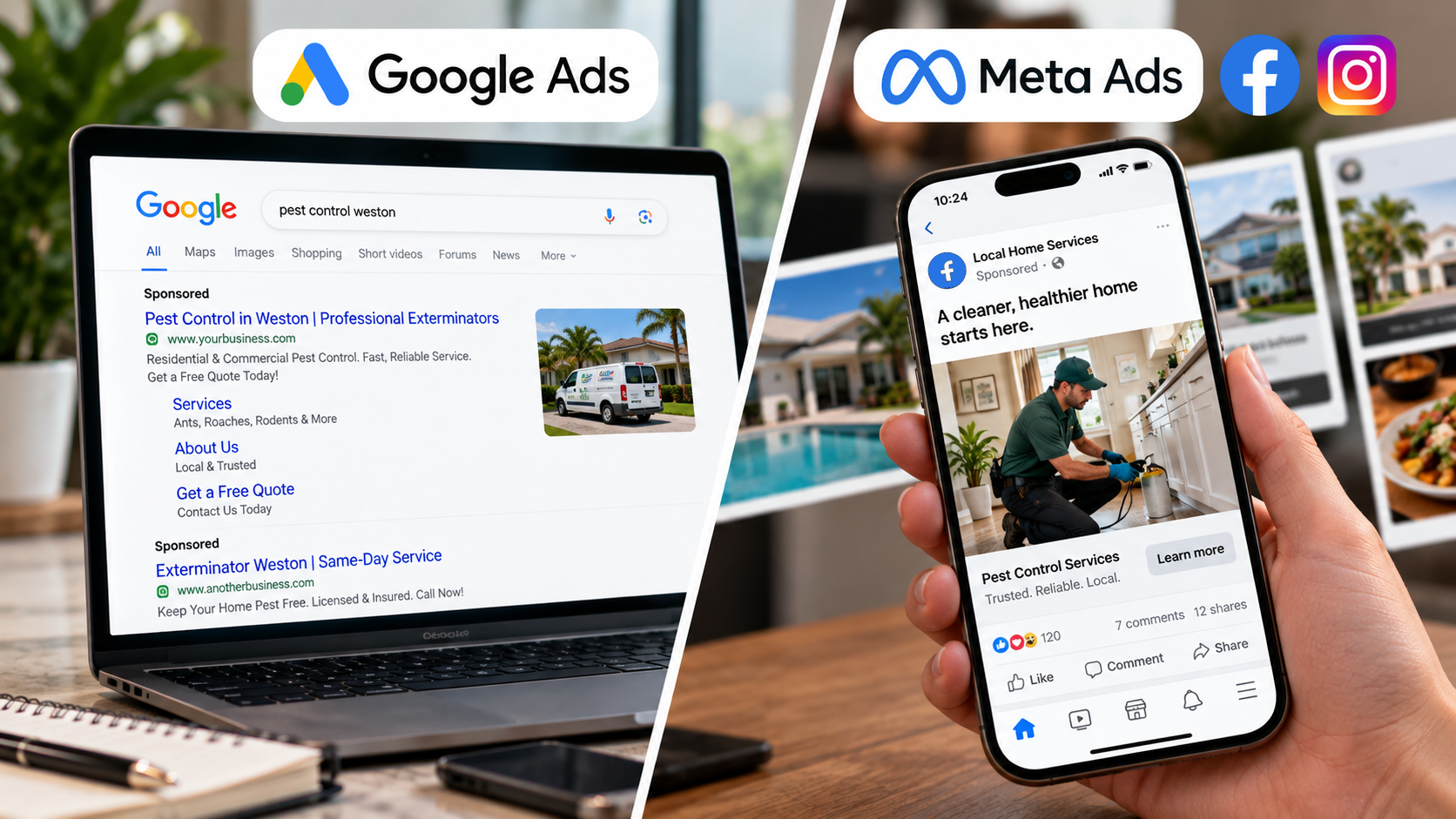
Google Search Ads usually deserve consideration first when customers actively search for a specific service. Meta Ads on Facebook and Instagram often make sense when a visual offer can spark interest before someone searches. Both can generate leads, and many businesses can use both, but the first investment should match how customers recognize their need and decide to buy.
A local business does not need to choose a platform based on popularity. It needs to identify the customer’s buying moment. Is the customer looking for help right now, or could a useful advertisement introduce an idea they had not considered? That distinction shapes targeting, creative, budgets, and the meaning of success.
What is intent-based advertising, and how is it different from passive advertising?
Intent-based advertising responds to a signal that someone wants information, a product, or a service. Discovery-based or passive advertising presents an offer while someone is doing something else. Google Search Ads commonly illustrate the first approach, while Facebook and Instagram feeds commonly illustrate the second. Both platforms offer additional campaign formats, so this is a comparison of their most familiar customer journeys rather than a rigid technical rule.
Google Search captures demand that already exists
A homeowner searching “pest control near me” knows the problem and is seeking a provider. The search itself gives an advertiser valuable context. The best ad answers that need, mentions the relevant service area, and links to a page where the visitor can request help. Someone searching “how do ants live?” is much less likely to be ready to hire a company. Strong campaigns distinguish commercial queries from general research.
Meta creates an opportunity for discovery
Someone browsing Instagram might see a beautiful patio renovation or a new restaurant menu and become interested even though they never searched for it. The image or video earns attention, the offer explains the benefit, and the next step invites a booking or inquiry. This is powerful for products and services people can appreciate visually, but curiosity is not the same as buying readiness.
When should a local service business prioritize Google Ads?
Search often fits urgent problems, clearly named services, and situations where customers compare providers after deciding they need help. The goal is not to attract everyone in a city; it is to reach relevant searchers who could become customers.
Urgent and problem-solving services
Pest control, mold testing, emergency repairs, and similar services often begin with an identifiable issue. A person searching for an exterminator in Weston has expressed stronger immediate intent than someone casually reading a home-maintenance post. Use specific service keywords, realistic geography, relevant landing pages, and a phone or quote option that works on mobile.
Professional services and researched purchases
Accountants, web designers, and commercial cleaners may also benefit from Search, although customers often need more time to compare. Their landing pages should explain the service, show credible evidence, answer common questions, and make the next step clear. Search demand can be limited for unfamiliar new services, so investigate whether customers actually use the terminology you expect.
When should a business prioritize Meta Ads?
Meta can be a stronger first test when the offer is visual, seasonal, experience-driven, or needs an explanation before people know to search for it. The creative itself must demonstrate value and make the next step appealing.
Restaurants, food, and visual experiences
A restaurant can show its brunch dishes, atmosphere, and weekend offer in a short video. A person browsing Instagram may decide to visit without planning to search for brunch. Similar opportunities exist for fitness classes, events, beauty services, and visually impressive home projects. Restaurants can still benefit from Google when people search for nearby dining, so the specific offer matters more than the industry label.
Education, inspiration, and unfamiliar services
A window-film installer might demonstrate glare reduction to homeowners who do not know the service name. A home organizer could show a room transformation. A well-made ad can introduce the problem and the outcome. Use authentic visuals, a clear audience, an understandable offer, and a follow-up process that separates genuine prospects from casual interest.
Related reading: Are Facebook Ads Worth It for Small Businesses in South Florida?
Are Google Ads more expensive than Meta Ads?
Competitive Google Search campaigns often cost more per click than Meta feed campaigns because advertisers compete for customers who have expressed commercial intent. Meta may deliver cheaper impressions and clicks. These are tendencies, not guaranteed prices: industry, location, seasonality, campaign objective, and creative quality all affect auction costs. Google also has display and video campaigns with different pricing models.
Compare CPC, CPM, CPL, and acquisition cost
CPC means cost per click; CPM means cost per thousand impressions; CPL means cost per recorded lead. Customer acquisition cost goes further by considering the cost of gaining a paying customer. A cheap click is not a bargain if the visitor never becomes a qualified prospect. An expensive click can be worthwhile when it reaches someone ready to purchase a profitable service.
Hypothetical example: lower click cost does not mean better leads
Suppose each platform receives $600 in media spend. Google Search delivers 60 clicks at $10 each and six qualified inquiries, costing $100 per qualified inquiry. Meta delivers 300 clicks at $2 each but only three qualified inquiries, costing $200 per qualified inquiry. Google is more expensive per click yet more efficient at producing qualified inquiries in this illustration. These are invented teaching numbers, not client results or benchmarks. A visual offer with little existing search demand could produce the opposite outcome.
Related reading: Google Ads official explanation of advertising costs.
How can you decide which platform to test first?
The first step is to examine the buying journey, not the platform interface. Ask whether the customer already knows what to search for, whether the offer is easy to demonstrate, and whether your team can respond effectively when an inquiry arrives.
Use five practical decision questions
Ask:
- Does the customer search for a named service when a problem arises?
- Is the offer visually compelling?
- Is the purchase urgent or planned?
- What is a new customer worth after service costs?
- Can someone respond promptly to calls and forms?
Answers to these questions help identify a sensible first channel and an appropriate campaign goal.
Choose by service and offer, not just industry
A pest-control business might use Search for active infestations and Meta to educate homeowners about preventative treatments. An event company might showcase completed events on Meta and use Search to reach people seeking an event production provider. A restaurant might promote new menu photography on Instagram while capturing nearby dining searches on Google. These are hypothetical examples, not universal prescriptions.
Can Google Ads and Meta Ads work together?
Yes. Search can capture immediate demand while Meta can introduce the business and maintain familiarity. Using both makes sense when the business has enough budget to test each platform and enough follow-up capacity to handle inquiries.
Build a consistent customer journey
A homeowner might see a Meta video about storm-season protection, later search for a local installer, and eventually request a quote. Both channels may have influenced the decision. Because attribution systems can assign credit differently, do not simply add platform-reported conversions and assume every reported conversion represents a separate customer.
Avoid dividing a small budget too early
When the budget is tight, begin with the platform that best matches the strongest buying signal. Establish a baseline for qualified inquiries and booked work before adding a second channel. A focused campaign can teach you more than two underfunded campaigns that cannot produce enough meaningful observations.
What results should a business owner measure?
Impressions and clicks explain advertising activity, but they do not prove business value. Evaluate whether inquiries match your service area and offering, whether your staff responds, and whether prospects become appointments or customers.
Define a qualified lead before launch
A qualified inquiry might come from someone within your coverage area who needs an offered service and has a realistic timeframe. Record service requested, location, source, follow-up status, and outcome when available. A request for a service you do not offer should not count the same as a legitimate estimate request.
Improve the landing page and form
Mobile visitors should quickly see what you do, where you work, why they can trust you, and how to contact you. Short forms can reduce friction but may collect less qualification information. Longer forms can screen inquiries but may deter some legitimate customers. Test the trade-off rather than assuming more leads means better leads.
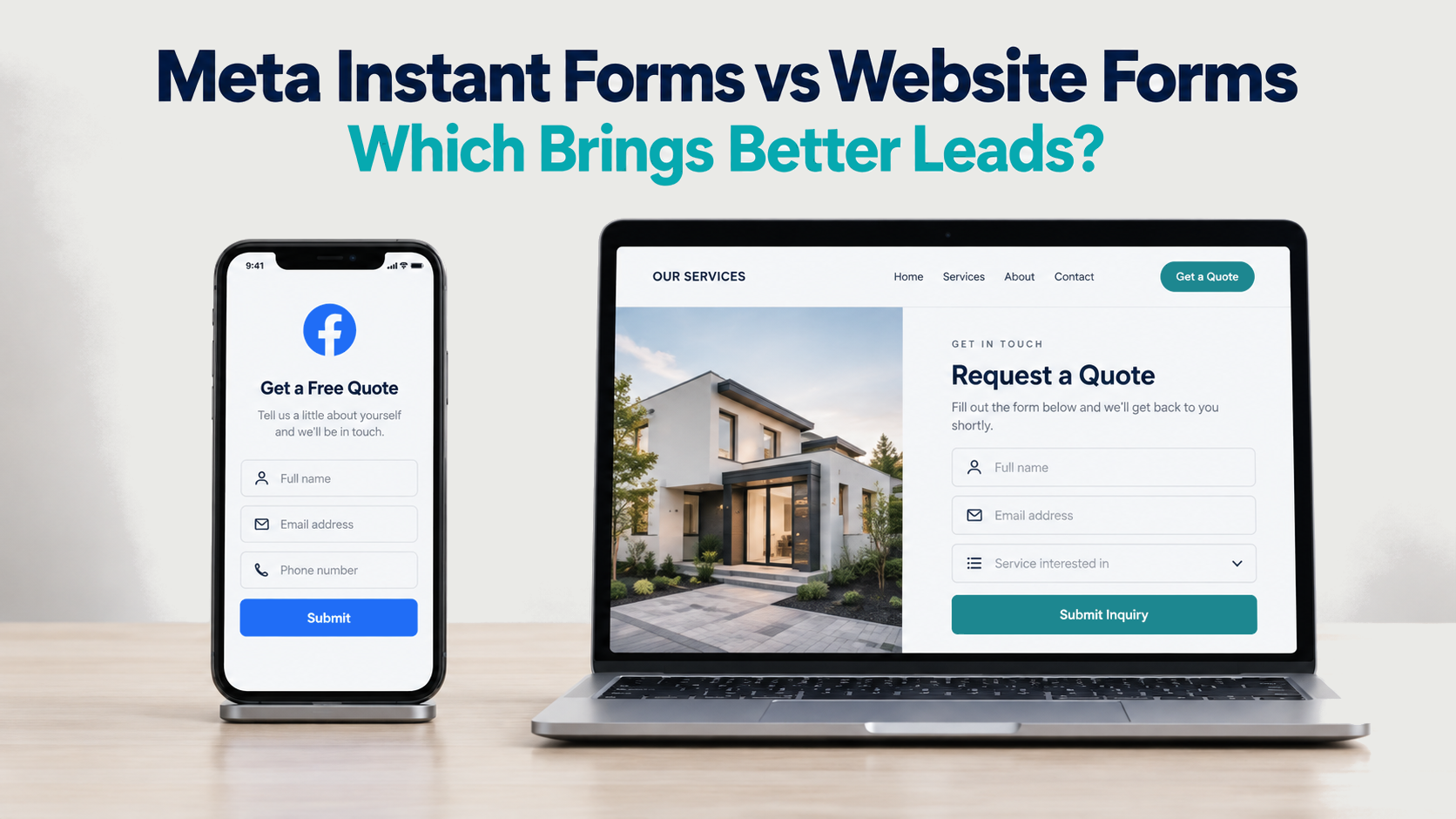
Related reading: Meta Instant Forms vs Website Forms: Which Brings Better Leads?
What should you prepare before hiring an advertising manager?
An effective campaign starts with clear business information. Before requesting a proposal, identify your priority services, geographic coverage, customer profile, profitable offerings, and how you handle inquiries. Media spend should be budgeted separately from professional management fees.
Build a simple advertising brief
Provide your service list and exclusions, target cities, customer problems, existing website pages, approved photos, offers, and expected customer value. Identify who will respond to calls and messages and how the business will report which inquiries were qualified. This makes a strategic recommendation more useful than a generic platform preference.
Connect advertising to your actual business goals
The Business Theory provides Google Ads and Meta Ads management for service businesses. The appropriate starting point is a discussion of how your customers discover the service, what makes a qualified inquiry, and what budget you can responsibly test. A campaign should be built around those answers rather than around impressions alone.
Related reading: Google Ads and Meta Ads management services
Related reading: Meta Ads management
Frequently asked questions about Google Ads vs. Meta Ads
The answers below address common questions local owners ask before spending on paid advertising. The right choice depends on customer behavior, offer quality, competition, and follow-up—not on a universal platform ranking.
Choose the Advertising Platform That Matches How Your Customers Buy
Choosing between Google Ads and Meta Ads isn't simply about finding the lowest advertising costs. It's about understanding your customers' buying behavior and investing in the platform most likely to generate qualified leads and new business.
If your customers actively search for your services when they need them, Google Ads may be the better starting point. If your business benefits from visual content, brand awareness, or reaching potential customers before they're ready to buy, Meta Ads may be a stronger option. For many businesses, combining both platforms can create a more comprehensive digital advertising strategy.
At The Business Theory, we help businesses develop advertising campaigns based on their goals, target audience, and budget. Explore our
Google Ads Management Services to reach customers actively searching for your services, or learn how our
Meta Ads Management Services can help introduce your business to potential customers across Facebook and Instagram.
Not sure which advertising platform is right for your business?
Contact The Business Theory to discuss your advertising goals, budget, and service area. We'll help you determine which approach makes the most sense for your business.
About The Business Theory
The Business Theory is an award-winning website design and digital marketing agency helping service-based businesses build stronger online presences and attract more qualified customers. We specialize in custom website design, Search Engine Optimization (SEO), directory listings, Google Ads, Meta Ads, social media posting, content marketing, and link building, with strategies tailored to each business rather than a one-size-fits-all approach. Whether you need a new website, stronger search visibility, or a more coordinated digital marketing strategy, explore our services or schedule a free consultation to learn how The Business Theory can support your business goals.