Can You List Your Business Online Without Showing Your Home Address?
Share this article

Yes, eligible businesses that travel to customers can use a Google Business Profile with a service area and hide their address from the public. Other directories have their own eligibility and address-display rules. The right approach is to describe how your business actually operates, check each platform before submitting information, and avoid publishing a residential address simply to make every listing look identical.
Working from home does not mean customers need directions to your front door. It also does not mean every online-only company qualifies for a local business listing. This guide helps service-business owners separate eligibility, verification, public contact information, and practical listing management.
Why does the way you serve customers matter?
Platforms distinguish businesses that receive customers at a location from businesses that travel to them. A cleaning company that visits homes operates differently from a salon that receives appointments at its premises. A consultant who works entirely online has another operating model. Those differences affect what information belongs on a local profile.
Google's business representation guidelines explain the eligibility framework and require accurate representation. Before creating or changing a profile, identify where customer interactions actually happen. A mailing address, business registration, or website alone does not establish that a location is a customer-facing office.
Identify your real operating model
Use everyday facts rather than the presentation you would prefer. The purpose is to select the right profile setup, not to make the company appear larger or more established than it is.
- Storefront: customers visit an eligible business location.
- Service-area business: the business visits customers and does not receive them at its address.
- Hybrid business: the business receives customers and also travels to them.
- Online-only business: customer interactions take place entirely online.
These distinctions should guide the first conversation with a listing provider. Explain your situation before a record is distributed across multiple platforms.
What can you hide on a Google Business Profile?
Google instructs businesses that do not serve customers at their business address to remove that address from the public profile and use service areas. Its service-area guidance explains how the setting works. An eligible mobile business can tell customers where it works without presenting a private home as somewhere they should visit.
Public display and platform verification are different. A platform may need accurate underlying information to assess the business even when a field is not shown publicly. Do not enter a fabricated location to avoid providing truthful information during an official verification process.
Use realistic coverage rather than an ambitious map
Choose places where you actually accept work. Coverage should reflect staffing, travel, scheduling, and the type of job. A mobile business that can occasionally travel farther for a large project should not imply that every distant customer can book the same service on the same terms.
Hypothetical example: a home-based cleaning company serves several nearby Broward County communities. It can explain those areas on its website and profile while keeping its residential address off the public profile. The inquiry form can request a ZIP code to confirm availability before an estimate is scheduled.
Can you use a mailbox or virtual office instead?
Do not treat a rented address as an automatic substitute for an eligible business location. Google's guidelines exclude remote mailboxes and virtual offices where the business does not operate. Co-working locations have specific requirements, including business staffing, signage, and receiving customers during business hours.
A postal address can serve a legitimate administrative purpose without qualifying as a location for Google Maps. Before paying for an address because someone promises local visibility, check whether the actual operating arrangement meets the platform's rules. The label on the rental package does not decide eligibility.
Would someone arriving during the published hours find your business, your staff, and the service represented? Or would they find only a mail desk? That question helps identify a mismatch, although the platform's complete requirements still control the final setup.
Do not ask a listing provider to invent a suite, borrow a friend's address, or create a separate profile in every city you serve. Marketing should represent the business you operate today. If the location arrangement changes later, review the profile again based on the new facts.
What should your website show instead of a home address?
Your website can give customers clear ways to evaluate and contact the business without functioning as a directory to your residence. Explain the service area, contact options, appointment process, and whether customers should expect you to travel to them. Keep that information consistent across the main service pages and contact page.
Avoid contradictory cues. A map with a pin at a residence can imply a storefront even if nearby text says appointments occur at the customer's property. Likewise, a footer address may remain visible after the contact page has been updated. Review the entire customer journey rather than one prominent field.
Audit the places an address can appear
Start with the content your business controls. Ask your web provider to check less obvious locations as well as the pages you can see. This is a practical publishing review, not a promise that information can be removed from the entire internet.
- Contact pages, footers, maps, and embedded widgets.
- Appointment confirmations and inquiry-response templates.
- Downloadable brochures, invoices used as samples, and old PDFs.
- Structured business information embedded in the website.
- Linked social profiles and older campaign pages.
The Business Theory builds custom Duda websites. If you are planning a new site, explain your public-address preferences and operating model before content and maps are added.
Does listing consistency require showing the same address everywhere?
Consistency means the facts accurately describe the same business; it does not mean ignoring a platform's rules or exposing a field that should remain private. A directory that supports hidden addresses may display your service area, while another may organize business information differently. Formatting and available fields vary.
The distinction matters when hiring a syndication service. Sending a master record to supported directories can simplify maintenance, but owners should understand what will become public. Do not assume every destination supports the same address controls or handles a service-area business identically.
Create a master record with public-display instructions
Record your business name, phone, website, services, operating hours, and coverage. Separately mark any information intended only for verification. Give the provider explicit instructions about reviewing public address display before distribution and identifying destinations that are unsuitable for your setup.
Our explanation of why business information differs across Google, Apple Maps, and Yelp covers the broader data-conflict problem. For a home-based business, the additional issue is deciding which facts should appear publicly in the first place.
What should you ask a directory listing service before enrolling?
Start with platform compatibility and control. A large directory count is less useful if the service cannot explain how your business type will be represented. Ask which destinations are supported, which require manual attention, and how public information is checked after changes are submitted.
The Business Theory's directory listing services help update, correct, claim, and distribute business information across supported platforms. Discuss your home-based setup before enrollment so the proposed scope reflects the address rules and limitations relevant to your business.
Request specific answers about the workflow
A useful proposal should explain responsibilities and verification steps rather than promise universal control over independent platforms. Keep a record of the answers so you can review the resulting listings against the agreed approach.
- Which supported directories allow my operating model?
- How will my public address preferences be handled?
- Who approves the business information before submission?
- What happens if a directory displays an address unexpectedly?
- Who retains account access and receives verification requests?
- What does ongoing monitoring include, and what is outside the scope?
Be cautious about any offer to guarantee visibility in every city through extra addresses. The goal is accurate representation and a reliable contact path, not an inflated location footprint.
What if your home address is already online?
Make an inventory before changing records. Search the business name, phone number, and the address itself. Record the exact page URLs and distinguish listings you control from records managed by other organizations. Correcting your website and profile does not automatically remove copies held elsewhere.
Prioritize information that directs customers to the home or contradicts your operating model. Follow each platform's correction or address-display process, keep confirmation messages, and check the public result. Some changes require review, and outcomes may differ across platforms.
Track submission and publication separately
A submitted change is not the same as a visible correction. Keep a simple log with the directory, problem, action taken, submission date, and date you verified the live result. If a correction is rejected, review the explanation instead of repeatedly sending the same unsupported edit.
Do not promise yourself complete removal from the internet. Public records, third-party databases, screenshots, and historical copies can remain outside a listing service's control. Focus first on the customer-facing destinations most likely to create confusion, then evaluate unresolved records individually.
How can you build trust without a public street address?
Explain who you are, what you do, and how customers can reach you. Use genuine photographs, clear service descriptions, appropriate credentials, and permission-based customer feedback. A dependable appointment process and accurate coverage can help customers make a decision without a map pin at your home.
Trust also depends on the details after an inquiry. Tell customers how estimates are arranged, what information you need, and when you expect to respond. Keep promises realistic. A professional-looking listing loses value if the linked website is vague or the contact number does not work.
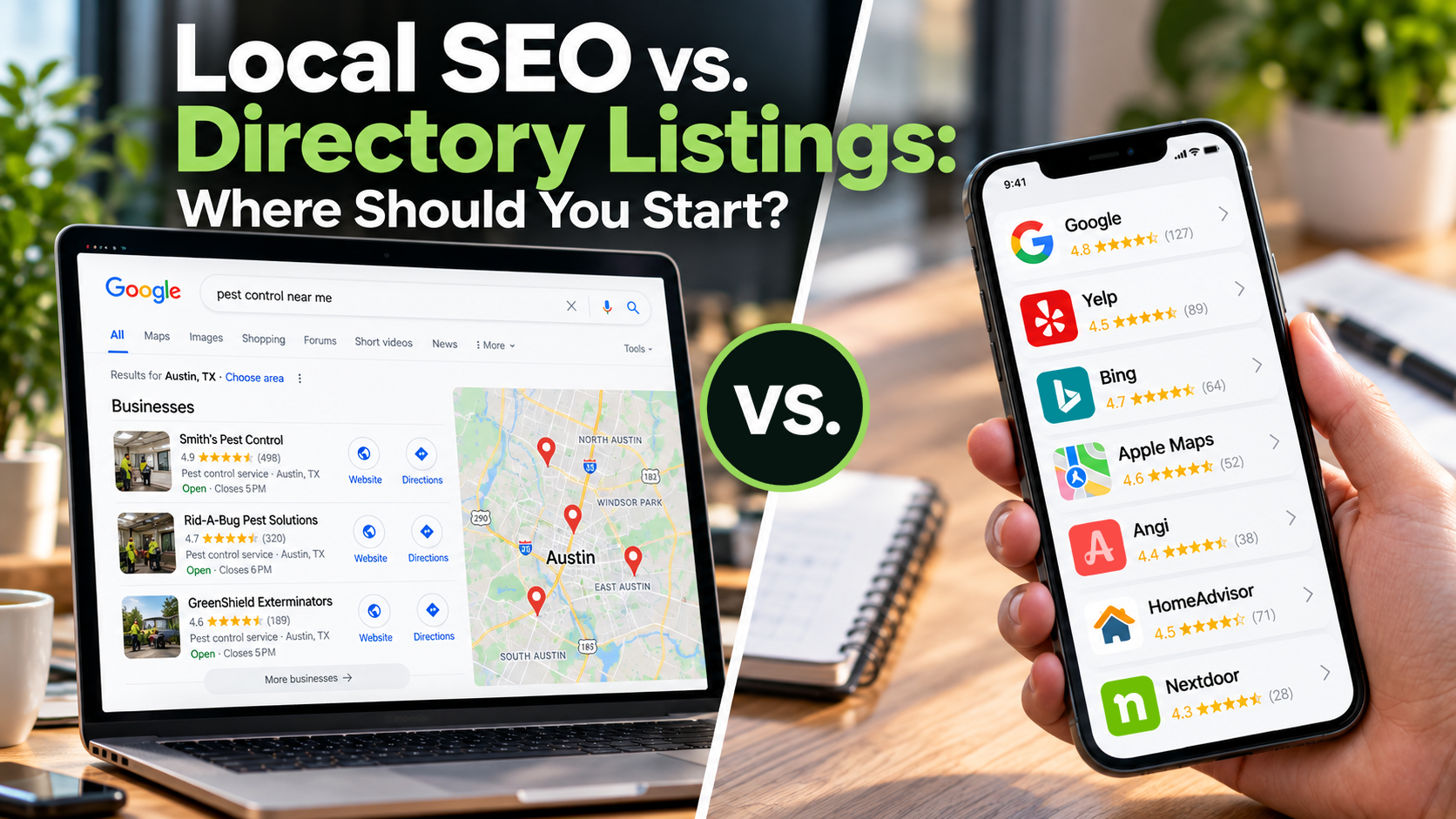
For broader visibility work, distinguish directory accuracy from the website and content work involved in SEO. Our guide to local SEO versus directory listings explains how to choose the relevant service based on the problem.
Frequently asked questions about home-based business listings
The right setup depends on your operating model and the individual platform. These answers provide a starting point for the review.
Build a public presence that matches how you work
Prepare your current listing URLs, real service area, and any address-display concerns before hiring help. Schedule a free consultation with The Business Theory to discuss directory listing management and the website information customers need. The first step is an accurate plan for your business model and supported platforms.
About The Business Theory
The Business Theory is an award-winning website design and digital marketing agency helping service-based businesses build stronger online presences and attract more qualified customers. We specialize in custom website design, Search Engine Optimization (SEO), directory listings, Google Ads, Meta Ads, social media posting, content marketing, and link building, with strategies tailored to each business rather than a one-size-fits-all approach. Whether you need a new website, stronger search visibility, or a more coordinated digital marketing strategy, explore our services or schedule a free consultation to learn how The Business Theory can support your business goals.