6 Things Every Great Business Website Has in Common
Share this article
Think about the last time you visited a business website.
Within just a few seconds, you probably formed an opinion about that company. Was the website easy to navigate? Did it look professional? Could you quickly find the information you were looking for? Or did you leave and continue searching for another business?
That's exactly how your potential customers think.
A great business website isn't just about having an attractive design. It's about creating an experience that builds trust, answers questions, and makes it easy for visitors to take the next step. While every business is different, the most successful websites tend to have several important qualities in common—qualities that help turn visitors into customers.
Whether you're building a brand-new website or evaluating your current one, understanding what separates an average website from a great one can help you make better decisions for your business.
In this guide, we'll explore the six things every great business website has in common, explain why each one matters, and show you how these essential elements work together to create a website that supports long-term business growth.
Why Great Business Websites Outperform Average Ones
Your website is much more than a digital brochure—it's often the first impression people have of your business.
Before someone picks up the phone, fills out a contact form, or requests a quote, they've likely spent time evaluating your website. They're deciding whether your business looks trustworthy, whether you understand their needs, and whether you're the right company to solve their problem.
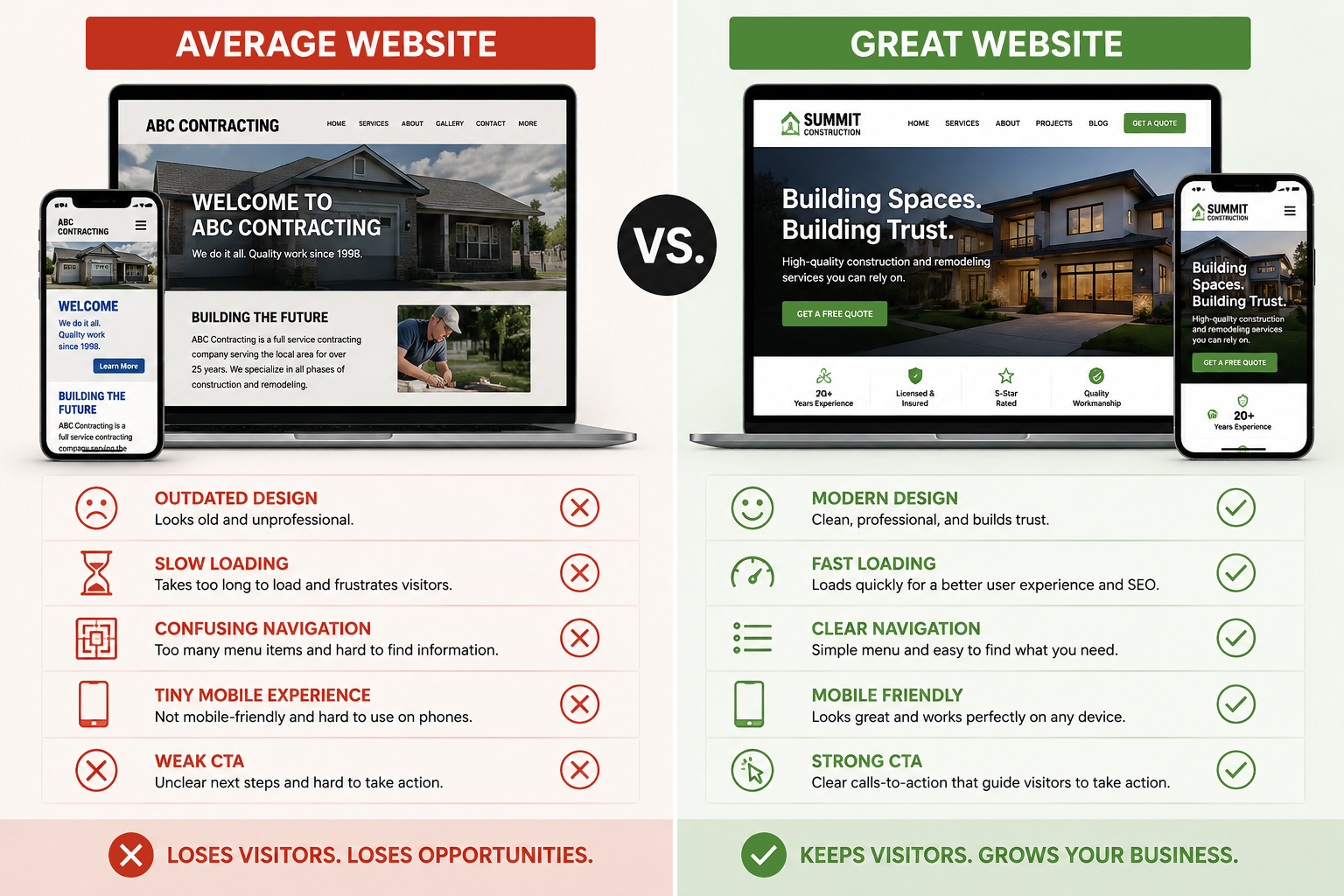
A great business website removes uncertainty. It provides clear information, builds confidence, and guides visitors toward taking action. An average website, on the other hand, often creates confusion, frustration, or doubt, causing potential customers to leave before ever contacting your business.
The difference isn't always about having the flashiest design. Instead, it's about creating an experience that's easy to use, informative, and focused on helping visitors accomplish what they came to do.
| Great Business Website | Average Business Website |
|---|---|
| Clearly explains what the business does | Leaves visitors guessing |
| Loads quickly on all devices | Slow or outdated experience |
| Easy to navigate | Difficult to find important information |
| Builds trust through professional design and content | Appears outdated or unprofessional |
| Encourages visitors to take action | Lacks clear calls-to-action |
| Supports long-term growth and SEO | Difficult to expand or optimize |
The best business websites don't succeed because of a single feature—they succeed because every part of the website works together to create a positive experience for visitors.
Let's take a closer look at the six things every great business website has in common and why each one plays such an important role in attracting customers and supporting long-term business growth.
The 6 Things Every Great Business Website Has in Common
While every business has unique goals, the most successful websites share several core characteristics. They aren't built simply to look attractive—they're designed to create a positive experience, answer customer questions, and encourage visitors to take the next step.
These six elements form the foundation of a website that not only looks professional but also supports your marketing efforts and helps your business grow.
1. A Clear First Impression
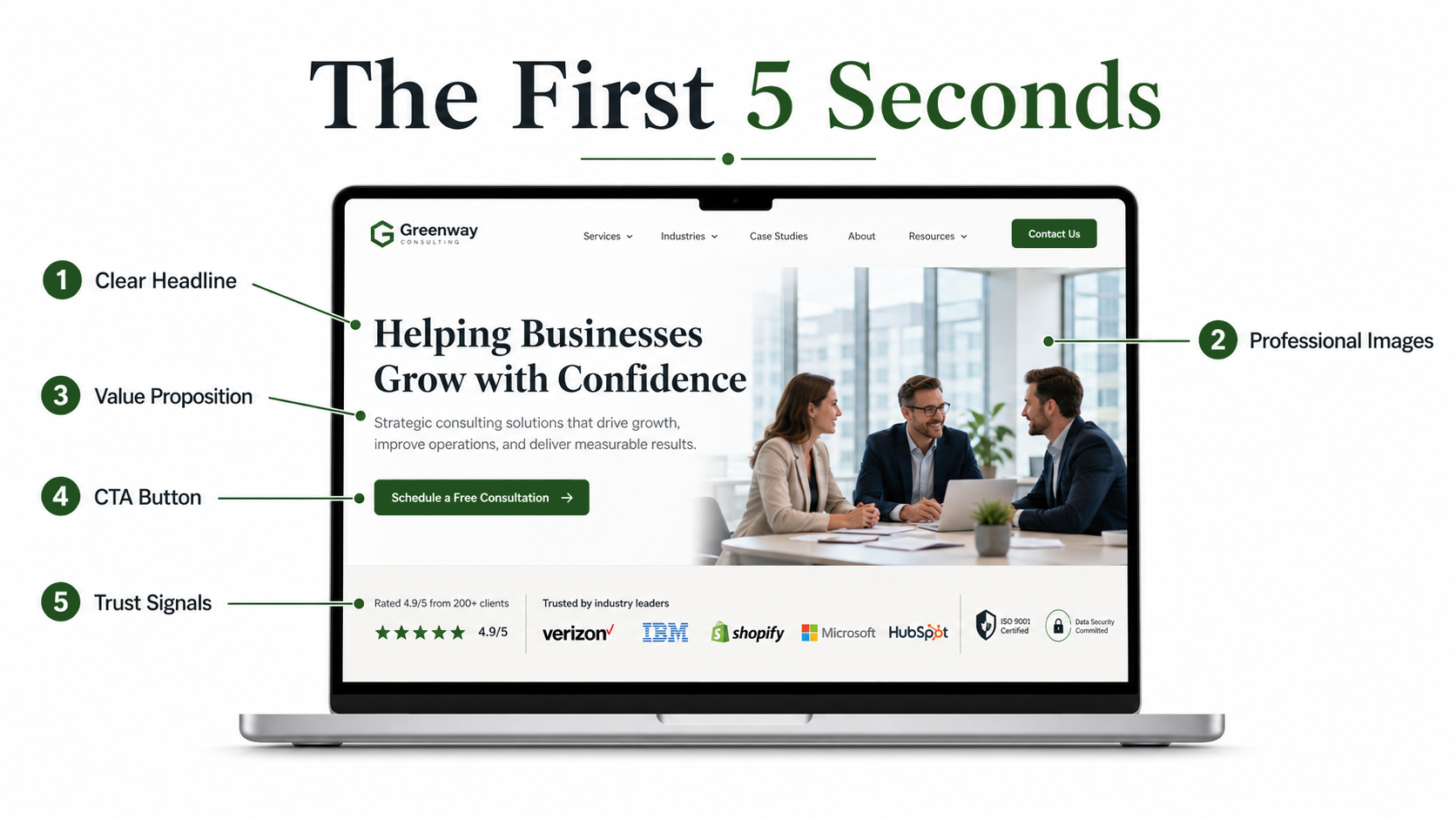
Visitors begin forming opinions about your business almost immediately after landing on your website. In just a few seconds, they're deciding whether your company appears trustworthy, professional, and capable of helping them.
That's why your homepage should immediately answer three simple questions:
- Who are you?
- What do you do?
- Why should someone choose your business?
A strong first impression starts with a clear headline, a short description of your services, professional imagery, and an obvious call-to-action that encourages visitors to contact you or learn more. If people have to search for basic information or aren't sure they've landed on the right website, there's a good chance they'll leave before exploring further.
| Great First Impression | Poor First Impression |
|---|---|
| Clear headline explaining what the business does | Vague or generic headline |
| Professional, modern design | Outdated or cluttered layout |
| Easy-to-find call-to-action | No clear next step for visitors |
| High-quality images and branding | Low-quality or inconsistent visuals |
| Immediate explanation of services | Visitors have to guess what the business offers |
Think of your homepage as the front entrance to your business. A clean, welcoming entrance encourages people to come inside, while a confusing or outdated one often sends them somewhere else.
If you're looking to create a website that immediately builds trust and clearly communicates your value, explore our Website Design Services in Fort Lauderdale to see how we help businesses make a strong first impression online.
2. Easy to Use on Every Device
Take a moment to think about how you browse the internet.
Maybe you're researching a service on your phone while waiting in line, comparing companies on your tablet from the couch, or using your desktop computer at work. Your customers do the same thing, which means your website needs to provide a great experience no matter what device they're using.
A great business website automatically adapts to different screen sizes without forcing visitors to zoom in, scroll sideways, or struggle to tap buttons. Everything should remain easy to read, simple to navigate, and quick to use whether someone visits from a smartphone, tablet, laptop, or desktop computer.
A website that's difficult to use on mobile devices doesn't just frustrate visitors—it can also affect your visibility in search results. Google prioritizes mobile-friendly websites because they provide a better experience for users.
| Great Mobile Experience | Poor Mobile Experience |
|---|---|
| Text is easy to read without zooming | Small text that's difficult to read |
| Buttons are easy to tap | Tiny buttons that are hard to select |
| Images automatically resize | Images are cut off or distorted |
| Navigation is simple and intuitive | Menus are confusing or difficult to use |
| Pages load properly on every device | Content breaks or overlaps on smaller screens |
A mobile-friendly website isn't a luxury anymore—it's an expectation. Whether someone is looking for your phone number, requesting a quote, or learning about your services, every interaction should feel smooth and effortless regardless of the device they're using.
At The Business Theory, every website we design is fully responsive, ensuring your business looks professional and performs seamlessly across desktops, tablets, and smartphones.
3. It Doesn't Keep People Waiting
We've all experienced it. You click on a website, wait a few seconds... and nothing happens.
Maybe the images won't load, the page freezes, or it simply feels sluggish. Before long, you hit the back button and move on to another business. Your customers are no different.
A great business website loads quickly and responds smoothly because every second matters. People expect websites to be fast, and even small delays can make visitors leave before they ever learn about your services.
Speed isn't just about convenience—it's about creating a positive first impression. A fast website feels professional, reliable, and trustworthy. A slow website can unintentionally make a business appear outdated or unprepared.
| Fast Website | Slow Website |
|---|---|
| Pages load quickly | Visitors wait several seconds for pages to appear |
| Images display smoothly | Images load slowly or appear broken |
| Navigation feels responsive | Clicking between pages feels sluggish |
| Visitors stay engaged | Visitors leave before exploring the website |
| Creates a professional impression | Can reduce confidence in the business |
Fortunately, website speed isn't determined by just one factor. Everything from your hosting platform and image optimization to your website's design and code contributes to how quickly your pages load.
A fast website creates a better experience for your visitors while supporting your long-term digital marketing efforts. When people can quickly find the information they need, they're far more likely to stay on your website and become customers.
If you're looking for a website that's built with speed and performance in mind, explore our Website Design Services in Fort Lauderdale to learn how we create websites that deliver a fast, professional experience from the very first click.
4. It Makes Information Easy to Find
Have you ever visited a website looking for something simple—like a phone number, pricing information, or a list of services—and ended up clicking through page after page without finding it?
It's frustrating.
A great business website makes finding information feel effortless. Visitors shouldn't have to guess where to click or spend several minutes searching for answers. The easier it is to navigate your website, the more likely people are to stay, learn about your business, and contact you.
Clear navigation starts with a logical website structure. Your main menu should include only the most important pages, while related information is grouped together in a way that feels natural. Every page should have a clear purpose, and visitors should always know where they are and how to get back to where they started.
| Great Navigation | Poor Navigation |
|---|---|
| Simple, organized menu | Cluttered menu with too many options |
| Important information is easy to find | Visitors have to search for basic information |
| Logical page organization | Pages feel random or disconnected |
| Consistent navigation throughout the site | Menus change from page to page |
| Visitors quickly find what they need | Visitors leave feeling confused |
Think of your website like a well-organized store. Customers shouldn't have to wander through every aisle just to find what they're looking for. The easier it is to navigate, the more enjoyable the experience becomes.
If you're wondering how many pages your website should have—and how they're typically organized—read our guide on How Many Pages Should a Business Website Have? It explains how thoughtful website structure helps visitors find information more easily while also supporting long-term SEO.
5. It Encourages Visitors to Take the Next Step
Imagine walking into a store where no one greets you, no one asks if you need help, and there isn't even a checkout counter.
You'd probably leave without buying anything.
The same principle applies to your website.
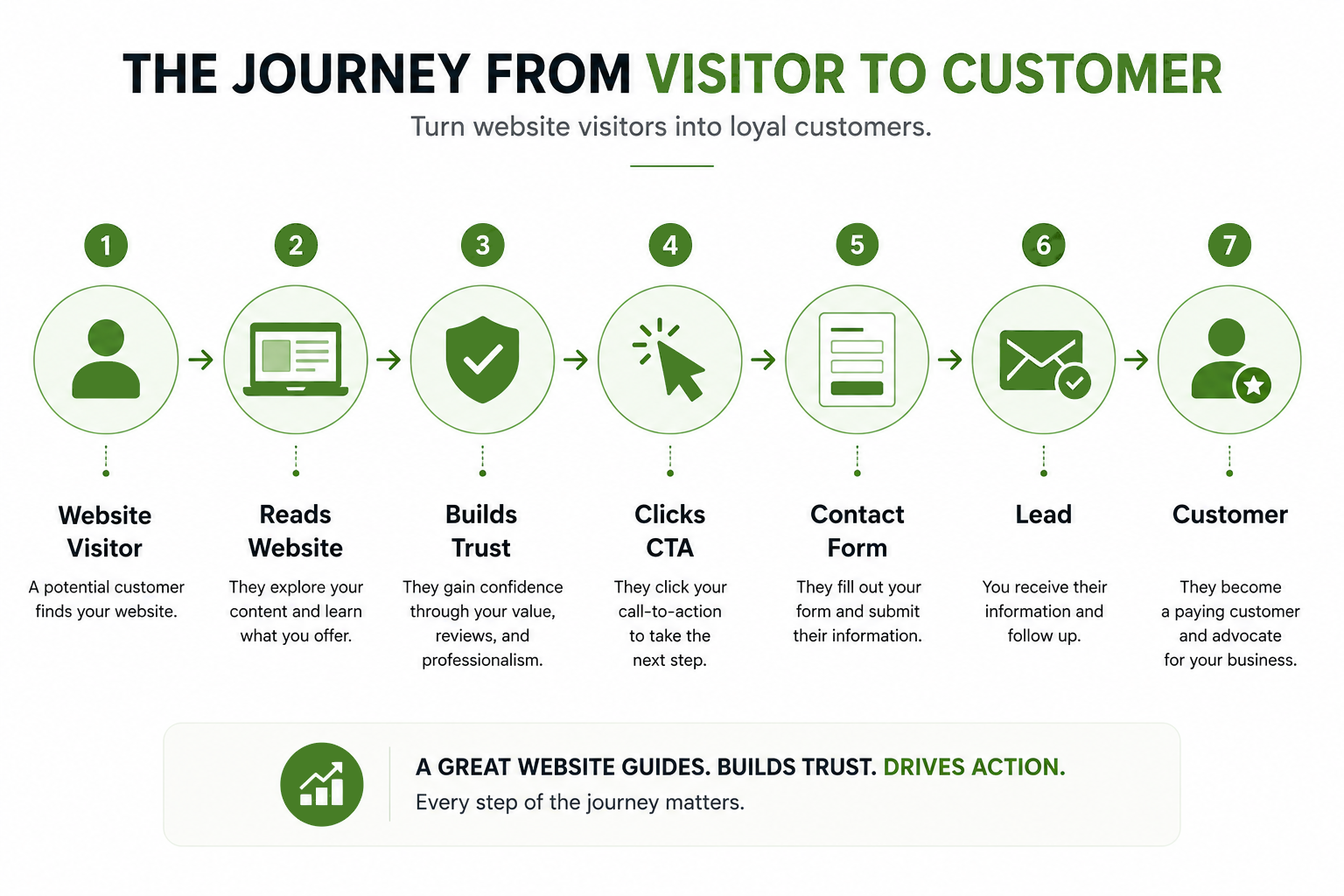
A great business website doesn't just provide information—it guides visitors toward taking the next step. Whether that's requesting a quote, scheduling a consultation, calling your office, or filling out a contact form, your website should make it obvious what visitors should do next.
These prompts are known as calls-to-action (CTAs), and they're one of the most important elements of a successful business website. Rather than leaving visitors wondering how to contact you, a strong CTA provides a clear, simple path forward.
| Effective Calls-to-Action | Weak or Missing Calls-to-Action |
|---|---|
| "Request a Free Quote" | No clear next step |
| "Schedule a Consultation" | Generic "Click Here" buttons |
| "Call Now" with a visible phone number | Contact information is difficult to find |
| Contact forms placed throughout the website | Only one contact form buried on the Contact page |
| Consistent CTA buttons across every page | Visitors must search for how to reach the business |
A strong call-to-action doesn't pressure visitors—it gives them confidence. When people know exactly what to do next, they're much more likely to contact your business, request a quote, or schedule a consultation.
If you're planning a new website or looking to improve the performance of your current one, our Website Design Services in Fort Lauderdale focus on creating websites that not only look professional but also guide visitors toward becoming customers through clear navigation, strategic calls-to-action, and a user-friendly experience.
6. It's Built on a Strong SEO Foundation
Even the most beautiful website can't help your business if no one can find it.
That's why every great business website is built with search engines in mind from the very beginning. Search Engine Optimization (SEO) isn't something that's added after a website launches—it's a foundation that's incorporated throughout the design and development process.
An SEO-friendly website helps search engines understand your content while making it easier for potential customers to discover your business when searching online. From properly structured pages and descriptive headings to optimized images and fast loading speeds, every detail contributes to your website's long-term visibility.
| SEO-Friendly Website | Website Without an SEO Foundation |
|---|---|
| Organized page structure | Confusing or inconsistent layout |
| Proper heading hierarchy | Missing or poorly structured headings |
| Optimized images and metadata | Large, unoptimized images and missing metadata |
| Fast loading performance | Slow-loading pages |
| Mobile-friendly experience | Poor experience on smartphones and tablets |
| Easy for search engines to understand | Difficult for search engines to crawl and index |
It's important to remember that an SEO-friendly website doesn't automatically rank on the first page of Google. Instead, it creates the foundation needed for ongoing optimization, content creation, and long-term growth. Without that foundation, even the best SEO strategy has a much harder time succeeding.
Think of it like building a house. You can have beautiful furniture and stylish finishes, but if the foundation isn't solid, everything built on top of it is affected. The same is true for your website.
If you're interested in learning how search engines evaluate websites and what goes into improving your online visibility over time, explore our Beginner's Guide to SEO for Small Businesses. It explains the fundamentals of SEO and how businesses can build a stronger presence in search results.
Frequently Asked Questions About Business Websites
Whether you're launching your first website or improving an existing one, it's natural to have questions about what separates a good business website from a great one. Here are answers to some of the most common questions business owners ask.
Great Business Websites Put People First
The best business websites aren't necessarily the ones with the most animations, the flashiest designs, or the longest list of features. They're the ones that make it easy for people to understand your business, find the information they need, and feel confident taking the next step.
Every great website shares the same foundation: it creates a strong first impression, works seamlessly on every device, loads quickly, makes navigation effortless, encourages visitors to take action, and is built with a solid SEO foundation. Together, these six elements create an experience that builds trust and supports your business long after your website is launched.
Whether you're creating your first website or planning a redesign, focusing on these fundamentals will help you build a website that's designed to serve your customers—not just impress them.
At The Business Theory, we believe every business deserves a website that's as hardworking as the people behind it. Our Website Design Services in Fort Lauderdale focus on creating custom, responsive, SEO-friendly websites that help businesses build credibility, attract qualified leads, and support long-term growth.
If you're ready to create a website that not only looks professional but also helps your business grow, Contact The Business Theory to schedule a consultation. We'd love to learn more about your business and discuss how a custom website can help you stand out online.
About The Business Theory
The Business Theory is an award-winning website design and digital marketing agency helping service-based businesses build stronger online presences and attract more qualified customers. We specialize in custom website design, Search Engine Optimization (SEO), directory listings, Google Ads, Meta Ads, social media posting, content marketing, and link building, with strategies tailored to each business rather than a one-size-fits-all approach. Whether you need a new website, stronger search visibility, or a more coordinated digital marketing strategy, explore our services or schedule a free consultation to learn how The Business Theory can support your business goals.