Can AI Manage Your Small-Business Marketing, or Do You Still Need a Marketing Expert?
Share this article
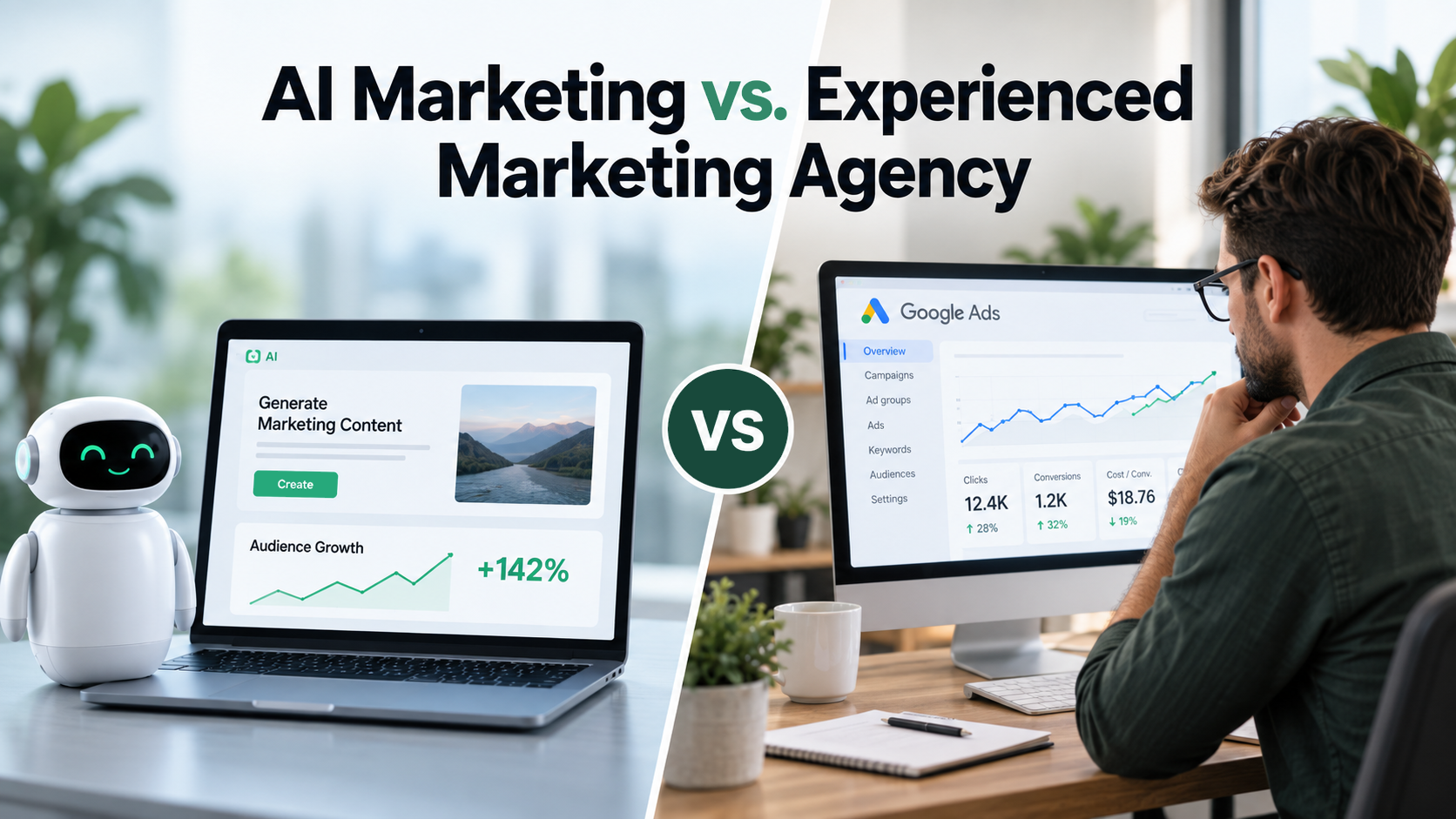
AI can already handle a surprising amount of marketing work for a small business. It can research topics, draft content, summarize performance data, generate ad variations, identify patterns, and automate repetitive tasks. What it cannot do on its own is take full responsibility for whether the strategy is right, the tracking is accurate, the message reflects the brand, or the leads are actually turning into customers.
The practical answer is that AI can manage pieces of your marketing, but it should not be treated as an unsupervised replacement for strategy, expertise, and accountability. For many small businesses, the strongest approach is to use AI for speed and efficiency while keeping a knowledgeable person responsible for priorities, approvals, budgets, accuracy, and business outcomes.
This guide explains what AI can handle, where human oversight still matters, and how that applies across SEO, content, advertising, and websites. It also shows when professional digital marketing services can protect your time and budget.
Direct Answer: AI can automate many small-business marketing tasks, but it still needs human direction for strategy, tracking, brand judgment, local context, compliance review, lead quality, and budget decisions. AI works best as a marketing assistant, not as an unsupervised replacement for experienced decision-making.
What Does It Mean for AI to “Manage” Your Marketing?
The phrase “AI managing marketing” can mean very different things. Generating a social caption is not the same as deciding which service deserves the next $3,000 in ad spend, and summarizing a dashboard is not the same as knowing whether those reported conversions became profitable customers.
Before handing more responsibility to an AI tool, separate task automation from strategic ownership. AI can complete or recommend individual actions, while someone still needs to decide whether those actions support the business.
- Generating ideas and research summaries
- Drafting written content and creative variations
- Summarizing analytics and campaign data
- Recommending campaign changes
- Publishing or scheduling content
- Managing advertising budgets
- Tracking conversions correctly
- Coordinating SEO, ads, content, and website activity
- Connecting marketing activity with qualified leads, sales, and revenue
Completing isolated tasks can save time. Owning the strategy means deciding what matters most, validating the data, approving risk, and being accountable for the result.
What Can AI Marketing Tools Do for a Small Business?
AI marketing tools are especially useful when the work involves speed, repetition, organization, or first drafts. They can reduce the time required to turn an idea into something usable, but the output still depends on the prompt, the business context provided, and the quality of the underlying data.
Research and Idea Generation
AI can organize customer questions, identify topic ideas, compare messaging themes, summarize competitor observations, and suggest campaign concepts. This can speed up brainstorming, especially when a business owner already knows the audience and can distinguish a useful idea from a generic one.
Content Drafting
AI can draft blog articles, website copy, social posts, email content, FAQs, ad variations, meta titles, and meta descriptions. The first draft can be useful, but it still needs fact-checking, firsthand expertise, brand alignment, originality, and a review for claims the business cannot support.
Data Summaries and Reporting
AI can summarize analytics, campaign results, sales data, and trends much faster than a person can scan multiple dashboards. The limitation is simple: a confident summary built on incomplete or incorrect tracking is still an incorrect summary.
Repetitive Marketing Tasks
AI can help adapt creative into multiple variations, organize information, prepare scheduling ideas, identify items that need attention, and reformat content for different channels. These are good examples of efficiency gains that do not require handing over the entire marketing strategy.
Campaign Recommendations
AI can spot patterns and suggest budget, targeting, creative, or content changes. Those recommendations should be reviewed before money is moved, audiences are changed, ads are published, or landing pages are altered because a recommendation can be technically plausible while still being wrong for the business.
What Is Muse for Small Business?
Muse for Small Business is a timely example of how quickly AI marketing tools are becoming more connected. Meta announced Muse for Small Business on September 29, 2026, describing it as an AI agent that can work with business tools and connected Meta accounts to help owners analyze information, create plans, and draft campaigns.
According to Meta's official Muse announcement, Muse can connect with Facebook Pages, Instagram professional-account analytics, Meta ad accounts, and supported tools such as Canva, HighLevel, QuickBooks, Shopify, Slack, Stripe, and others. Meta also says nothing publishes, sends, or spends without the owner’s approval.
That distinction matters. Drafting a campaign is not the same as approving it, and analyzing connected information is not the same as knowing whether that information is complete, current, or appropriate to use. Businesses should review connector permissions carefully and avoid giving any system access to confidential or customer information it does not need.
Where Does AI Still Need a Marketing Expert?
AI can support nearly every major marketing function, but the level of human judgment required changes depending on the responsibility. Tasks that affect budgets, customer data, brand reputation, compliance, or revenue deserve more oversight than low-risk drafting or organization work.
The comparison below shows the difference between assistance and accountability.
| Marketing responsibility | How AI can assist | Where human expertise matters |
|---|---|---|
| Business and marketing strategy | Suggest goals, channels, and ideas | Choose priorities based on revenue, capacity, budget, and risk |
| Brand positioning | Draft messaging variations | Protect brand voice, reputation, and differentiation |
| Local-market knowledge | Summarize public information | Apply real knowledge of service areas, seasonality, and local competition |
| Offer development | Suggest promotions or packages | Confirm margins, capacity, service limitations, and customer fit |
| Content accuracy | Draft and rewrite content | Fact-check services, claims, examples, and local details |
| Campaign budgets | Recommend allocations | Approve spend and decide what the business can afford to test |
| Conversion tracking | Summarize recorded data | Verify that forms, calls, bookings, and offline sales are tracked correctly |
| Lead-quality evaluation | Group or score lead data | Determine whether leads are qualified and becoming customers |
| Policy review | Flag possible concerns | Review platform rules, claims, permissions, and approval risk |
| Cross-channel coordination | Summarize multiple channels | Decide how SEO, ads, content, listings, and the website should work together |
Where Human Judgment Matters Most
The biggest gap between AI assistance and professional management is prioritization. AI can suggest many reasonable actions, but a person still needs to decide which service, location, offer, or channel deserves limited time and budget, whether the message accurately represents the brand, and whether the recommendation fits the local market.
Human oversight is also essential when the recommendation depends on tracking, lead quality, privacy, or platform rules. A dashboard can show clicks and conversions, but someone must verify that the tracking is correct, the leads are qualified, and the actions being approved make sense for the business.
Can AI Manage SEO?
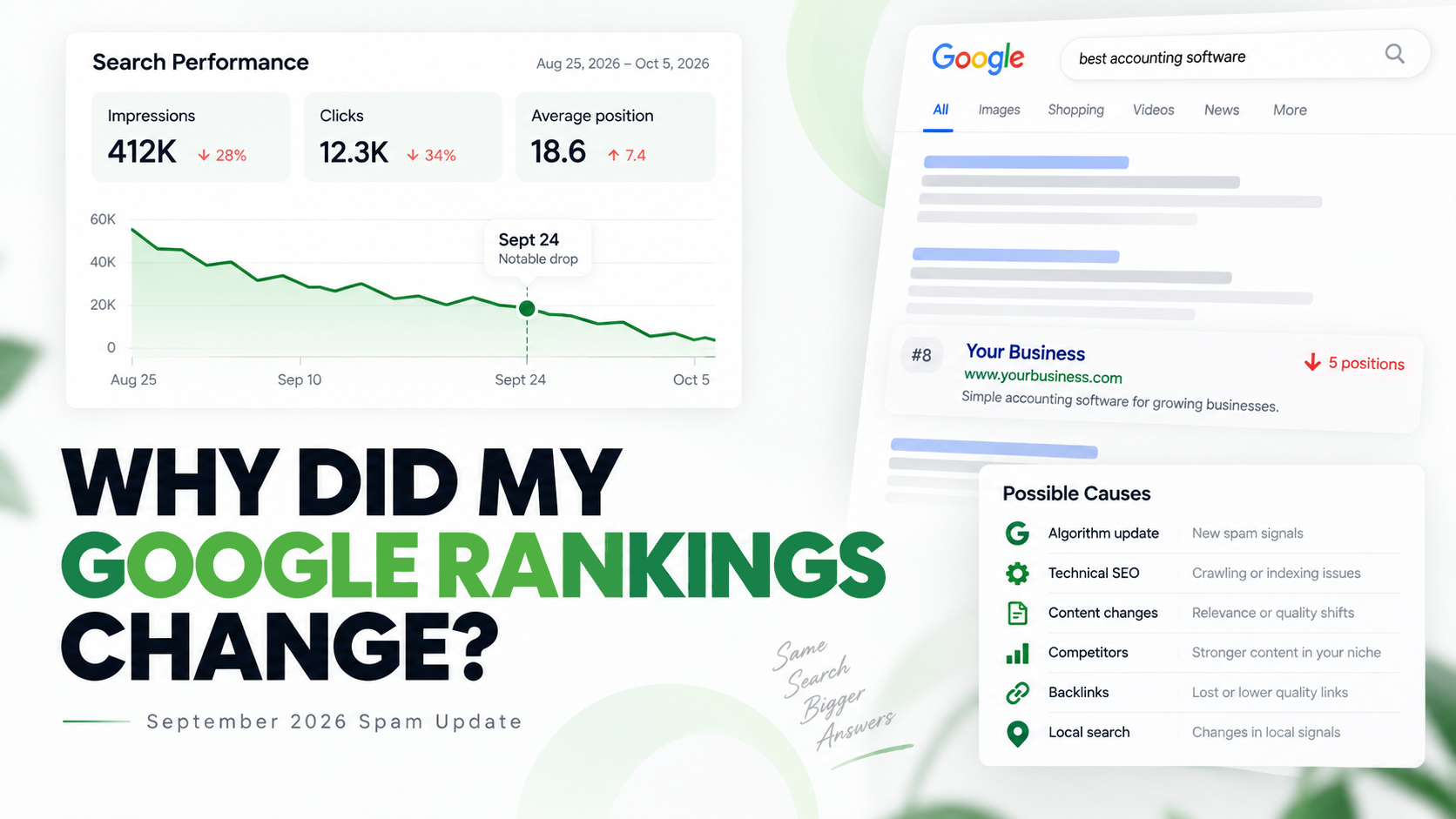
AI can assist with SEO, but it should not be treated as a complete SEO strategy. It is useful for topic research, keyword organization, content outlines, metadata, FAQ ideas, Search Console summaries, and internal-link suggestions, but those tasks still need strategic review.
SEO still requires judgment around search intent, technical issues, indexing, website structure, local relevance, competitor analysis, content quality, link quality, and actual lead performance. Google’s current guidance for generative AI search still emphasizes foundational SEO and unique, valuable content rather than “AEO hacks.” Read Google’s official generative AI search guidance.
If you want professional help with those decisions, our Search Engine Optimization services combine technical SEO, content, local search, keyword strategy, performance monitoring, and ongoing optimization.
For a deeper look at how AI is reshaping visibility, see How Google AI Is Changing Local Search for Service Businesses.
Can AI Write All of Your Content?
AI can produce first drafts quickly, but small-business content should not be published on autopilot. The strongest content adds firsthand expertise, accurate service details, original examples, local experience, genuine customer questions, clear service limitations, human fact-checking, and a useful next step.
Generic content can sound professional while doing very little to build trust or distinguish the company. It may also miss the exact questions customers ask before buying, which weakens both AEO and conversion potential.
Our content marketing services are designed around useful, search-focused content that supports core service pages and customer intent rather than publishing for volume alone.
Can AI Manage Google Ads?
AI can automate important parts of Google Ads, including bidding, asset combinations, reporting, and pattern detection. Google’s Smart Bidding uses AI at auction time to optimize for conversions or conversion value, but campaign success still depends on accurate goals and conversion data.
Human oversight remains important for search terms, negative keywords, location targeting, budget allocation, advertising claims, landing-page relevance, conversion tracking, lead quality, offline sales, and customer acquisition cost. Google Ads management can help keep those decisions connected to the business rather than relying on automation alone.
For a practical explanation of why platform-reported conversions do not automatically equal customers, read Clicks Aren’t Customers: How to Know If Your Google Ads Are Actually Making Money.
Can AI Manage Meta Ads?
AI can help Meta advertisers generate creative ideas, copy variations, audience observations, campaign summaries, performance patterns, and new campaign concepts. Those capabilities can save time, but the business still needs someone to evaluate the offer, creative direction, geography, brand presentation, tracking, lead-form questions, lead quality, and budget changes.
A campaign can produce a large number of leads that are outside the service area, unqualified, or unlikely to become customers. That is why Meta Ads management should still connect platform data with real business feedback.
If you are deciding whether the channel fits your business at all, see Are Facebook Ads Worth It for Small Businesses in South Florida?.
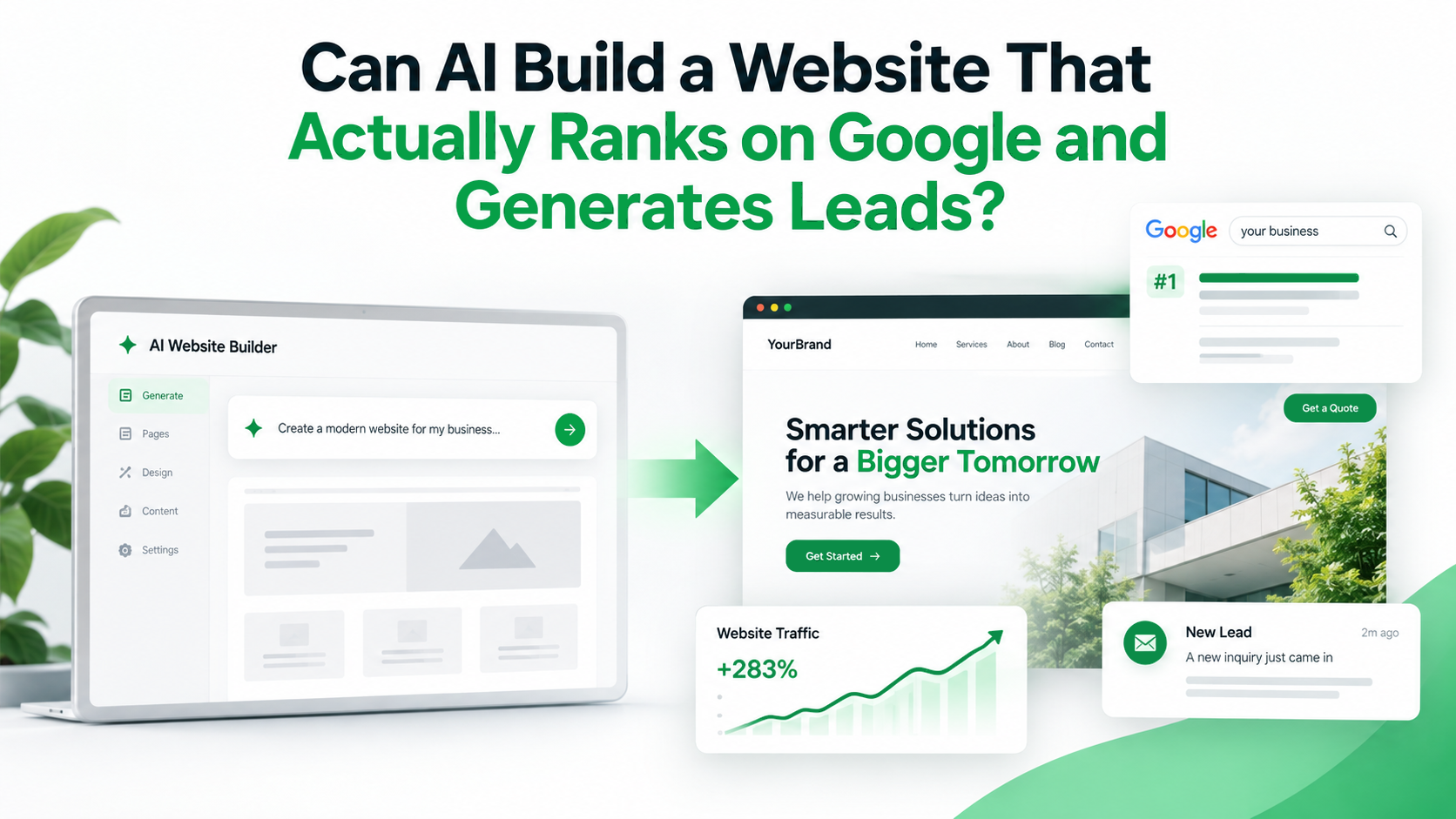
Can AI Build the Website or Landing Pages Your Marketing Needs?
AI can draft a website or landing page quickly, but the destination still has to match the advertisement, load quickly, work well on mobile, build trust, make the service clear, and guide the visitor toward an appropriate next step. A strong ad can underperform when the landing experience creates friction.
AI can help draft layouts and copy, while user experience, conversion strategy, brand presentation, SEO structure, and testing still require judgment. Forms should collect only what the business needs, calls to action should be easy to find, and the page should clearly explain the service and location being promoted.
Our website design services focus on responsive design, lead generation, SEO-friendly structure, and long-term usability. For a deeper comparison, read AI Website Builder vs. Professional Web Designer.
Not Sure Which Parts of Your Marketing to Automate?
AI can help your business save time, but the right tools still need accurate tracking, a clear strategy, and careful oversight. The Business Theory can review your current website, SEO, content, and advertising to help determine where automation makes sense and where professional management could protect your time and budget.
When Might AI Be Enough for a Small Business?
AI-assisted self-management can be reasonable when the business is small, the marketing risk is limited, and the owner has enough time to review the work carefully.
- The owner has more time than budget.
- Marketing activity and ad spend are limited.
- The owner understands the platform and reviews every output.
- Accurate conversion tracking is already in place.
When Should You Hire a Marketing Expert?
Professional help becomes more valuable when marketing decisions have a meaningful financial or operational impact, or when several channels need to work together.
- The business is spending meaningful money on advertising.
- Marketing generates a substantial portion of revenue.
- SEO, paid ads, content, listings, and the website need to work together.
- Leads are coming in but many are not qualified.
- Conversion tracking is incomplete or unreliable.
- The owner does not have time to review AI outputs carefully.
The Strongest Approach: AI Efficiency With Human Strategy
The strongest small-business marketing model is often not “AI or human.” It is AI used inside a strategy that still has a person responsible for the decisions. An experienced agency can use AI to speed up research, drafts, reporting, testing ideas, and organization while keeping human control over accuracy, budgets, brand voice, tracking, optimization, lead quality, and client communication.
That is how The Business Theory approaches modern marketing. Helpful technology can make the work more efficient, but strategy and accountability should not be outsourced to an automated tool.
Questions to Ask Before Letting AI Manage Your Marketing
Before connecting an AI tool to business systems or allowing it to recommend marketing actions, understand exactly what it can see and what it can do. A few basic questions can prevent a convenience feature from becoming an expensive source of confusion.
- What information can the tool access?
- Which actions require my approval?
- Is the conversion tracking accurate?
- Who verifies factual claims before publication?
- Who reviews targeting and budget recommendations?
- How is customer information protected?
- Can the tool distinguish a lead from a qualified customer?
- Who is responsible when a recommendation is wrong?
- Does the strategy reflect the company’s real service areas and goals?
- Are decisions based on revenue and qualified leads or only surface-level metrics?
Key Takeaways
AI is becoming more useful across nearly every part of digital marketing, but generating marketing assets is not the same as building and managing a strategy. The value of AI depends on the quality of the data, the clarity of the business goals, and the judgment of the person reviewing the output.
- AI can save time and improve efficiency.
- AI recommendations depend on accurate data and tracking.
- Human oversight matters most when money, customer information, or brand reputation is involved.
- Generating content or ads is not the same as knowing what the business should prioritize.
- The strongest approach often combines AI assistance with experienced professional judgment.
- The Business Theory can help develop and manage a coordinated digital marketing strategy.
Frequently Asked Questions About AI Marketing for Small Businesses
AI marketing tools are moving quickly, and business owners are understandably asking how much of their marketing can safely be automated. The answers below focus on what AI can realistically do today and where a knowledgeable person still needs to review the strategy, tracking, and business impact.
Use AI Without Losing the Strategy Behind Your Marketing
AI can help small businesses work faster, analyze more information, and complete repetitive marketing tasks. It cannot replace a clear strategy, accurate tracking, brand judgment, local experience, or accountability for how marketing decisions affect the business.
The Business Theory combines modern tools with professional oversight across SEO, Google Ads, Meta Ads, content, and website design. We build strategies around your services, customers, target locations, budget, and actual business goals rather than relying on automated recommendations alone.
Ready to Build a Smarter Marketing Strategy?
AI can help small businesses work faster, organize information, and automate repetitive marketing tasks, but the strongest results still come from combining technology with clear strategy, accurate tracking, and professional oversight.
At The Business Theory, we help businesses coordinate SEO, Google Ads, Meta Ads, content, website design, and other digital marketing efforts around their actual goals instead of relying on disconnected tools or automated recommendations alone.
If you’re ready to take a more strategic approach to your marketing, schedule a free consultation to discuss your goals and see which services may be the best fit for your business. You can also explore our marketing services to learn more about how we help businesses build a stronger, more connected online presence.
About The Business Theory
The Business Theory is an award-winning website design and digital marketing agency helping service-based businesses build stronger online presences and attract more qualified customers. We specialize in custom website design, Search Engine Optimization (SEO), directory listings, Google Ads, Meta Ads, social media posting, content marketing, and link building, with strategies tailored to each business rather than a one-size-fits-all approach. Whether you need a new website, stronger search visibility, or a more coordinated digital marketing strategy, explore our services or schedule a free consultation to learn how The Business Theory can support your business goals.