Do Small Businesses Still Need a Professional Website Designer?
Share this article
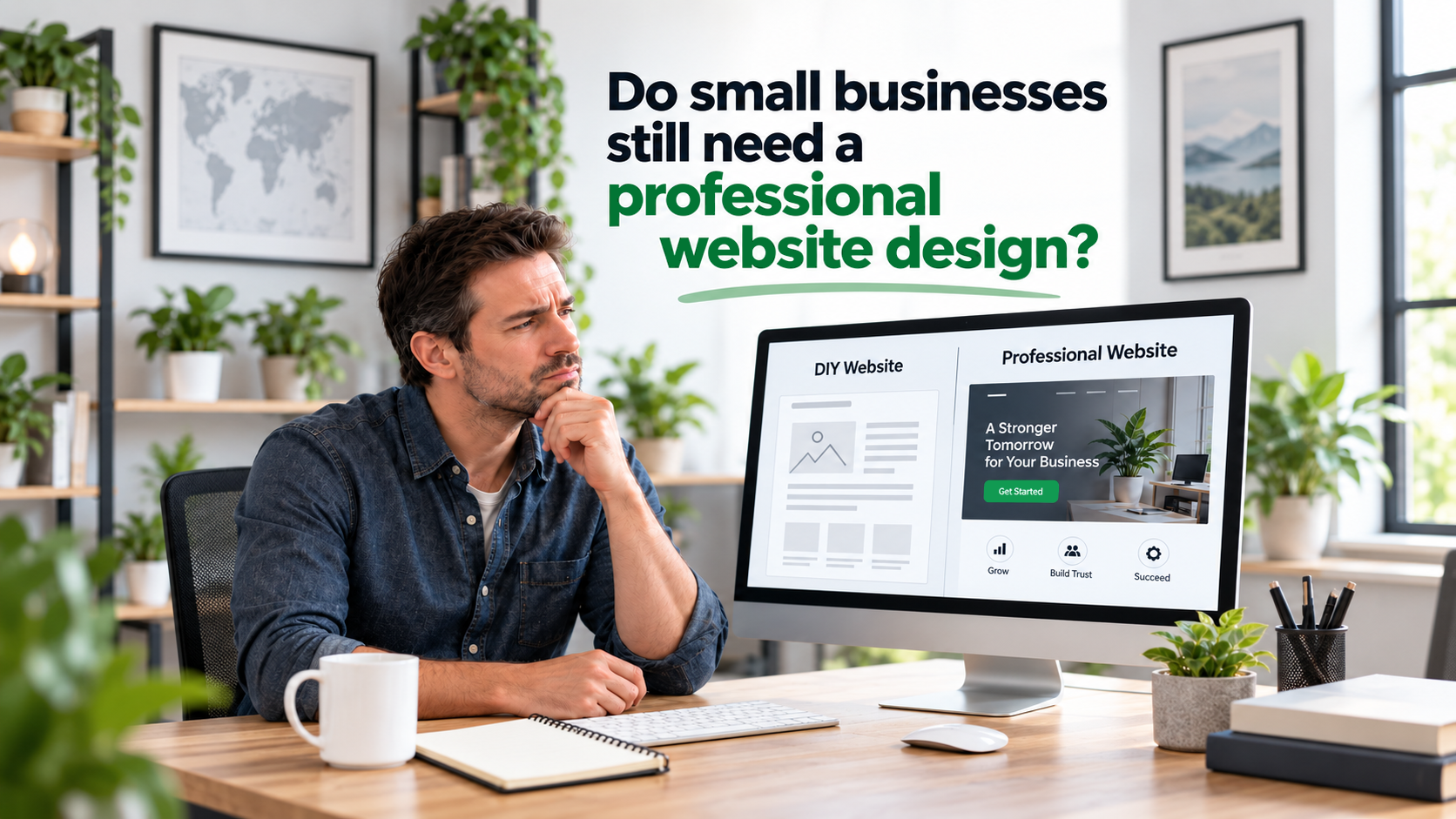
Yes. A small business can technically build a website without a professional designer, but building a site and building a website that supports trust, search visibility, lead generation, and long-term growth are two different things. A professional website designer brings strategy to the parts of a website that business owners often do not see at first: page structure, user experience, mobile usability, calls to action, search-friendly foundations, brand consistency, and the path a visitor takes before becoming a lead.
DIY tools and AI website builders can be useful when a business needs a very simple online presence quickly. But when the website is expected to compete in search, explain multiple services, support local markets, build credibility, or generate inquiries, professional planning becomes much more valuable.
For service-based businesses, the website is often the first place a potential customer evaluates whether the company looks legitimate, understands their problem, serves their area, and is worth contacting. That is why professional website design is less about making a page “look nice” and more about building a useful business asset.
Is a Professional Website Designer Worth It for a Small Business?
A professional website designer is usually worth the investment when your website needs to generate leads, support SEO, explain multiple services, establish trust, or grow with the business.
If the site is only a temporary placeholder with a few basic details, a DIY option may be enough. The decision should be based on what the website needs to accomplish—not simply whether you can build one yourself.
What Does a Professional Website Designer Actually Do?
Professional website design combines visual design with business strategy, information architecture, user experience, technical setup, and conversion planning. The designer’s job is to turn your business information into a website that is easy to understand and easy to use.
Plans the Website Around Your Business Goals
A professional starts with your services, customers, geographic market, sales process, and goals. That information determines which pages are needed, how visitors should move through the site, and where calls to action should appear.
Organizes Information So Visitors Can Find Answers Quickly
Customers should not have to hunt for what you do, who you serve, how your process works, or how to contact you. Clear navigation and page hierarchy help visitors find the right information while also giving search engines a better understanding of the website.
Designs for Mobile, Tablet, and Desktop
A responsive website should feel intentional on every screen size. That includes readable text, usable forms, clear buttons, appropriately sized images, and layouts that do not become confusing on mobile devices.
Builds Conversion Paths
A beautiful website can still fail if visitors do not know what to do next. Professional design uses calls to action, forms, trust signals, service information, and page flow to move visitors toward a meaningful next step.
Creates an SEO-Friendly Foundation
SEO is not just something added after a website launches. Page structure, headings, internal links, metadata, image alt text, mobile usability, crawlability, and dedicated service pages can all affect how well a site supports future search growth.
Explore The Business Theory’s professional website design services to see how these elements are built into a custom Duda website.
Can a Small Business Build Its Own Website?
Yes. A business owner can use a website builder, a prebuilt theme, or AI to create a functioning website. For a new business with a very small budget and simple needs, that can be a reasonable starting point.
When a DIY Website May Be Enough
- You only need a temporary online presence.
- You have one simple service and very little content.
- The website is not expected to generate meaningful leads yet.
- You are comfortable handling design, mobile layouts, copy, forms, analytics, and basic SEO yourself.
- You understand that the site may need to be rebuilt as the business grows.
When DIY Starts to Become a Limitation
- Your website needs to compete for local or service-based searches.
- You offer multiple services that need dedicated pages.
- Visitors are reaching the site but are not contacting you.
- The site looks inconsistent or does not represent the quality of your business.
- You keep adding plugins, sections, or fixes without a clear structure.
- You are spending more time troubleshooting the website than running the business.
If you are specifically considering AI, read our guide on whether an AI website builder can create a website that ranks on Google and generates leads.
Professional Website Designer vs. DIY vs. AI Website Builder
| Factor | Professional Designer | DIY Builder | AI Website Builder |
|---|---|---|---|
| Speed to launch | Moderate | Varies | Fast |
| Customization | High | Moderate | Varies |
| Business strategy | High | Depends on owner | Limited without expert input |
| SEO planning | Can be built into structure | Depends on owner knowledge | Usually basic unless refined |
| Conversion planning | Strategic | Often manual | Usually generic |
| Brand differentiation | High | Depends on template/customization | Can feel generic without editing |
| Scalability | High when planned correctly | Varies | Varies |
| Time required from owner | Lower | High | Moderate |
7 Reasons Professional Website Design Matters for Small Businesses
Professional website design matters because your website influences how potential customers judge your business, understand your services, find you in search, and decide whether to contact you. For small businesses, the strongest websites combine credibility, usability, SEO-friendly structure, mobile performance, and clear conversion paths rather than focusing on appearance alone.
1. Your Website Shapes Trust Before a Customer Contacts You
A potential customer may compare several businesses before making a call or submitting a form. An outdated layout, unclear service information, broken mobile experience, or generic messaging can create hesitation. Professional design helps the website reflect the quality, credibility, and professionalism of the business behind it.
2. Clear Messaging Helps Visitors Understand What You Do
Small-business websites often try to say too much at once. A professional designer helps organize the message so visitors quickly understand your services, who they are for, where you work, and what action to take next.
3. Better User Experience Can Support More Leads
Lead generation is not only about traffic. The website also has to make the next step obvious. Strategic forms, phone links, buttons, service pages, reviews, FAQs, and trust elements reduce friction and make it easier for interested visitors to contact the business.
4. Website Structure Supports SEO
Search engines need clear signals about the purpose of each page. Dedicated service pages, logical headings, internal links, descriptive titles, useful content, and a crawlable structure give a website a stronger foundation for ongoing SEO. Google’s own Search Essentials emphasizes helpful, people-first content and using the words people search for in prominent locations such as titles and headings.
5. Mobile Design Is Part of the Customer Experience
For many local and service businesses, a potential customer may first encounter the website from a phone. Mobile design needs to be more than a desktop layout squeezed onto a smaller screen. Navigation, forms, tap targets, text size, image placement, and calls to action should all be reviewed intentionally.
6. A Well-Planned Website Is Easier to Grow
Businesses change. New services are added, service areas expand, staff grows, and marketing becomes more sophisticated. A professionally planned website creates a cleaner foundation for adding pages, SEO content, landing pages, tracking, and future campaigns.
7. Professional Design Can Save Time and Prevent Expensive Rework
The cheapest website is not always the lowest-cost option over time. A site that needs constant fixes, lacks proper structure, or has to be rebuilt shortly after launch can create additional cost and lost time. Planning the website correctly from the beginning reduces unnecessary rework.
What Should a Small-Business Website Include?
The exact page count depends on the business, but most service-based websites need enough structure to answer the questions customers ask before contacting a company. Common pages and elements include:
- A clear homepage that explains what the business does and who it serves
- Dedicated service pages for important offerings
- An About page that builds credibility and explains the business
- A contact or consultation page with an easy next step
- Testimonials, reviews, case studies, or project examples
- FAQs that answer common buying questions
- Location or service-area information when geography matters
- Mobile-responsive layouts and accessible forms
- Basic on-page SEO, metadata, heading structure, and internal links
- Analytics and Search Console setup so performance can be measured
Not sure how much content your business actually needs? See our guide:
How Many Pages Should Your Business Website Have?
How Much Does Professional Website Design Cost for a Small Business?
Professional website design costs vary based on the number of pages, complexity, content needs, custom functionality, platform, and the amount of strategy involved. A small service business with a straightforward site may need far less than a company with dozens of services, locations, integrations, or custom features.
At The Business Theory, current custom Duda website packages are:
| Package | Pages | Starting Price |
|---|---|---|
| Starter | Up to 5 pages | $1,250 |
| Standard | Up to 10 pages | $2,500 |
| Premium | Up to 15 pages | $3,750 |
These packages include responsive Duda design, basic on-page SEO foundations, forms, SSL, Google Analytics, Google Search Console, and two revision rounds. Additional pages are available when a business needs a larger site structure.
What Should You Look for When Hiring a Website Designer?
Look for a website designer who can connect design decisions to real business goals. A strong partner should be able to show real work, explain their process, understand user experience and SEO fundamentals, communicate clearly about ownership and support, and recommend what your business actually needs instead of pushing unnecessary features.
A Portfolio of Real Work
Look at actual websites the designer has built. Pay attention to variety, mobile presentation, navigation, clarity, and whether the work looks appropriate for each client rather than identical from project to project.
Experience With Businesses Like Yours
A designer does not need to specialize exclusively in your exact industry, but understanding service-based businesses, lead generation, local markets, and customer decision-making can be valuable.
A Clear Process
You should understand what is included, what information the designer needs from you, how revisions work, what happens before launch, and what support is available afterward.
SEO Awareness
A website designer does not have to be your ongoing SEO provider, but the site should be built with search-friendly fundamentals so future SEO work is not fighting against poor structure.
Ownership and Platform Clarity
Know which platform will be used, who controls the domain, how hosting works, whether you will have access to the website, and how future edits are handled.
Business-Focused Recommendations
A good designer should be able to explain why a page, section, or feature is being recommended and how it supports the customer experience or business goal.
You can review examples of our work in The Business Theory’s website design portfolio.
When Should a Small Business Hire a Professional Website Designer?
Consider hiring a professional designer when the website has become important to how customers discover, evaluate, or contact your business. Common signs include:
- Your current website looks outdated or does not match the quality of your business.
- The site is difficult to use on mobile devices.
- Visitors are reaching the website but inquiries are limited.
- Your services are difficult to understand or buried on one page.
- You are investing in SEO or advertising and need stronger landing pages.
- You are expanding into new services or locations.
- You want a website that can support marketing for several years instead of another temporary fix.
Frequently Asked Questions About Professional Website Design
Small-business owners often have the same questions before investing in a professional website: whether hiring a designer is worth it, how design affects SEO, whether AI can replace a professional, how long a project takes, and when a redesign makes sense. The answers below address those questions directly.
The Bottom Line: Your Website Should Support the Business Behind It
A small business does not need a professional website simply because professional design sounds impressive. It needs one when the website has an important job to do.
If customers use your website to decide whether they trust you, compare your services, find you in search, request an estimate, book a consultation, or take the next step, the quality and strategy behind the site matter. Professional website design brings those pieces together so the website is not just online—it is useful.
The Business Theory is an award-winning South Florida website design and digital marketing agency that works with service-based businesses. We build custom Duda websites around each client’s services, customers, brand, and goals, with responsive design and SEO-friendly foundations included from the start.
Ready to strengthen your website? Schedule a free consultation or explore our full range of digital marketing services.
About The Business Theory
The Business Theory is an award-winning website design and digital marketing agency helping service-based businesses build stronger online presences and attract more qualified customers. We specialize in custom website design, Search Engine Optimization (SEO), directory listings, Google Ads, Meta Ads, social media posting, content marketing, and link building, with strategies tailored to each business rather than a one-size-fits-all approach. Whether you need a new website, stronger search visibility, or a more coordinated digital marketing strategy, explore our services or schedule a free consultation to learn how The Business Theory can support your business goals.