How SEO Content Helps Businesses Rank Higher and Stay Competitive
Share this article
SEO content helps businesses compete in search by answering customer questions, explaining services clearly, and matching the purpose behind a search. When useful content is supported by relevant internal links and a technically sound website, it can improve organic visibility and help potential customers move toward an inquiry.
For a service business, the goal is to reach people who need what you offer in the areas you serve. A page that attracts thousands of unrelated visits may contribute less to your business than one that answers a specific hiring question and produces a few suitable inquiries.
Working with an SEO company in South Florida can help you turn customer questions and search data into a focused content plan. This guide explains how SEO content supports rankings, how answer engine optimization fits into the process, and how to decide what to write or improve next.
What is SEO content
SEO content is website content created to meet a relevant search need while helping search engines understand the page. It includes service pages, educational articles, location pages, FAQs, and other resources that provide useful information about your business and its services.
A good page begins with a clear purpose. It might explain what a service includes, help someone compare options, or answer a question about cost or preparation. Keywords help identify the topic, but the content still needs to satisfy the reader.
For example, a mold testing service page can explain the testing process and how to request an inspection. A related article about a musty smell with no visible mold can help someone understand the problem before exploring the service.
How does SEO content help a business rank higher on Google?
SEO content can support higher rankings by making a page more relevant and useful for a particular search. Clear explanations, accurate details, descriptive headings, and relevant internal links help define what the page covers and whether it meets the searcher’s needs.
Content is one part of SEO. A page also needs to be accessible to search engines, usable for visitors, and competitive against the other results. Publishing a well-written article does not guarantee a particular ranking.
Match the page to the purpose of the search
Search intent is the reason someone searches. A person looking for “mold testing company in Weston” is likely evaluating providers. Someone searching “what happens during mold testing” may need an explanation before deciding to book.
Those searches may call for different pages. A service page should explain the offer and next step; an educational article should answer the question and connect readers to a relevant service when appropriate.
Answer what customers need to know
Explain the details that influence the decision: what is included, who the service suits, how the process works, and what affects the price. Include genuine experience or examples when available, and verify technical claims before publishing.
Google’s guidance on helpful content encourages useful, reliable information created for people. Simply adding keywords or reaching a chosen word count does not make a page more helpful.
What is the difference between SEO content and AEO content?
SEO content supports visibility in search results. Answer engine optimization, or AEO, focuses on presenting information so it clearly answers a question, including questions people ask through AI-powered search. A useful page can serve both purposes.
For a business owner, the practical approach is to write clear questions and answers, provide supporting details, and keep facts consistent across the website. Readers should be able to find the answer without working through a long promotional introduction.
Answer first and explain it afterward
Start each question-based section with a concise, self-contained answer. Then explain the conditions, examples, or steps that make it useful. When an answer depends on project size, location, or service scope, state those factors rather than inventing one universal answer.
Google’s guidance on AI features says established SEO practices remain relevant and no special AI markup is required. Clear answers improve readability, but they do not guarantee that an AI system will cite your business.
Our content and blogging services help businesses develop useful content around their services and customer questions.
Should a business focus on service pages or blog posts
A business should prioritize service pages when important services are missing or poorly explained. Once those pages provide a strong foundation, blog posts can answer related questions and guide readers toward the services they may need.
Service pages and articles have different jobs. A service page helps someone evaluate your company as a provider. A blog article gives them information about a problem, decision, or process. Both need a clear purpose and a relevant next step.
An accounting firm might need a complete bookkeeping service page before publishing several bookkeeping articles. Otherwise, readers may find helpful advice but struggle to understand what the firm actually offers.
Read our guide to service pages vs. blog posts for SEO for a closer look at deciding where to invest your content budget.
How do you choose SEO content topics that can bring qualified traffic?
Choose topics that connect your actual services with customer questions and relevant search opportunities. Prioritize the searches your business can answer well and that have a clear relationship to an inquiry, consultation, or other business goal.
Start with questions your team hears during calls, estimates, and consultations. Then compare those questions with keyword research and your website’s existing search performance.
Use search data to identify gaps
Google Search Console can show which queries already produce impressions and which pages attract clicks. Review whether the page answers those searches fully before deciding that a new article is needed.
For example, if a service page appears for cost questions but never explains pricing factors, adding an accurate cost section may be more useful than publishing a separate article immediately. If the question needs a detailed explanation that would overwhelm the service page, a supporting article may make sense.
Check the existing website for similar content. Several pages aimed at the same question can make it harder to maintain accurate information and choose a clear destination for internal links.
Why does local SEO content matter for South Florida businesses
Local SEO content helps customers understand which services are available in their area and whether your business serves their needs. For businesses working across Miami-Dade, Broward, and Palm Beach County, accurate geographic information can also help filter unsuitable inquiries.
A contractor serving Weston should make that coverage clear and describe relevant services. A location page becomes more useful when it includes genuine local project examples, service details, or practical information that applies to customers there.
Avoid filling a page with city names or copying the same article across dozens of locations. Use local references when they help the reader, and only claim service areas your business actually covers.
Support website content with accurate business information
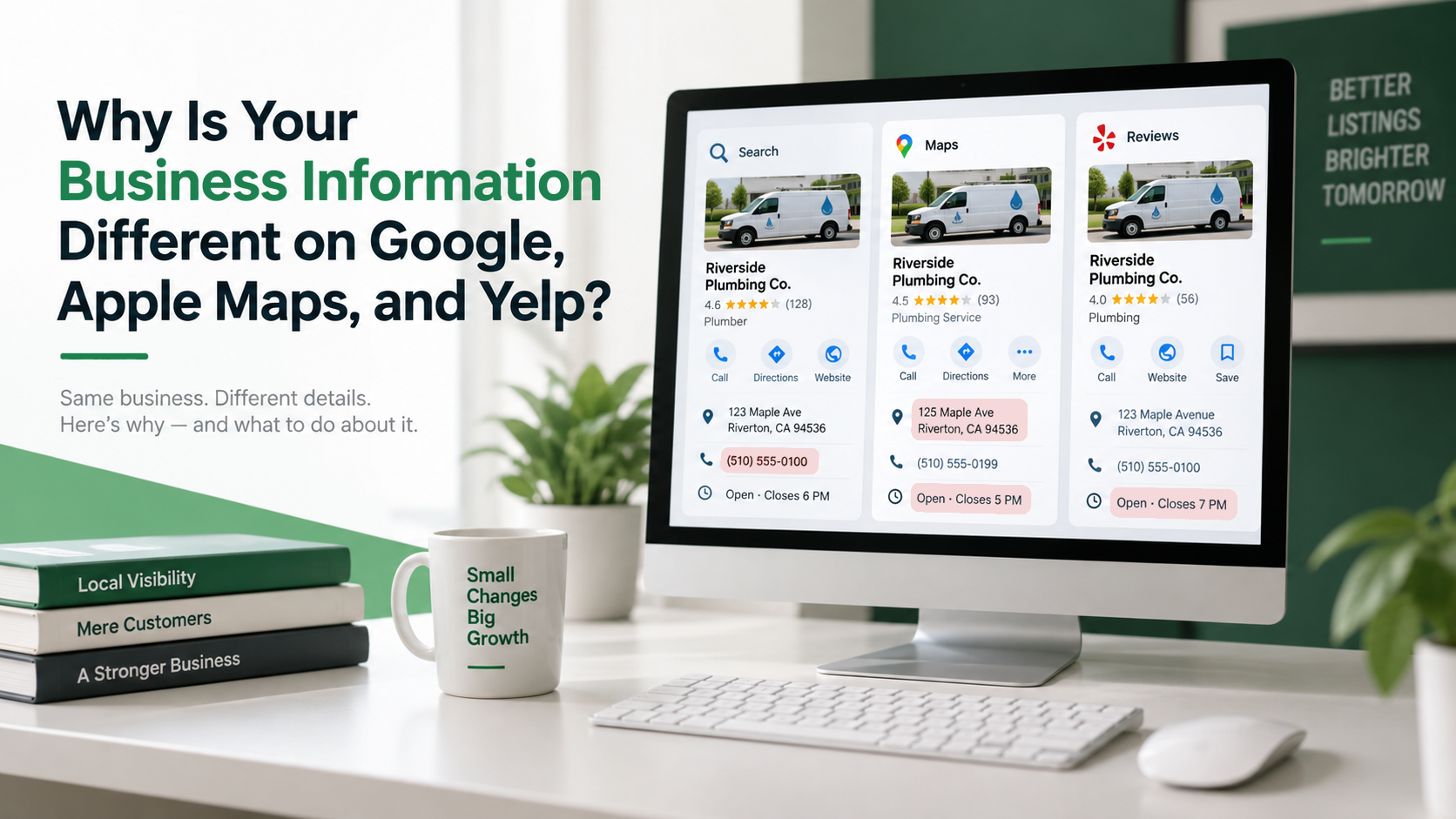
Your website, Google Business Profile, and directory listings should accurately describe your business and how customers can reach it. Content supports this broader local presence, but publishing articles alone does not secure a Google Maps position.
Our directory listing services help manage business information across directories. For a broader introduction, explore our local SEO guide for Miami businesses.
How do internal links make SEO content more useful?
Internal links connect related pages on your website. They help readers find the next useful resource and help search engines discover pages and understand relationships between your content and services.
An article about gutter installation costs can link to a gutter installation service page. The service page can link back to the guide where a longer pricing explanation would help the customer.
Use descriptive linked text that explains the destination. Place links where they support the discussion, rather than adding an unrelated list of services to every article. A reader researching a specific service should have a clear route to that service and its contact options.
Our SEO services can help strengthen the relationships between core pages, supporting articles, and relevant search topics.
Should you update an existing article or publish a new one?
Update an existing article when it already addresses the right topic but contains outdated information, incomplete answers, or an unclear structure. Publish a new article when it answers a distinct customer need that your website does not adequately cover.
Start with the page’s purpose and performance. If it already earns relevant impressions, a careful improvement may build on that visibility. Preserve useful explanations and add missing information instead of replacing the page with generic text.
A meaningful update might correct an outdated process, explain an unanswered cost question, add a genuine example, or repair links. Changing the publication date or adding a paragraph solely to make the page appear fresh does not establish new value.
When reviewing competing websites, look for the question your page leaves unanswered. Use that finding to improve your own explanation, rather than copying a competitor’s structure or expanding the article without a reason.
How often should a business publish SEO content?
Publish at a pace that allows you to create accurate, useful content and maintain the pages you already have. There is no universal number of monthly articles that guarantees rankings, and publishing more pages is not a substitute for covering the right topics.
A business with weak service pages may benefit more from strengthening those pages than from increasing blog frequency. A business with complete service coverage may have room for new articles about customer questions, comparisons, or preparation.
Keep a schedule your team can sustain, but choose each topic for a reason. Review the content after publication and adjust the plan as you learn which questions attract relevant visitors.
How can you measure whether SEO content is working
Measure whether content gains visibility for relevant searches, brings suitable visitors to your website, and contributes to inquiries your team can use. Rankings and traffic provide context; business outcomes show whether that visibility is valuable.
Use Google Search Console to review impressions, clicks, queries, and page performance. Use analytics and your lead records to understand what visitors do after arriving and whether their inquiries match your services.
- Check which service-related queries are gaining impressions and clicks.
- Review whether articles lead visitors toward relevant service pages.
- Track completed inquiries and appointments, not only button clicks.
- Record lead quality and outcomes using consistent criteria.
- Compare comparable periods and consider seasonality, website changes, and marketing activity.
Give changes time to be discovered and evaluated, then review the evidence. If a page gains visibility but attracts unsuitable inquiries, reconsider its topic or geographic relevance. If suitable visitors arrive but rarely contact you, review the offer, service information, and contact experience.
How The Business Theory helps businesses build an SEO content strategy
As an SEO company in South Florida, The Business Theory helps service-based businesses connect useful website content with their search visibility and business goals. Our approach considers the services you offer, the areas you serve, the questions customers ask, and the opportunities visible in your existing search performance.
Depending on your needs and selected services, the work can include strengthening existing pages, developing supporting articles, improving internal links, and monitoring search performance. Content works best when it is supported by an accessible website and clear paths to contact.
If you are planning a new website, our custom website design services provide a foundation for presenting your services and helping customers take the next step.
Plan your next content investment around a clear opportunity
Your next step may be a stronger service page, a targeted article, or an update to content that already earns impressions. Choose the work that addresses a real gap and gives customers more useful information.
Start with our free SEO audit for an initial look at website SEO issues, or schedule a free consultation to discuss a content strategy for your business.
About The Business Theory
The Business Theory is an award-winning website design and digital marketing agency helping service-based businesses build stronger online presences and attract more qualified customers. We specialize in custom website design, Search Engine Optimization (SEO), directory listings, Google Ads, Meta Ads, social media posting, content marketing, and link building, with strategies tailored to each business rather than a one-size-fits-all approach. Whether you need a new website, stronger search visibility, or a more coordinated digital marketing strategy, explore our services or schedule a free consultation to learn how The Business Theory can support your business goals.