Local SEO Miami: How to Rank Your Business Higher in Local Search
Share this article
If your Miami business isn’t appearing when potential customers search for the services you offer, local SEO can help improve your visibility where it matters most. Local SEO in Miami focuses on helping businesses appear more prominently in Google Search, Google Maps, and other location-based search results when nearby customers are actively looking for their products or services.
For businesses competing across Miami and South Florida, ranking well locally requires more than simply adding city names to a website. Google considers signals such as your website content, Google Business Profile, business information across online directories, reviews, local relevance, backlinks, and the overall usefulness and authority of your online presence.
In this guide, we’ll explain how local SEO works for Miami businesses, which ranking factors matter most, how long local SEO can take, and what you can do to improve your visibility in local search results. Whether you serve customers throughout Miami-Dade County or specific communities such as Miami, Coral Gables, Doral, Kendall, or Miami Beach, the goal is the same: help the right customers find your business when they are searching for the services you provide.
What Is Local SEO and How Does It Work for Miami Businesses?
Local SEO is the process of optimizing a business’s online presence so it can appear more prominently when people search for products or services in a specific geographic area. For Miami businesses, that means improving visibility in Google Search, Google Maps, and local search results when potential customers search for nearby services.
Unlike traditional SEO, which may target customers anywhere, local SEO focuses on connecting businesses with people searching within the areas they actually serve. Google uses signals such as relevance, distance, prominence, website content, Google Business Profile information, reviews, business directory listings, and local authority to determine which businesses appear for location-based searches.
For example, someone might search for “mold inspection Miami,” “web designer near me,” or “pest control in Coral Gables.” Local SEO helps Google understand what your business offers, where you provide those services, and whether your business is a relevant and trustworthy result for that search.
Why Is Local SEO Important for Miami Businesses?
Miami is a highly competitive market where customers often have dozens of businesses to choose from for the same service. Strong local visibility can put your business in front of potential customers at the exact moment they are searching for what you offer.
Local SEO can help Miami businesses:
- Appear more prominently in relevant Google searches
- Increase visibility in Google Maps and local results
- Reach customers within specific service areas
- Build trust through reviews and consistent business information
- Generate more qualified website traffic, calls, and inquiries
- Compete for searches with strong local buying intent
For service-based businesses in particular, local SEO is less about attracting the most website visitors and more about attracting the right visitors—people in your service area who are actively searching for the services you provide.
What Is the Difference Between Local SEO and Traditional SEO?
Traditional SEO focuses on improving a website’s visibility in organic search results, often without a strong geographic component. Local SEO adds location and proximity signals to that strategy, helping search engines connect a business with searches occurring in or related to its service area.
A Miami business may therefore use traditional SEO to build the overall authority and usefulness of its website while using local SEO to strengthen visibility for searches connected to Miami, Miami-Dade County, nearby communities, and “near me” searches.
Both strategies can work together. A well-optimized website gives Google useful information about your services, while your Google Business Profile, reviews, directory listings, locally relevant content, and other signals help establish where your business operates and who it serves.
What Are the Most Important Local SEO Ranking Factors?
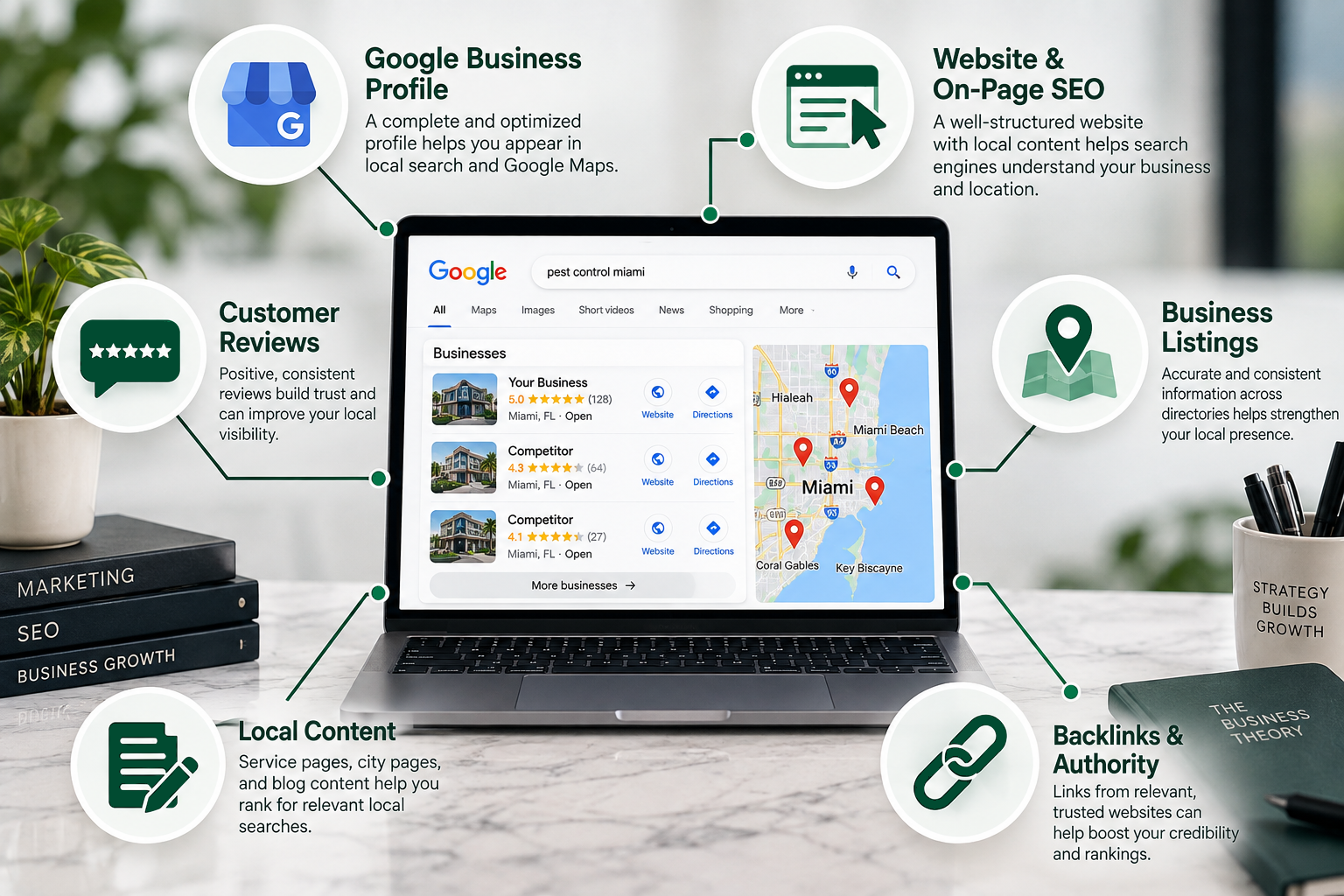
Google uses multiple signals to determine which businesses appear in local search results. For Miami businesses, strong local SEO comes from creating a consistent picture of what your business does, where it operates, and why it is a relevant and trustworthy result for a potential customer’s search.
There is no single optimization that guarantees a top position. Instead, businesses should strengthen several local search signals together, including their website, Google Business Profile, reviews, business information, locally relevant content, and overall online authority.
Optimize Your Google Business Profile
A complete and accurate Google Business Profile can help Google understand your business and connect it with relevant local searches. Businesses should maintain accurate contact information, business hours, categories, services, photos, and other applicable profile details.
Your website and Google Business Profile should also reinforce one another. The services and locations described on your profile should be supported by useful, relevant information on your website rather than relying on the profile alone.
Keep Your Business Information Consistent Across the Web
Your business name, address, phone number, website, and other important information should remain accurate and consistent wherever your company appears online. Outdated or conflicting information across directories can create a poor experience for both potential customers and search engines.
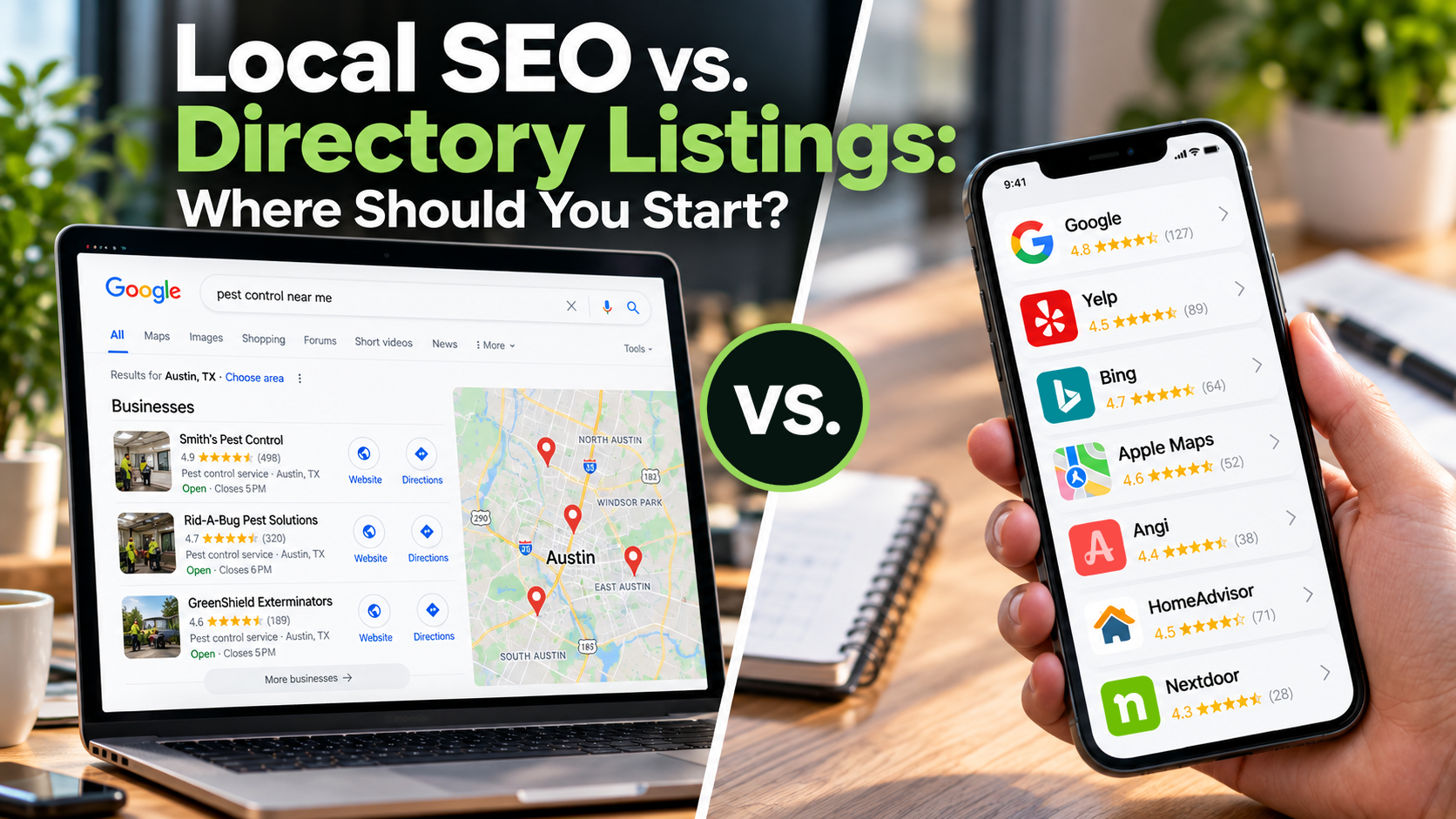
This is where professionally managed directory listing services can support a broader local SEO strategy by helping businesses maintain accurate information across relevant online directories and listing platforms.
Build a Strong Review Profile
Customer reviews can influence both consumer trust and local visibility. Businesses should consistently encourage genuine customers to leave reviews, respond professionally to feedback, and avoid tactics designed to artificially manipulate ratings.
Reviews can also provide Google and potential customers with additional context about the services a business provides and the experiences previous customers have had.
Create Helpful Location-Relevant Website Content
Your website should clearly explain your services and the geographic areas you serve. For businesses operating across Miami-Dade County, that may include dedicated service information and locally relevant content for communities where the company genuinely conducts business.
However, local optimization should go beyond repeatedly adding city names to a page. Each page should provide useful information that matches what someone in that location is actually searching for, while avoiding thin or substantially duplicated location pages.
A strong website structure is an important part of that process. Our custom website design services focus on building search-friendly websites with clear service architecture, on-page SEO foundations, and content structures designed for service-based businesses.
Strengthen Your Website's Local Authority
Links and mentions from relevant websites can help search engines better understand the authority and reputation of your business. Local organizations, industry publications, business associations, community resources, and other reputable websites can all contribute to a stronger online presence when the relationship is legitimate and relevant.
Quality matters more than simply accumulating as many links as possible. A thoughtful link-building strategy should focus on earning relevant connections that strengthen your website's authority rather than pursuing low-quality backlinks solely to increase a link count.
Improve the Technical and On-Page SEO of Your Website
Local visibility still depends heavily on the quality of the website behind the business. Search engines need to be able to crawl, understand, and index your pages, while visitors need a website that loads properly, works well on mobile devices, and makes it easy to find the information they need.
Page titles, headings, internal links, service content, location relevance, site structure, structured data, and other on-page elements all contribute to how clearly search engines understand your website.
For businesses that want help improving these signals, our local SEO services combine on-page optimization, local search strategy, content, and other SEO improvements designed to increase qualified organic visibility.
How Do You Improve Local SEO for a Miami Business?
Improving local SEO for a Miami business requires strengthening both your website and your presence across Google's local search ecosystem. The most effective strategy combines Google Business Profile optimization, locally relevant website content, accurate business listings, customer reviews, on-page SEO, internal linking, and authority-building rather than relying on any single ranking tactic.
For businesses competing throughout Miami and Miami-Dade County, these steps can help build stronger local search visibility over time.
1. Identify the Local Searches Your Customers Actually Use
Local SEO should begin with understanding how potential customers search for your services. Instead of optimizing around broad keywords alone, research combinations of your service, location, and customer intent.
For example, a service business might discover searches such as:
- “mold inspection Miami”
- “Miami web design company”
- “pest control Coral Gables”
- “SEO company Miami”
- “Google Ads agency South Florida”
These searches reveal more than keywords—they show what potential customers are trying to accomplish. Your website should have pages and content capable of satisfying those different search intents instead of attempting to rank one page for every possible variation.
2. Optimize Your Most Important Service Pages
Your core service pages should clearly answer the questions a potential customer has before contacting your business: What do you offer? Who is it for? Where is it available? What does it include? How does the process work? How much does it cost when pricing can reasonably be provided?
Each important service should generally have its own focused page rather than being buried within a single general services page. Titles, headings, introductory copy, FAQs, images, internal links, and calls to action should all reinforce the primary topic of that page naturally.
This approach also makes your content easier for traditional search engines and AI-powered search experiences to understand because each page establishes a clear subject and purpose.
3. Strengthen Your Google Maps Visibility
For many local searches, potential customers encounter Google Maps results before traditional organic listings. An optimized Google Business Profile, accurate business information, appropriate categories, reviews, photos, services, and a strong website can all contribute to a business's overall local search presence.
If your business isn't appearing where you expect it to, there may be more involved than simply adding keywords to your profile. Our guide to why your business isn't showing up on Google Maps explains several common reasons businesses struggle to gain local visibility.
4. Build Content Around Real Customer Questions
One of the strongest ways to expand local search visibility is to answer the questions potential customers are already asking.
Instead of publishing generic articles simply to keep a blog active, create content around specific problems, comparisons, costs, timelines, misconceptions, and decision-making questions related to your services.
For example, a Miami service business might create content answering:
How much does the service cost in Miami?
How long does the service take?
When should I hire a professional?
What should I look for when choosing a company?
What happens during the service?
This type of question-based content is particularly useful for answer engine optimization (AEO) because it provides concise, extractable answers while giving readers the option to continue into more detailed explanations.
5. Connect Your Content With Strategic Internal Links
Every new article shouldn't exist as an isolated page. Relevant informational content should connect naturally to service pages, related articles, location pages, and other resources that help visitors continue researching the topic.
For example, an article explaining a common customer problem can link to the service that solves it, while the service page can link to supporting educational resources for visitors who need additional information before contacting the business.
This creates clearer topical relationships throughout your website and helps visitors—and search engines—discover related content.
6. Measure Rankings, Traffic, and Leads Separately
Higher rankings are useful, but ranking #1 is not the ultimate business goal—generating qualified customers is.
Monitor Search Console data to see which queries are gaining impressions, which pages are moving closer to page one, and where strong visibility isn't producing clicks. Then compare that information with actual calls, forms, appointments, purchases, or other conversions.
A page moving from position 20 to position 8 is meaningful progress even before it reaches the top three. Likewise, a page receiving thousands of impressions but very few clicks may need improvements to its search intent, title, description, or overall positioning rather than simply more content.
7. Continue Improving Pages That Are Already Gaining Visibility
Local SEO shouldn't be treated as a one-time website project. Search behavior changes, competitors improve their websites, businesses add services, and Google continues evaluating available results.
Review pages that are already receiving impressions before constantly creating something new. A page sitting between positions 5 and 20 can sometimes represent a much stronger opportunity than a brand-new page with no established search visibility.
Updating outdated information, expanding incomplete answers, improving internal links, adding relevant FAQs, strengthening supporting content, and better matching search intent can help an existing page become more useful and competitive.
How Long Does Local SEO Take to Work?
Most businesses can begin seeing measurable movement from local SEO within three to six months, although the timeline varies based on competition, the condition of the website, existing authority, location, and how much optimization has already been completed. More competitive markets like Miami may require consistent SEO work beyond that initial period to achieve and maintain stronger rankings.
Local SEO is cumulative. Google needs time to crawl updated pages, evaluate new content and links, process changes to business information, and determine how your website compares with other businesses competing for the same searches.
What Can Affect How Quickly Local SEO Works?
Two businesses offering similar services in Miami may experience very different timelines. A company with an established website, strong reviews, accurate listings, and existing organic visibility may have a stronger starting point than a newer business building its online presence from the ground up.
Factors that can influence the timeline include:
- Your website's current rankings and authority
- Competition for your target services and locations
- The quality and depth of your service pages
- Google Business Profile optimization
- The number and quality of customer reviews
- Accuracy of business listings across the web
- Relevant backlinks and other authority signals
- Technical and on-page SEO issues
- How consistently useful content is published and improved
This is also why SEO timelines should be based on actual search performance rather than promises of immediate rankings.
Can a Business Rank Faster for Some Keywords Than Others?
Yes. A business may begin ranking relatively quickly for specific service-and-location searches while taking considerably longer to compete for broader, higher-volume keywords.
For example, ranking for a highly specific service in a particular Miami-Dade community may require less competition than trying to reach the top results for a broad search such as “SEO company Miami.”
Search Console can also reveal keywords where a website is already close to stronger positions. Improving a page ranking around positions 8–15 may offer a more immediate opportunity than targeting an entirely new keyword for which the website has no established visibility.
Is Local SEO a One-Time Investment?
No. Local SEO works best as an ongoing strategy because rankings, competitors, search behavior, website content, reviews, and Google's search results continue to change.
Initial optimization establishes the foundation, but maintaining and improving visibility typically requires continued monitoring, content improvements, on-page optimization, authority building, and adjustments based on actual search performance.
At The Business Theory, we recommend committing to at least six months of SEO so there is enough time to implement the strategy, collect meaningful performance data, and evaluate how rankings and organic visibility are developing. You can learn more about what's included in our local SEO services and how we approach ongoing optimization for service-based businesses.
Does Ranking #1 Happen in Three to Six Months?
How Much Does Local SEO Cost in Miami?
The cost of local SEO in Miami varies depending on the competitiveness of your industry, the number of services and locations you want to target, your website's current condition, and the amount of ongoing optimization required. At The Business Theory, local SEO plans start at $747.50 per month, with a one-time $249 setup fee.
Businesses competing across multiple South Florida markets or requiring more extensive optimization may benefit from a more comprehensive SEO plan.
What Does The Business Theory Charge for SEO?
The Business Theory currently offers three SEO plans for service-based businesses:
- Pro SEO: $747.50 per month
- Plus SEO: $997.50 per month
- Platinum SEO: $1,247.50 per month
- One-Time Setup Fee: $249 for all plans
We recommend a minimum six-month SEO commitment because meaningful organic growth generally requires time to implement optimizations, measure search performance, and make improvements based on real data. After the initial six months, service continues month to month.
You can review our SEO services and plans to learn more about the available options and what is included.
What Determines the Cost of Local SEO?
Local SEO pricing can vary significantly because businesses do not all require the same amount of work. A company targeting one primary service in a smaller geographic area may have very different needs from a business offering several services throughout Miami-Dade, Broward, and Palm Beach counties.
Factors that can affect the scope of an SEO campaign include:
- Number of services being optimized
- Number of geographic markets being targeted
- Current website rankings and organic visibility
- Quality and structure of existing website content
- Level of local competition
- Technical and on-page SEO requirements
- Content creation needs
- Business listing and citation management
- Backlink and authority-building needs
- Existing Google Business Profile presence
A proper SEO strategy should therefore be based on the business's actual goals and competitive environment rather than choosing a package solely because it promises a certain number of keywords.
Is Local SEO Worth the Investment for a Small Business?
Local SEO can be valuable for businesses whose customers actively use Google to find nearby services. Unlike advertising, where visibility generally stops when the advertising budget stops, SEO focuses on building organic search visibility that can continue generating exposure as pages gain and maintain rankings.
That does not mean SEO produces permanent rankings or immediate results. Continued competition and changes in search results mean businesses still need to maintain their online presence.
The potential value is greatest when SEO attracts searches with real commercial intent. Ranking for a smaller number of searches made by people who genuinely need your services can be more valuable than generating large amounts of traffic from visitors who are unlikely to become customers.
Should You Choose the Cheapest SEO Company?
Price should be considered, but it should not be the only factor when choosing an SEO provider. Extremely inexpensive SEO may involve limited optimization, generic content, low-quality backlinks, or strategies that are not tailored to the business's actual market.
Before hiring an SEO company, ask what work will actually be performed, how progress will be measured, what reporting is provided, and whether the strategy addresses your website, content, local presence, and authority as a whole.
A reputable SEO provider should also avoid guaranteeing a specific #1 Google ranking. No SEO company controls Google's rankings, and legitimate optimization focuses on improving the signals and content that make a website more competitive for relevant searches.
Can You Do Local SEO Yourself?
Yes, small business owners can handle some local SEO tasks themselves, especially foundational work such as maintaining an accurate Google Business Profile, requesting customer reviews, checking business information, and creating helpful website content. However, local SEO becomes more complex when a business needs to compete for valuable searches across multiple services, cities, or highly competitive markets like Miami.
The right approach depends on your available time, SEO knowledge, competition, and how important organic search is to generating new business.
What Local SEO Tasks Can Business Owners Handle Themselves?
There are several local SEO activities that do not necessarily require an agency. Business owners who have the time to manage their online presence can start with:
- Keeping Google Business Profile information accurate
- Adding relevant services and business information
- Uploading current photos
- Responding to customer reviews
- Encouraging satisfied customers to leave genuine reviews
- Checking that contact information is consistent online
- Publishing useful information about services and customer questions
- Keeping website content accurate and up to date
- Monitoring basic performance in Google Search Console
These steps can create a stronger foundation, particularly for newer businesses that have done little local optimization.
When Does Local SEO Become More Difficult?
Local SEO becomes more complicated when a business needs to determine which searches to target, which pages should rank for them, why competitors are outranking the website, and what changes are most likely to improve performance.
For example, a website may already appear on Google but consistently rank on page two. Another business may receive thousands of impressions without generating clicks. In other cases, several pages may compete for similar keywords, making it difficult for Google to determine which page is the strongest result.
Solving those problems can require deeper keyword research, competitor analysis, technical SEO, content optimization, internal linking, local landing-page strategy, structured data, backlink analysis, and ongoing Search Console monitoring.
Do You Need an SEO Agency to Rank Locally?
Not every business needs to hire an SEO agency. A business owner with the necessary time and knowledge may be able to manage local optimization independently, particularly in a less competitive market.
Professional SEO becomes more valuable when organic search is an important source of leads, competition is strong, rankings have stalled, or the business is expanding into multiple services and locations.
An SEO provider can also use performance data to prioritize opportunities rather than making changes based solely on assumptions. For example, a page already ranking on the second page of Google for a valuable search may deserve attention before creating an entirely new page.
How Can You Tell If Your Website Needs SEO Help?
One of the easiest places to start is by looking at your existing search performance. If your website receives impressions but very few clicks, important pages are stuck outside the top results, or customers cannot find you for searches directly related to your services, there may be opportunities to improve your SEO.
A website SEO review can help identify issues involving content, rankings, page structure, technical optimization, and search visibility. If you're unsure where your website currently stands, our free SEO audit provides a starting point for evaluating your site's search presence.
Not necessarily. The three-to-six-month timeframe refers to when businesses may begin seeing meaningful SEO movement—not a guarantee of reaching the first organic position.
Reaching the top results depends on the competitiveness of the search, the strength of competing websites, geographic relevance, authority, content quality, and many other factors. Some searches may improve considerably faster than others.
A better way to evaluate local SEO progress is to look for increasing impressions, improving average positions, more relevant organic traffic, and ultimately more qualified leads. Those signals show whether the strategy is moving in the right direction even before a particular keyword reaches the top position.
Should You Learn SEO or Hire Someone to Manage It?
For many small business owners, the decision comes down to time versus complexity. Learning the fundamentals of local SEO can be useful even if you eventually hire someone, because it helps you understand what is being done and what meaningful progress looks like.
If you're managing a competitive service business, however, SEO can quickly become an ongoing responsibility involving research, content, optimization, analytics, and testing. In that situation, outsourcing SEO allows the business owner to remain focused on operating the business while someone else manages search performance.
Neither approach automatically guarantees higher rankings. What matters is whether the strategy is based on useful content, sound SEO practices, accurate data, and continuous improvement.
How Do You Rank Higher on Google Maps in Miami?
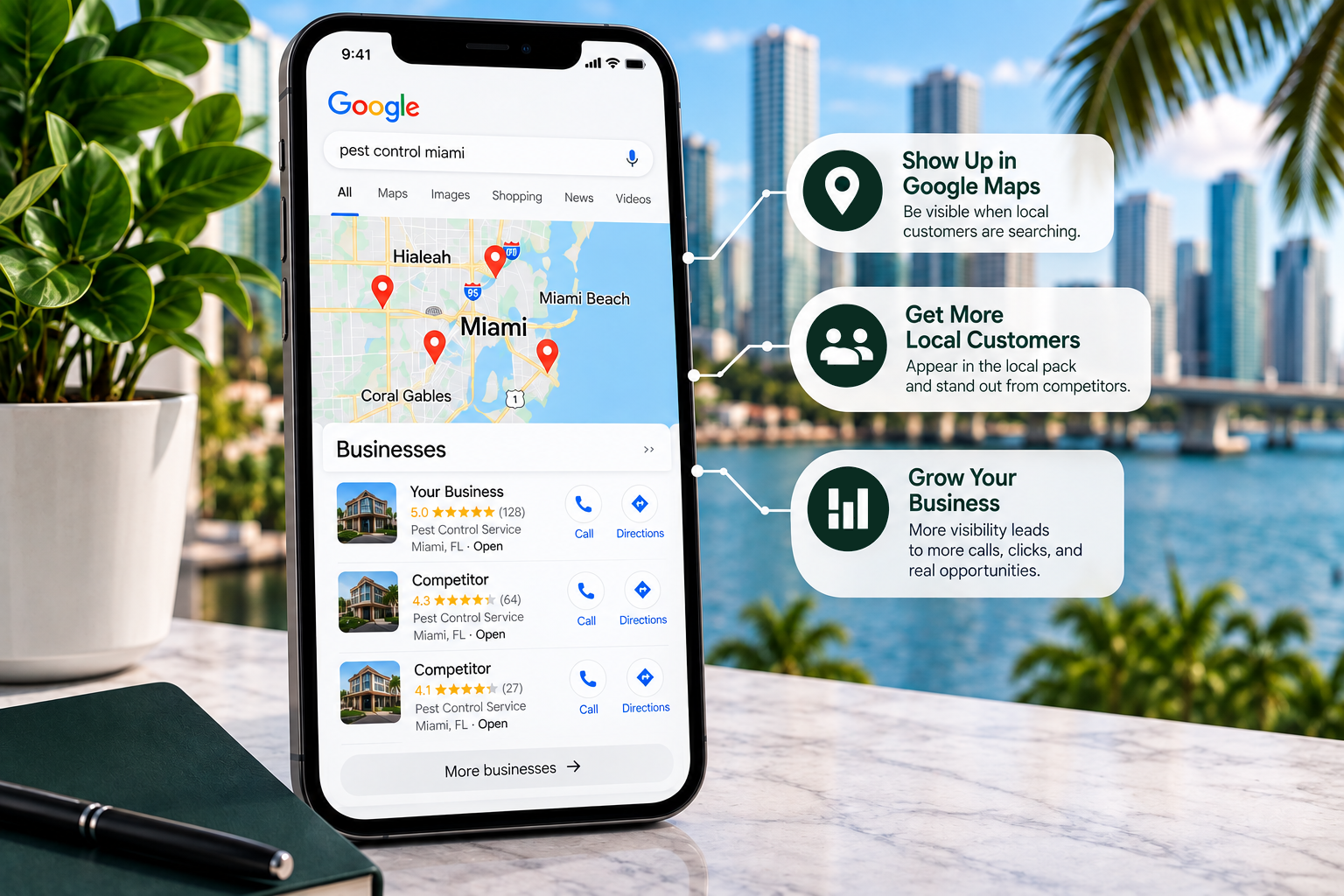
Ranking higher on Google Maps in Miami requires more than simply creating a Google Business Profile. Businesses need to strengthen their relevance, prominence, and overall local presence so Google can confidently connect them with people searching for their services in the areas they serve.
Your Google Business Profile is an important part of that strategy, but your website, reviews, business listings, local authority, and proximity to the searcher can also influence which businesses appear in local results.
Complete and Optimize Your Google Business Profile
Start by making sure your Google Business Profile accurately represents your business. Your primary category should closely match your core service, while additional categories should only be used when they genuinely describe other services you provide.
Businesses should also keep important profile information current, including:
- Business name
- Address or service area
- Phone number
- Website
- Business hours
- Categories
- Services
- Photos and other applicable business information
Avoid adding unnecessary keywords to your business name or selecting categories simply because you want to rank for them. Your profile should accurately represent the real-world business.
Make Your Website Relevant to the Services and Areas You Serve
Google Maps optimization doesn't stop at your Google Business Profile. Your website gives search engines additional context about what your business does and where those services are available.
For a Miami service business, your website should clearly describe your primary services, service area, and the questions potential customers commonly ask. When appropriate, dedicated service or location pages can provide more detailed information for individual services and communities.
The goal isn't to create dozens of nearly identical pages with different city names. Each page should provide enough unique and useful information to deserve its own place in search results.
Earn and Respond to Genuine Customer Reviews
Reviews can help potential customers evaluate a business while also contributing to its overall local presence.
Encourage customers to leave honest feedback about their experience, and respond to reviews professionally. Over time, a consistent stream of genuine reviews can provide stronger trust signals than receiving a large number of reviews all at once and then going months without activity.
Businesses should never purchase reviews or offer incentives in exchange for positive ratings.
Keep Business Listings Accurate
Google can encounter information about your company across many different websites. Keeping your core business information accurate across important directories reduces conflicting information and creates a more consistent online presence.
If your company has changed its phone number, address, website, hours, or other important information, those changes should be reflected across relevant listings rather than only on your Google Business Profile.
Our directory listing services help businesses manage and maintain accurate information across online business directories as part of a broader local visibility strategy.
Build Local Authority Beyond Your Google Business Profile
Google Maps visibility isn't created entirely inside Google Business Profile. A strong local business can also earn mentions and links from relevant organizations, industry websites, community resources, local publications, associations, and other credible sources.
These signals can help establish that your company is a legitimate and recognized business within its market.
For Miami businesses, that means building a genuine presence within Miami and Miami-Dade County, rather than trying to manufacture hundreds of low-quality links simply because they contain a location keyword.
Why Isn't My Business Showing Up on Google Maps?
A business may struggle to appear prominently on Google Maps because of competition, proximity, weak relevance, incomplete business information, limited reviews, website issues, insufficient local authority, or problems with the Google Business Profile itself.
Your ranking can also change depending on where the person searching is physically located. A business may appear prominently for someone searching nearby but rank much lower for the same search performed from another part of Miami.
If your profile exists but your business still isn't receiving the visibility you expect, read our guide explaining why your business may not be showing up on Google Maps for a deeper look at common causes.
Can You Guarantee a #1 Google Maps Ranking?
No legitimate SEO company can guarantee the #1 position on Google Maps. Local results can vary based on the search query, the searcher's location, competing businesses, relevance, prominence, and other signals evaluated by Google.
The better goal is to strengthen your business's overall local search presence so you can become more competitive for the services and geographic areas that actually generate customers.
Does Your Website Affect Local SEO Rankings?
Yes. Your website can significantly influence local SEO because it helps search engines understand what services your business provides, where you provide them, and how relevant your business is to a local search. A strong Google Business Profile can support local visibility, but it should be backed by a well-structured, useful, and search-friendly website.
For Miami businesses, the website should clearly establish both service relevance and geographic relevance without relying on repetitive location keywords or thin city pages.
Create a Clear Website Structure
Search engines and visitors should be able to understand your website's organization easily. Important services should generally have dedicated pages, and those pages should be accessible through logical navigation and internal links.
For example, a service-based business might structure its website around:
- Core service pages
- Individual service or specialty pages
- Relevant location pages
- Educational articles and resources
- About and trust-building content
- Contact and conversion pages
A clear structure also makes it easier to connect informational articles with the commercial service pages they support.
Optimize Individual Service Pages
Each major service page should have a clear primary purpose rather than attempting to rank one page for every service the business provides.
Strong service pages typically explain what the service is, who needs it, how it works, where it is available, what customers should expect, and common questions surrounding the service.
Page titles, H1s, supporting headings, copy, images, internal links, FAQs, and calls to action should reinforce that primary topic naturally.
Use Location Pages When They Provide Real Value
Location pages can help businesses establish relevance for communities they genuinely serve, but simply duplicating the same page and replacing one city name with another creates little value for users.
A useful location page should provide information that makes sense for someone searching for that service in the specific area. Depending on the business, that might include service availability, local considerations, commonly requested services, relevant FAQs, customer experiences, or other location-specific information.
For businesses serving Miami-Dade County, this could mean creating useful pages for important markets such as Miami, Coral Gables, Doral, Kendall, or Miami Beach when there is a legitimate reason for each page to exist.
Make Your Website Mobile-Friendly
Local searches frequently happen when potential customers need information quickly. Your website should work properly across smartphones, tablets, and desktop devices without requiring visitors to zoom, struggle with navigation, or hunt for basic contact information.
Important actions such as calling the business, requesting a quote, scheduling an appointment, or submitting a form should be easy to complete from a mobile device.
Help Search Engines Understand Your Content
Good website design isn't only visual. Search engines need a clear content hierarchy and enough context to understand each page.
Descriptive page titles, properly organized headings, internal links, image alt text, structured data when appropriate, clear service information, and crawlable content can all contribute to a stronger SEO foundation.
This is one reason we build our custom websites for service-based businesses with SEO foundations incorporated into the website structure rather than treating search optimization as an afterthought.
Does Website Speed Affect Local SEO?
Website performance matters because visitors expect pages to load and function properly. A slow or unstable website can create a poor experience, particularly for someone searching from a mobile device.
Speed alone will not make a business rank #1 in Miami, however. It should be treated as part of the overall website experience alongside useful content, crawlability, mobile usability, search intent, local relevance, and authority.
Can a Website Rank Locally Without a Google Business Profile?
A website can appear in traditional organic search results without a Google Business Profile. However, businesses eligible for a Google Business Profile may miss important opportunities for visibility in Google Maps and local results if they do not maintain one.
The strongest local strategy generally connects the two: your website establishes detailed service and location relevance, while your Google Business Profile strengthens your presence within Google's local ecosystem.
What Is the Difference Between Local SEO and Google Ads?
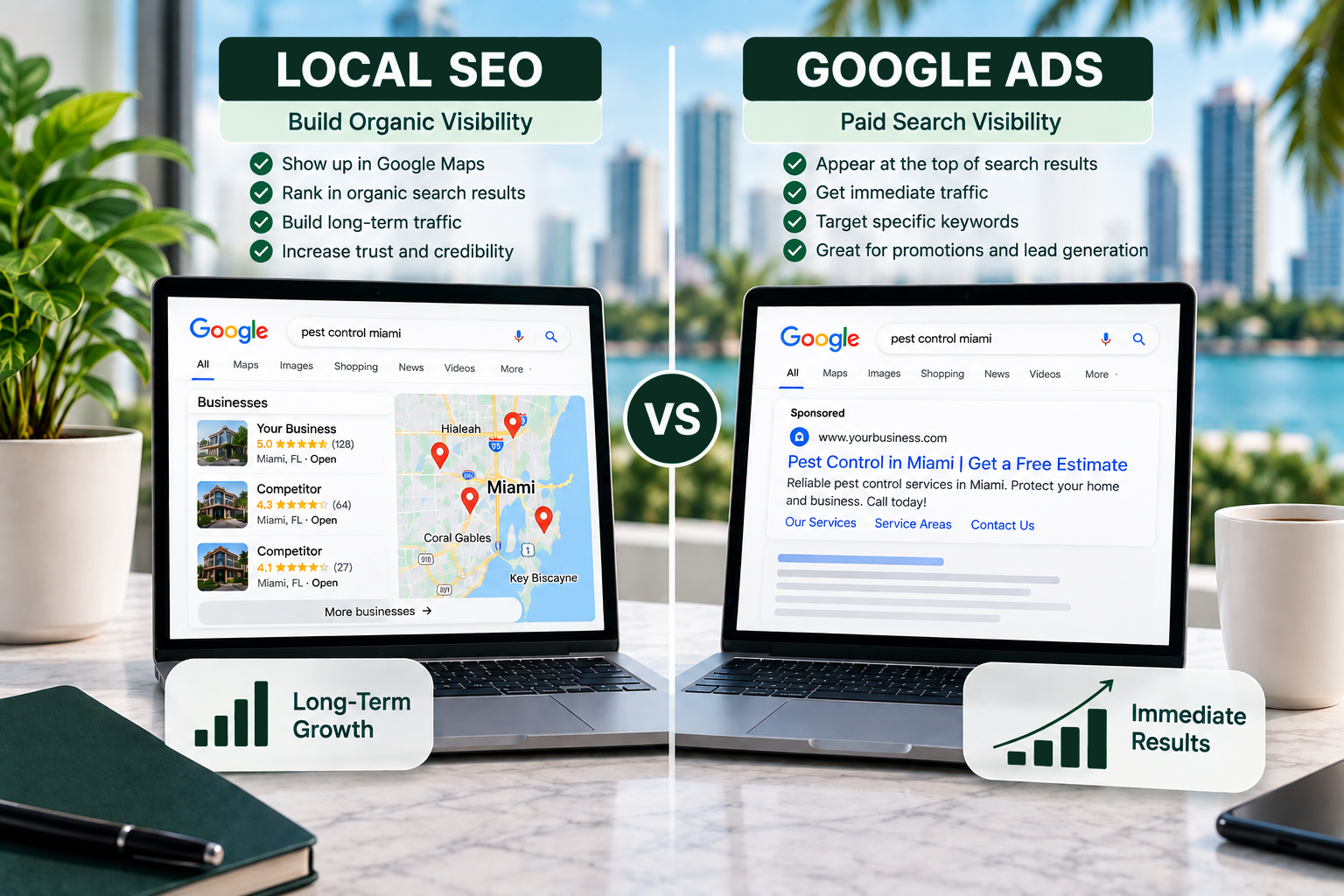
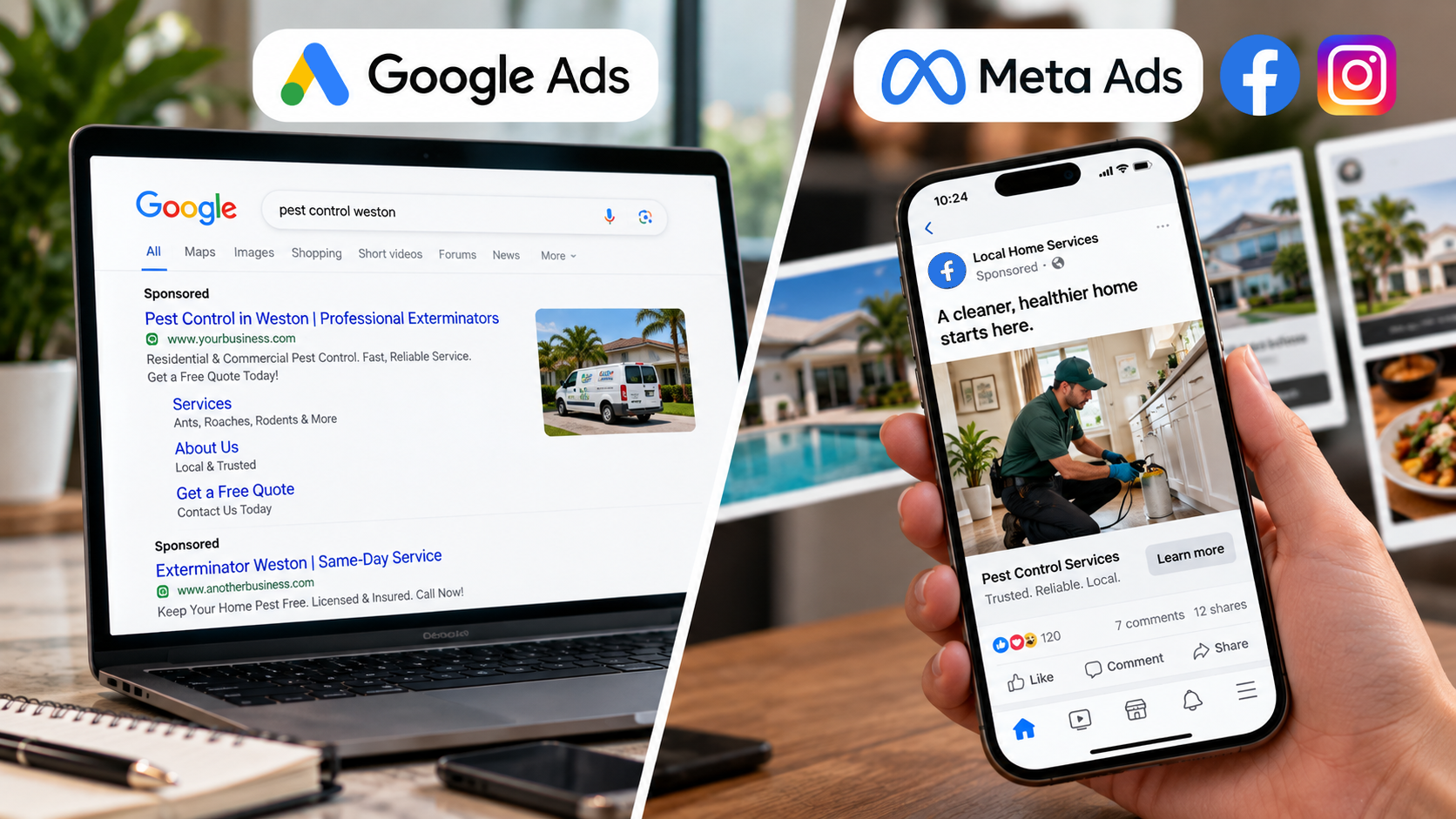
Local SEO and Google Ads can both help Miami businesses appear in front of people searching for their services, but they work differently. Local SEO focuses on building organic visibility over time, while Google Ads allows businesses to pay for placement in eligible sponsored search results and other Google advertising placements.
For many service-based businesses, the two strategies can complement each other rather than requiring an either-or decision.
How Does Local SEO Work?
Local SEO focuses on improving your website and overall local presence so your business becomes more competitive in unpaid search results.
That can include optimizing:
- Website service and location pages
- Google Business Profile
- Business directory listings
- Customer review strategy
- On-page SEO
- Internal linking
- Local content
- Backlinks and authority signals
SEO generally takes longer to develop because rankings are earned rather than purchased. However, pages that build strong organic visibility can continue attracting potential customers without paying Google for each individual click.
How Do Google Ads Work?
Google Ads allows businesses to create advertising campaigns targeting searches related to their services. Advertisers can select targeting, budgets, bidding strategies, and other campaign settings, while Google determines when eligible ads appear based on the campaign and its advertising systems.
For a Miami service business, this can provide visibility for searches with strong commercial intent while an organic SEO strategy is still developing.
Businesses interested in paid search can learn more about our Google Ads management services and how we manage campaigns for service-based businesses.
Is Local SEO Better Than Google Ads?
Neither strategy is automatically better. The right choice depends on the business's goals, timeline, budget, competition, and current online visibility.
Google Ads may be useful when a business wants to pursue paid visibility more quickly, while local SEO is designed to build organic visibility over a longer period. Ads require an ongoing advertising budget, whereas organic clicks are not charged on a per-click basis.
A business may therefore use Google Ads to generate opportunities in the short term while simultaneously investing in SEO to strengthen its long-term organic presence.
Can You Use Local SEO and Google Ads Together?
Yes. Local SEO and Google Ads can be used together as part of a broader search marketing strategy.
Paid search can provide additional visibility for high-intent searches while SEO targets organic rankings for important services, locations, and customer questions. The performance data from both channels can also help businesses better understand which services and searches generate meaningful customer interest.
For example, if certain service-related searches consistently generate qualified leads through advertising, those topics may also deserve stronger service pages and supporting organic content.
What Happens If You Stop Paying for Google Ads?
When a Google Ads campaign stops running, its paid placements stop generating traffic. SEO works differently because organic visibility is based on how search engines evaluate your website and broader online presence rather than an active advertising budget.
That doesn't mean SEO rankings are permanent. Competitors can improve, search results can change, and content can become outdated, which is why ongoing optimization remains important.
The distinction is that SEO builds an organic asset over time, while Google Ads purchases advertising visibility while campaigns are active.
How Do You Choose a Local SEO Company in Miami?
Choosing a local SEO company in Miami should involve more than comparing prices or looking for an agency that promises the fastest rankings. Look for a provider that can explain what will be optimized, how progress will be measured, which searches matter to your business, and how the strategy connects organic visibility to actual leads and customers.
A good SEO strategy should also be tailored to your services, locations, competition, and current search performance rather than applying the same checklist to every business.
Look for a Strategy Based on Your Actual Search Data
SEO recommendations should be based on evidence whenever possible. Google Search Console can reveal which searches already generate impressions, which pages are close to stronger rankings, where visibility is increasing, and where pages receive impressions without earning clicks.
This matters because the best opportunity isn't always a brand-new keyword.
A website already ranking in positions 8–20 for a valuable local search may have a stronger opportunity than a completely new page targeting a keyword for which Google has not yet established relevance.
Ask How the Agency Measures SEO Progress
Rankings are important, but they shouldn't be the only measurement used to evaluate an SEO campaign.
A local SEO company should be able to monitor indicators such as:
- Organic impressions
- Search queries
- Ranking movement
- Organic clicks
- Landing-page performance
- Google Business Profile visibility when applicable
- Calls and form submissions
- Qualified leads and conversions
The goal isn't simply to make a chart go upward. SEO should ultimately help the business become more visible to people who are actually searching for its services.
Review the Company's Own Website and SEO Presence
An SEO company's website can provide useful insight into how it approaches search optimization. Look at whether its service pages clearly explain what it offers, whether its content answers meaningful customer questions, and whether the website demonstrates a thoughtful approach to SEO rather than relying primarily on marketing claims.
Case studies, testimonials, portfolio examples, and educational content can also provide additional context about the company's experience and approach.
You can explore some of The Business Theory's client results and website projects to see examples of businesses we've worked with across different service industries.
Avoid Guaranteed #1 Ranking Promises
Be cautious of any SEO provider that guarantees a #1 Google ranking for a particular keyword.
SEO professionals can research opportunities, improve websites, strengthen content, build authority, monitor performance, and make strategic recommendations, but they do not control Google's search results.
A more credible provider should be willing to explain what it can improve, what factors may affect performance, and how progress will be evaluated over time.
Ask What Is Actually Included in the SEO Service
“SEO” can mean very different things depending on the company.
Before signing an agreement, understand whether the service includes areas such as:
keyword research, on-page optimization, technical SEO, content improvements, local SEO, business listings, reporting, Google Business Profile support, backlink strategy, and ongoing performance monitoring.
You should also understand what is not included so expectations are clear from the beginning.
Choose an SEO Partner That Understands Service-Based Businesses
Local SEO for service businesses has its own challenges. Customers often search using combinations of service + city, “near me” queries, specific problems, costs, comparisons, and urgent needs.
A local SEO strategy should therefore connect your service pages, location relevance, educational content, Google Business Profile, directory presence, and website authority rather than treating each piece separately.
The Business Theory provides local SEO services for service-based businesses throughout Miami and South Florida, with strategies focused on improving relevant organic visibility and turning search traffic into opportunities for customer acquisition.
Should You Hire a Miami-Based SEO Company?
You don't necessarily need to hire an SEO company physically located in Miami to improve local search visibility there. What matters more is whether the provider understands local search intent, your target market, your service areas, and how to build geographic relevance appropriately.
However, working with a company familiar with South Florida can provide useful context around Miami-Dade, Broward, and Palm Beach markets—particularly for service businesses operating across multiple cities and counties.
Frequently Asked Questions About Local SEO in Miami
Local SEO can raise a lot of questions for Miami business owners trying to improve their visibility on Google. Here are straightforward answers to some of the most common questions about local rankings, Google Maps, service areas, and SEO for South Florida businesses.
Key Takeaways for Local SEO in Miami
Local SEO can help Miami businesses become more visible when potential customers search for services in their area, but sustainable growth comes from strengthening multiple signals together. A strong strategy connects your website, Google Business Profile, reviews, business listings, content, and authority while continuously improving based on actual search performance.
- Local SEO takes time. Businesses may begin seeing measurable movement within three to six months, but competitive rankings often require ongoing optimization.
- Your website and Google Business Profile should support each other. Strong local visibility isn't built through Google Maps alone; your website should clearly establish your services, expertise, and geographic relevance.
- Search intent matters more than keyword repetition. Create pages that genuinely answer what potential customers are searching for rather than repeatedly inserting “Miami” or other location keywords into generic content.
- Accurate business information strengthens your local presence. Keep your name, address, phone number, website, hours, and other important details consistent across relevant online directories.
- Reviews help build trust and local visibility. Encourage genuine customer feedback and respond professionally rather than relying on artificial or incentivized reviews.
- Local content should answer real customer questions. Service pages, location pages, FAQs, and educational articles can work together to build topical authority and make your website easier for traditional and AI-powered search experiences to understand.
- Existing rankings can reveal your best opportunities. Pages already receiving impressions or ranking near page one may deserve optimization before you create entirely new content.
- Ranking #1 shouldn't be the only measurement of success. Track impressions, clicks, ranking movement, qualified traffic, calls, form submissions, and leads to understand whether SEO is actually helping grow the business.
- SEO should be an ongoing strategy. Competitors, search behavior, your business, and Google's results continue to change, so successful local SEO requires monitoring and refinement over time.
- Local SEO and paid advertising can work together. SEO builds organic visibility over time, while Google Ads can provide additional paid visibility for valuable searches while organic rankings develop.
Build a Stronger Local Search Presence in Miami
Local SEO gives Miami businesses an opportunity to reach potential customers at the moment they are actively searching for nearby services. Building that visibility requires more than targeting local keywords—it means creating a connected strategy that includes a well-optimized website, Google Business Profile, accurate directory listings, customer reviews, locally relevant content, internal linking, and ongoing performance monitoring.
The businesses that perform well in local search are continually improving their online presence based on what customers are searching for and what their search data reveals. By focusing on useful content, strong local signals, and pages that genuinely answer customer questions, your business can build greater visibility across Google Search, Google Maps, and emerging AI-powered search experiences.
If your business is ready to strengthen its visibility in Miami or throughout South Florida, The Business Theory provides local SEO services for service-based businesses throughout Miami-Dade, Broward, and Palm Beach counties. Our approach focuses on identifying meaningful search opportunities, improving the pages that matter most, and building an ongoing SEO strategy designed to connect your business with people actively searching for your services.
To learn more about how we can help improve your local search presence, explore our local SEO services or get started with a free SEO audit. You can also contact The Business Theory directly at (954) 707-3727 to discuss your website, current search visibility, and opportunities for organic growth.
About The Business Theory
The Business Theory is an award-winning website design and digital marketing agency helping service-based businesses build stronger online presences and attract more qualified customers. We specialize in custom website design, Search Engine Optimization (SEO), directory listings, Google Ads, Meta Ads, social media posting, content marketing, and link building, with strategies tailored to each business rather than a one-size-fits-all approach. Whether you need a new website, stronger search visibility, or a more coordinated digital marketing strategy, explore our services or schedule a free consultation to learn how The Business Theory can support your business goals.