Is SEO Dead in the Age of AI? No, but the Rules Have Changed
Share this article
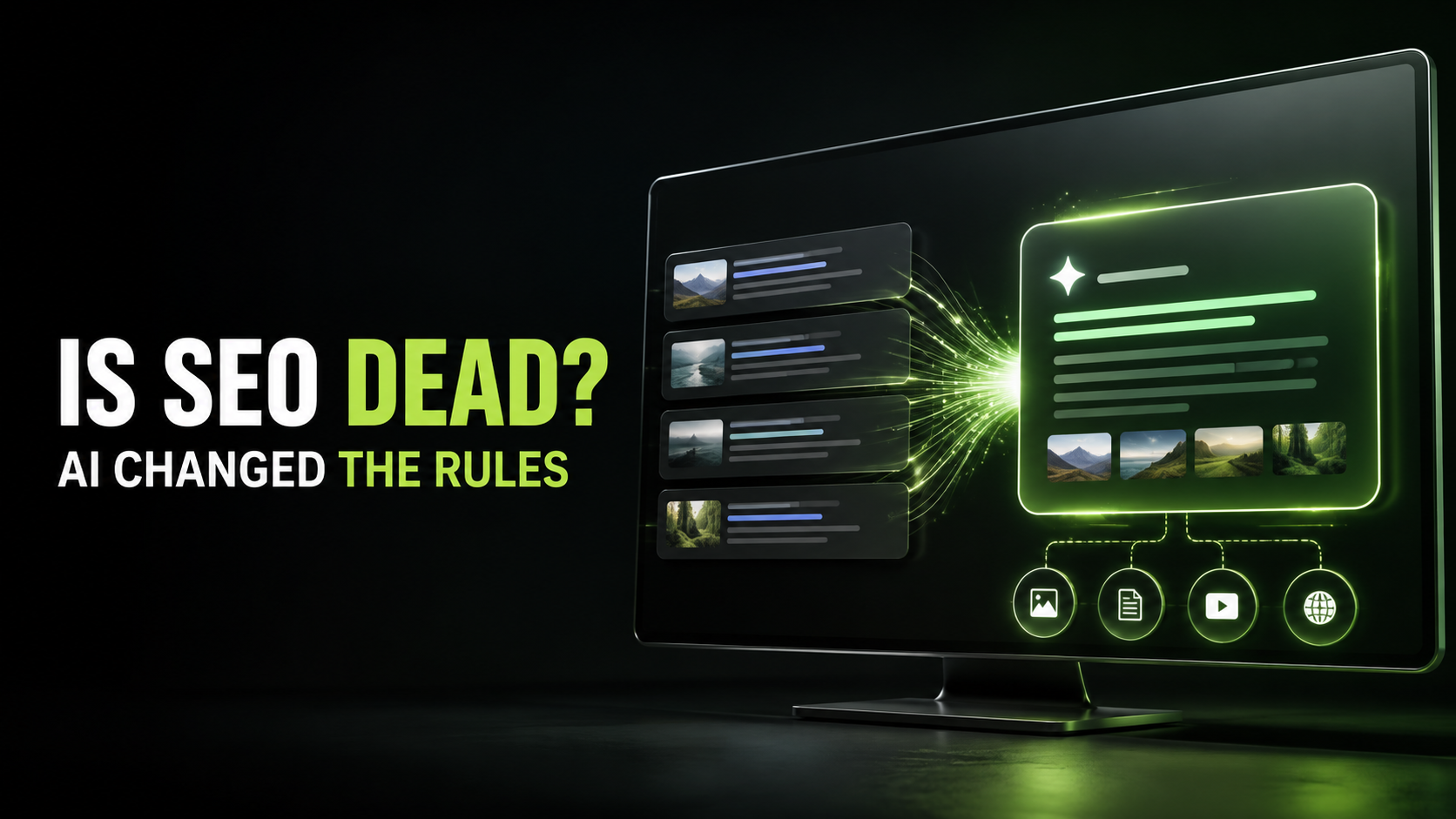
For years, SEO success was often measured by how high a website ranked and how many people clicked through from Google. AI Overviews, AI Mode, and conversational search have changed that journey. People can now receive an answer directly in search, which means a business may earn more visibility even when it receives fewer website clicks.
So, is SEO dead? No. A thoughtful search engine optimization strategy is becoming even more important because AI search systems still need trustworthy, well-structured sources to understand businesses, compare services, and support the answers they provide. A website that clearly explains what a company does, where it works, whom it helps, and why its experience matters has a better chance of appearing in both traditional search results and AI-generated answers.
What has changed is the purpose of the content. Publishing broad articles simply to attract traffic is no longer enough. Effective SEO content should generate a qualified inquiry, strengthen a valuable service page, build local and topical authority, or give search engines and AI systems reliable information they can reference.
For small businesses, the goal is no longer to earn the most clicks. It is to be found, understood, trusted, and chosen when a potential customer is ready to act. This article explains how AI has changed SEO, why SEO remains worth the investment, and what businesses should focus on now.
Is SEO Dead Because of AI?
No. SEO is not dead. AI has changed how search results are presented, but it has not eliminated the need for reliable website content. Google confirms that its generative AI features are built on its existing Search ranking and quality systems. This means AI Overviews and AI Mode still rely on information from websites that Google can crawl, understand, and evaluate.
AI may reduce clicks for broad questions that can be answered directly within the search results. However, it does not eliminate searches from people who need to compare providers, understand a specific service, find a local business, or make a purchasing decision.
Why SEO Still Matters in AI Search
- AI needs reliable sources: Search engines and AI systems use clear, accurate, and trustworthy website content to support their answers.
- High-intent searches still lead to action: Someone looking for a specific service, provider, price, or solution is more likely to visit a website or contact a business.
- Local visibility remains important: Customers still use Google Search, Google Maps, and AI-assisted search to find businesses serving their location.
- Strong content helps AI understand a business: Detailed service pages, local information, FAQs, reviews, and original expertise make it easier to identify what a company offers and when it should be recommended.
The role of SEO is expanding beyond earning a traditional website click. A potential customer may discover a business in an AI-generated answer, research its services, search for its name, and contact it later. Businesses that continue following the principles in our Beginner’s Guide to SEO for Small Businesses can strengthen their visibility across both traditional and AI-powered search.
How Has AI Changed the Way People Search?
AI has made search more conversational, detailed, and answer-focused. Instead of entering a few keywords and reviewing a list of website links, people can now ask complete questions and receive summarized answers directly within Google or an AI platform.
Four Major Changes in Search Behavior
- Searches are becoming more specific: People can describe their problem, location, budget, preferences, and desired outcome in a single search.
- Answers can appear before the website click: AI Overviews may summarize information from multiple sources directly within the search results.
- One question can lead to several related searches: AI systems may explore different parts of a question to provide a more complete response and identify relevant sources.
- Context and relevance matter more: Search systems are becoming better at understanding what someone needs instead of relying only on the exact keywords entered.
These changes help explain why a website may receive more impressions while generating fewer clicks. A business can appear as a source or relevant result even when the searcher receives part of the answer before visiting the website. Fewer clicks do not always mean less opportunity. The people who do visit may have stronger intent because they already understand the topic and are ready to compare services or take action.
SEO must now help a business appear throughout this expanded search journey. Our guide explaining how Google AI Overviews are changing search for small businesses provides a closer look at how these AI-generated results affect visibility and website traffic.
What Should SEO Content Focus on in the Age of AI?
In the age of AI, SEO content should prioritize specific, commercially relevant information that helps people make decisions and gives search systems reliable facts about a business. A practical starting mix is 60% high-intent content, 25% supporting educational content, and 15% proof of authority.
60% High-Intent Content
Most content should target people who are actively comparing services, evaluating providers, or preparing to contact a business. This content connects search visibility directly to a potential inquiry.
Examples include:
- Detailed pages for individual services
- Unique pages for important service areas
- Cost, comparison, and eligibility guides
- Problem-and-solution content connected to a professional service
High-intent content should clearly explain who the service is for, what is included, where it is available, and what the customer should do next.
25% Supporting Educational Content
Educational content still matters, but it should support a service or buying decision rather than answer random questions simply to attract traffic.
Examples include:
- How a service or process works
- What customers should expect or prepare for
- Common warning signs, causes, and risks
- Questions customers frequently ask before hiring a provider
This content can strengthen relevant service pages through internal links while helping search engines and AI systems understand the full range of topics connected to the business.
15% Proof of Authority
The remaining content should demonstrate why the business is a credible source. AI can summarize common information, but it cannot replace a company’s firsthand experience, local knowledge, and documented results.
Examples include:
- Case studies and completed project examples
- Professional credentials and team experience
- Original photographs, observations, or industry insights
- Customer reviews, testimonials, and measurable results
What Should Every SEO Article Accomplish?
Before publishing new content, a business should determine whether it will:
- Generate a qualified inquiry from someone who may need the service
- Strengthen a high-value service page through relevant information and internal linking
- Build local or topical authority around the services and locations the business wants to be known for
- Become a reliable source for AI answers by providing specific, useful, and trustworthy information
Generic information is becoming easier for AI to summarize without requiring a website visit. The stronger opportunity is to publish content that reflects the business’s actual services, experience, customers, and local market. This gives traditional search engines and AI-powered platforms more meaningful information to understand, reference, and potentially recommend.
Do Fewer Website Clicks Mean SEO Is No Longer Working?
No. Fewer website clicks do not automatically mean SEO is failing. AI-generated answers can satisfy part of a search before someone visits a website, but they can also introduce a business, establish credibility, and help a potential customer decide which company to research or contact.
What Fewer Clicks Can Mean in AI-Powered Search
- The searcher received an initial answer: AI may summarize basic information without requiring an immediate website visit.
- The business still earned visibility: A company may appear as a cited source or relevant recommendation within the AI-generated response.
- The remaining clicks may have stronger intent: People who continue to the website may be ready to compare services, verify experience, or contact the business.
- The customer journey may continue elsewhere: Someone may discover a company through AI and later search its name, visit its Google Business Profile, or contact it directly.
The Goal Is Qualified Visibility, Not Maximum Traffic
A website attracting thousands of visitors who never need its services is not necessarily more valuable than a website attracting fewer people with a genuine reason to inquire. As AI reduces some informational clicks, businesses should focus less on traffic volume and more on appearing for searches connected to their services, locations, expertise, and customers’ real needs.
This does not mean every decline in website traffic should be ignored. It means clicks should be considered within the larger search journey. SEO remains valuable when it helps the right audience discover the business, understand what it offers, trust its experience, and take the next step when ready.
The foundational principles of SEO still matter because AI search systems need to find, understand, and evaluate website content before they can use it confidently. Technical accessibility, clear organization, relevance, and trust remain essential for visibility in both traditional and AI-powered search.
The SEO Fundamentals Businesses Should Continue Prioritizing
- A crawlable and indexable website: Search engines must be able to access and index important pages before those pages can appear in search results or support AI-generated answers.
- Clear website and heading structure: Organized service pages, descriptive headings, title tags, and meta descriptions help people and search systems understand each page.
- Dedicated service and location content: Clearly explaining individual services and the areas served helps connect the business to specific, high-intent searches.
- Relevant internal linking: Connecting educational articles to related service pages helps search engines understand topical relationships and guides visitors toward the next step.
- Original experience and evidence: Case studies, real photographs, reviews, credentials, and firsthand insights give a business authority that generic AI-generated content cannot reproduce.
- Accurate local business information: Consistent contact details, service areas, hours, reviews, and Google Business Profile information strengthen local relevance and trust.
AI has not replaced these fundamentals. It has increased the importance of giving search systems clear evidence about who the business is, what it offers, where it operates, and why its information should be trusted.
Businesses can use our free SEO audit to identify problems with titles, descriptions, headings, structured data, links, and other foundational SEO elements that may affect search visibility.
How Can a Business Become a Trusted Source for AI Answers?
A business can improve its chances of appearing in AI-generated answers by publishing clear, specific, trustworthy content that directly addresses what its customers want to know. AI systems need more than repeated keywords. They need reliable information that connects the business to a service, location, problem, and area of expertise.
What Makes Website Content Useful to AI Search?
- Answer the main question immediately: Begin each section with a concise response before expanding with additional details, examples, or explanations.
- Provide complete service information: Explain who the service is for, what it includes, how the process works, where it is available, and when someone may need it.
- Use firsthand experience: Include real observations, project examples, original photographs, local conditions, and lessons learned from serving customers.
- Make expertise easy to verify: Clearly identify the business, team members, credentials, experience, service areas, and reasons customers can trust the information.
- Support important claims: Reference trustworthy sources when discussing facts, regulations, safety concerns, statistics, or other information that should be verified.
- Organize content clearly: Use descriptive headings, short paragraphs, relevant internal links, and structured data when appropriate. Structured data can help search engines interpret a page, but it does not guarantee inclusion in an AI-generated answer.
Websites also need enough depth to explain their individual services clearly. Businesses evaluating their website structure can review our guide to how many pages a business website should have to understand when dedicated service pages may be necessary.
The goal is not to produce the largest amount of content. It is to publish information that is more specific, useful, and credible than the generic explanations already available. That is what gives search engines and AI systems a meaningful reason to reference one business over another.
Is SEO Still Worth It for Small Businesses?
Yes. SEO is still worth it for small businesses because customers continue using Google, Maps, and AI-powered search to find services, compare options, and decide which businesses they trust. The value of SEO now comes from earning qualified visibility throughout that decision-making process, not simply generating the highest possible number of clicks.
Why SEO Remains a Valuable Long-Term Strategy
- It reaches people with an existing need: SEO helps a business appear when someone is actively searching for a service, solution, provider, or local company.
- It expands visibility across search experiences: Optimized content can support visibility in traditional results, local listings, image results, and AI-generated answers.
- It builds authority over time: Helpful service pages, educational articles, local content, reviews, and original expertise create a stronger digital presence that can continue growing.
- It can reduce dependence on paid advertising: Unlike advertising that stops when the budget ends, established organic visibility can continue helping customers discover a business over time.
SEO is most valuable when it focuses on the searches that can lead to meaningful business opportunities. Traffic for its own sake is not the goal. The goal is to become visible when the right customer is looking for information, evaluating options, or preparing to contact a provider.
Businesses ready to strengthen their visibility across traditional and AI-powered search can learn more about our professional SEO services and available plans.
Frequently Asked Questions About SEO and AI Search
AI is changing how people search, but it has not eliminated the value of SEO. These common questions explain how businesses can adapt their search strategy and remain visible.
SEO Is Not Dead. It Has Evolved.
AI has changed how search engines deliver information, but it has not removed the need for trustworthy websites, clear service information, local relevance, or professional expertise. In many ways, AI has made those elements more important because search systems need reliable sources to understand which businesses and answers are most relevant.
The businesses that adapt will focus on quality over volume, specific customer questions over generic topics, and qualified visibility over traffic alone. SEO remains the foundation that helps a business become discoverable, understandable, and credible across both traditional and AI-powered search.
Prepare Your Business for the Future of Search
The Business Theory helps service-based businesses build stronger search visibility through intentional SEO, valuable content, and websites designed to support long-term growth.
Not sure whether your current website is prepared for the way search is changing? Contact The Business Theory to discuss your goals and the next steps for your business.
Why Trust The Business Theory’s Perspective on SEO and AI Search?
The Business Theory is an award-winning South Florida digital marketing agency founded by Nat Lopez and known for combining custom Duda website design with SEO, content strategy, local visibility, and paid advertising. Through hands-on work with service-based businesses across multiple industries, we regularly work with keyword research, technical optimization, service-page development, internal linking, local SEO, and content designed for both traditional and AI-powered search. Our work has earned a five-star Google rating, positive client reviews and testimonials, recognition as one of Techreviewer’s Top 100 Web Development Companies for 2026, and 2025 awards for web design, SEO, and social media marketing. Readers can learn more about The Business Theory and explore our professional SEO services.
About The Business Theory
The Business Theory is an award-winning website design and digital marketing agency helping service-based businesses build stronger online presences and attract more qualified customers. We specialize in custom website design, Search Engine Optimization (SEO), directory listings, Google Ads, Meta Ads, social media posting, content marketing, and link building, with strategies tailored to each business rather than a one-size-fits-all approach. Whether you need a new website, stronger search visibility, or a more coordinated digital marketing strategy, explore our services or schedule a free consultation to learn how The Business Theory can support your business goals.